Friday, 28 November 2014

AIP Paleo Bubble and Squeak

I’ll tell you something. I had the best breakfast of my life sometime in the autumn of 2003, in a café in London’s East End, very early in the morning. As breakfasts go, nothing I’ve had since has quite come close. 

It was a cup of strong tea, served in a china mug that had a dark hairline crack down one side. On the plate, there were sausages, bacon, eggs, mushrooms, baked beans and toast – and a big pile of ‘double bubble’, obviously. 

I always loved bubble and squeak. My mum used to make it for me and my sister for lunch, with potatoes and cabbage – when we’d come to the kitchen door to listen to the sizzling and the squeaks as the air escapes from underneath the mashed and chopped vegetables. It’s lovely when it goes all crisp. I often make it myself for breakfast now – but not the conventional way. And you don’t even need a recipe to make it.
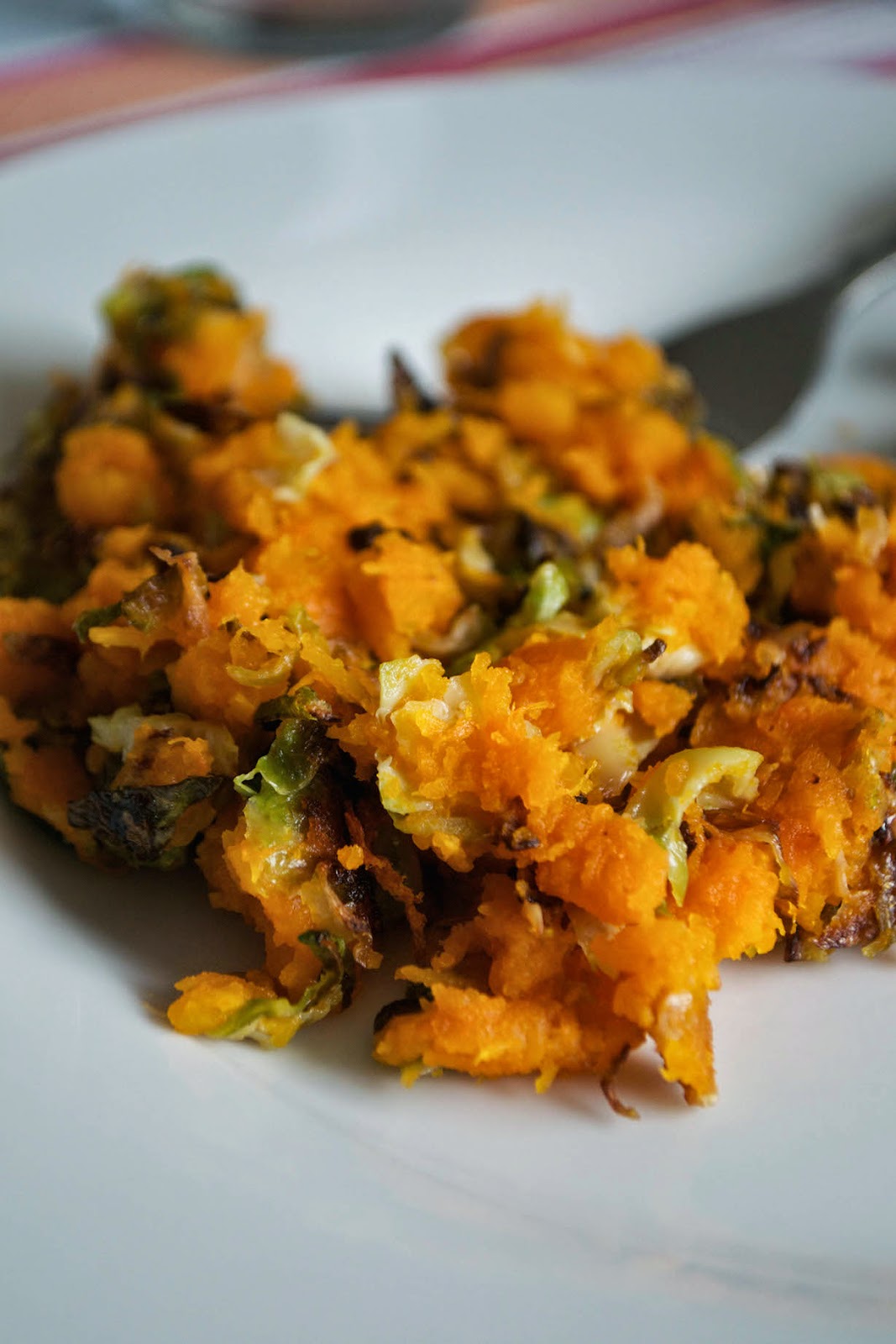


Since I discovered that I didn’t do too well with potatoes, I use any cooked starch I have leftover in the fridge from the night before. Butternut squash, sweet potato – that kind of thing. I will usually cook more starchy veg than I need for dinner so that I have THIS to make in the morning. That usually gets me out of bed pretty sharp the next day.

And Brussels Sprouts are BY FAR the best green to use in bubble and squeak, even if you make the conventional potato version. Sliced thinly, they cook quickly and crisp up beautifully in the pan. They have an earthy, sweet flavour which works well with the sweet, sticky onions that are in there, too. Autoimmune disease wasn’t going to stop me having my bubble and squeak, that’s for sure. Here’s how you do it. 

Autoimmune Protocol Bubble and Squeak
Serves 1-2
Melt a teaspoon of butter, coconut oil or lard in a large non-stick frying pan. Add a small chopped white onion and fry until tender and just beginning to turn crisp. Add in a handful or two of leftover mashed butternut squash or sweet potatoes. Stir it all together and add a handful of finely sliced Brussels Sprouts. Cook, stirring, until the veg is all hot and reheated, and the onions and sprouts start to take on a dark crispness to them, sizzling in the pan. Sprinkle in a pinch of salt and you’re ready to go. Eat hot. 


Monday, 24 November 2014

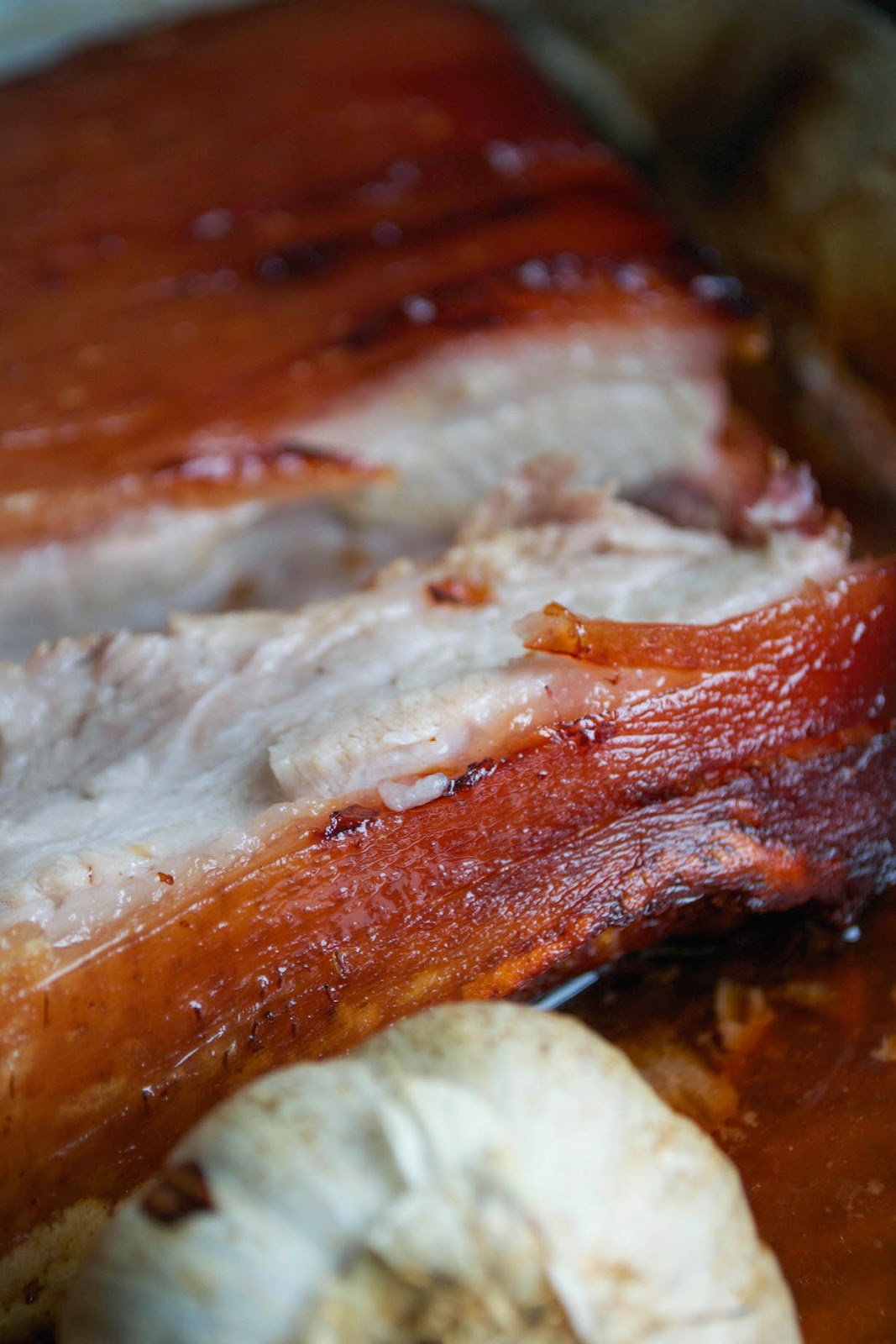
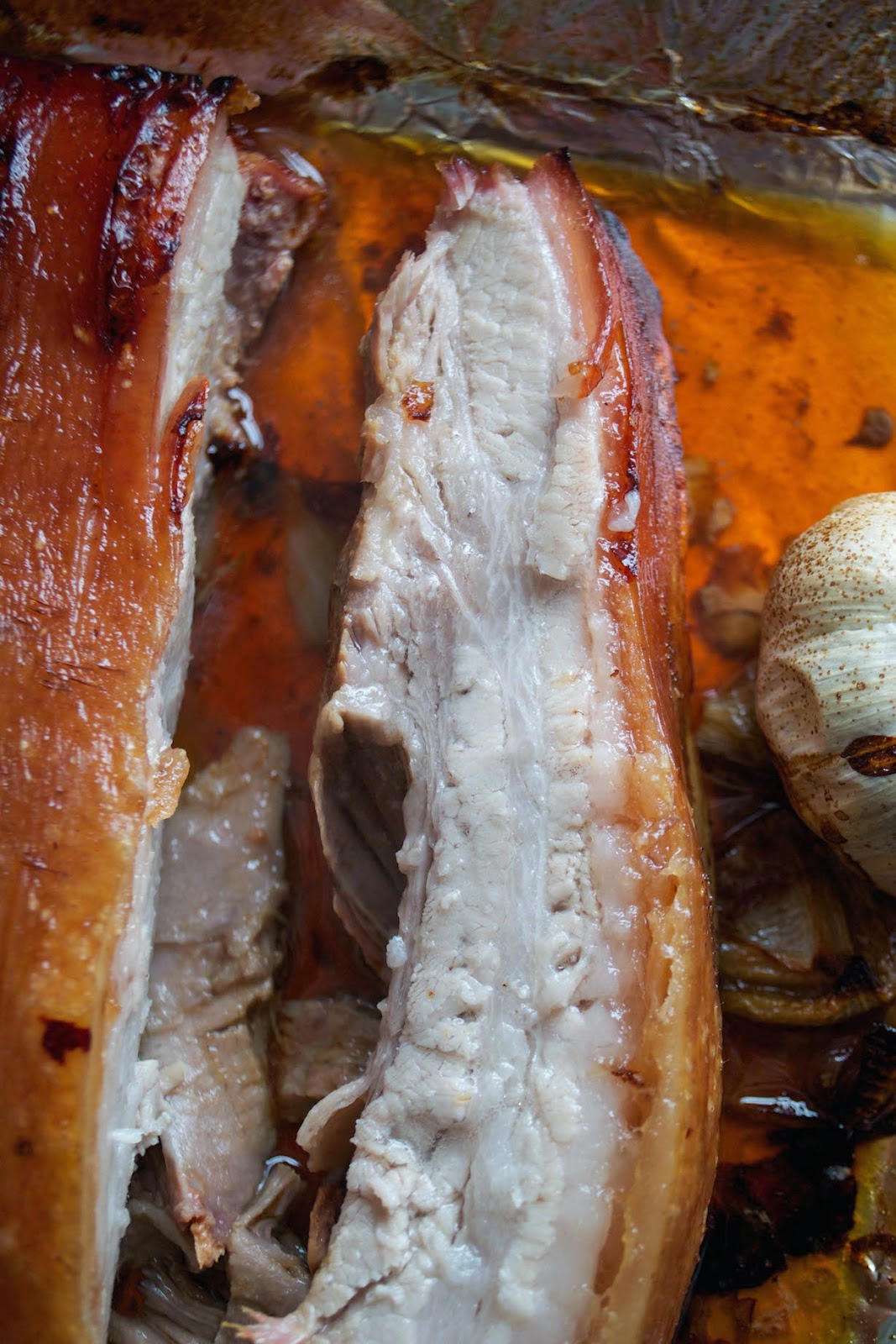
Pork Belly Roasted with Garlic and Cider

Sorry. Did I mention pork belly? 


I’m surprised by the number of people that still pull a face and complain about pork belly being fatty and greasy.


YUM. 

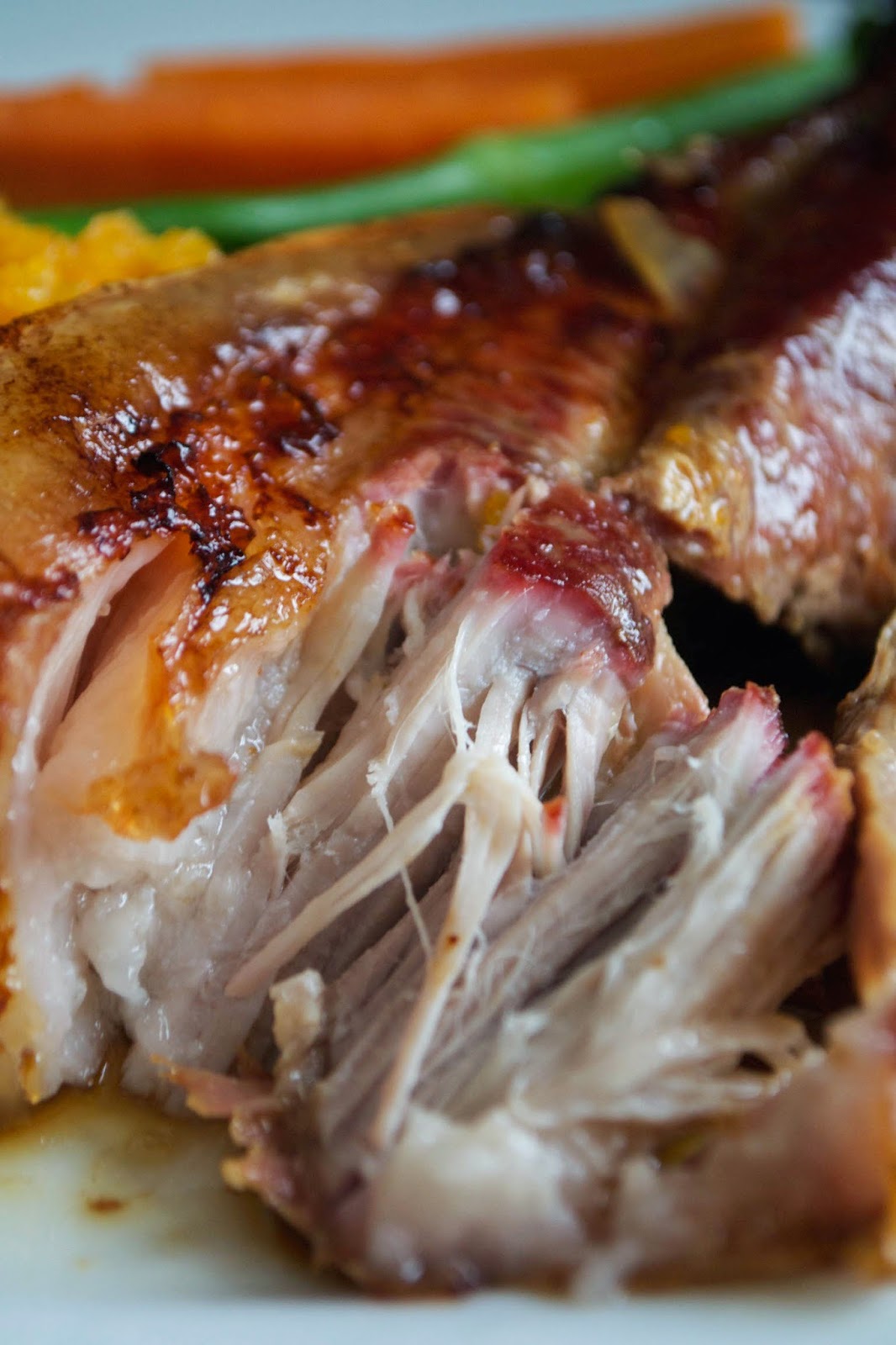
This slow-roasted pork belly slab is indeed a bit fattier than other cuts, but then it’s belly for goodness’ sake. It has the sweetness of the cider (it’s all cooked, so it’s ok if you are avoiding alcohol), soft, melty onions and then a whole garlic bulb that turns like paste after the long roasting in the oven. You just squeeze it out of the papery skins and eat it with the pork and the cidery juices in the pan. 


Honestly. You want to put this on late morning on a Sunday and tuck in once it’s all cooked, later in the afternoon. It’s one of our super favourite roast dinners now. 

The timings for the recipe are based on Jamie Oliver’s pork belly roast

A note on the cider: Do you know, some people say that cider isn’t ‘paleo’ and that cavemen wouldn’t have known how to make it. Firstly, a) the paleo diet isn’t really just based on what cavemen ate – and b) I think that they did drink cider – because it’s just fermented apples, which is something that happens in nature. I like to think of them, getting a bit giggly and rosy-cheeked, painting on cave walls as the sun comes up, having accidentally drunk the juice of some gone off apples. So there you go.

Pork Belly Roasted with Garlic and Cider
Serves 4-5
Ingredients
1.2kg slab of pork belly
pinch of salt
1 onion, peeled and sliced thickly
2 whole bulbs of garlic
about half a mugful of cider

Method
Turn your oven up as high as it will go, and get out a shallow roasting tray. I like to line mine with foil to save on the washing up afterwards, as everything will go very dark and sticky. 

Pat the skin of the pork belly slab with a kitchen paper towel, so it’s dry and sprinkle over a pinch of salt. On the roasting tray, arrange the onion slices and put the garlic bulbs near the centre of the onions. Lay the pork joint over the top, skin side facing up. 

Slide into the oven and roast for 10 minutes – you’ll see the skin start to bubble and crisp up. Once the 10 minutes are up, turn the oven down to gas mark 3/170ºC/325ºF and roast for another hour and a half. The pork should now be fairly cooked, but you’ll want it a bit more melty. 

Pour the cider into the tray, around the pork – don’t pour it straight onto the skin, but around the base of the roasting joint, and then slide back into the oven for another 45 minutes. 

This will give you plenty of time to get on with your vegetables. Once the 45 minutes are up, bring the pork joint out of the oven and allow to rest for 15 minutes. Then, cut into slices with a sharp knife and serve with the garlic and the roasting juices spooned over the top. Beautiful. 


Friday, 21 November 2014

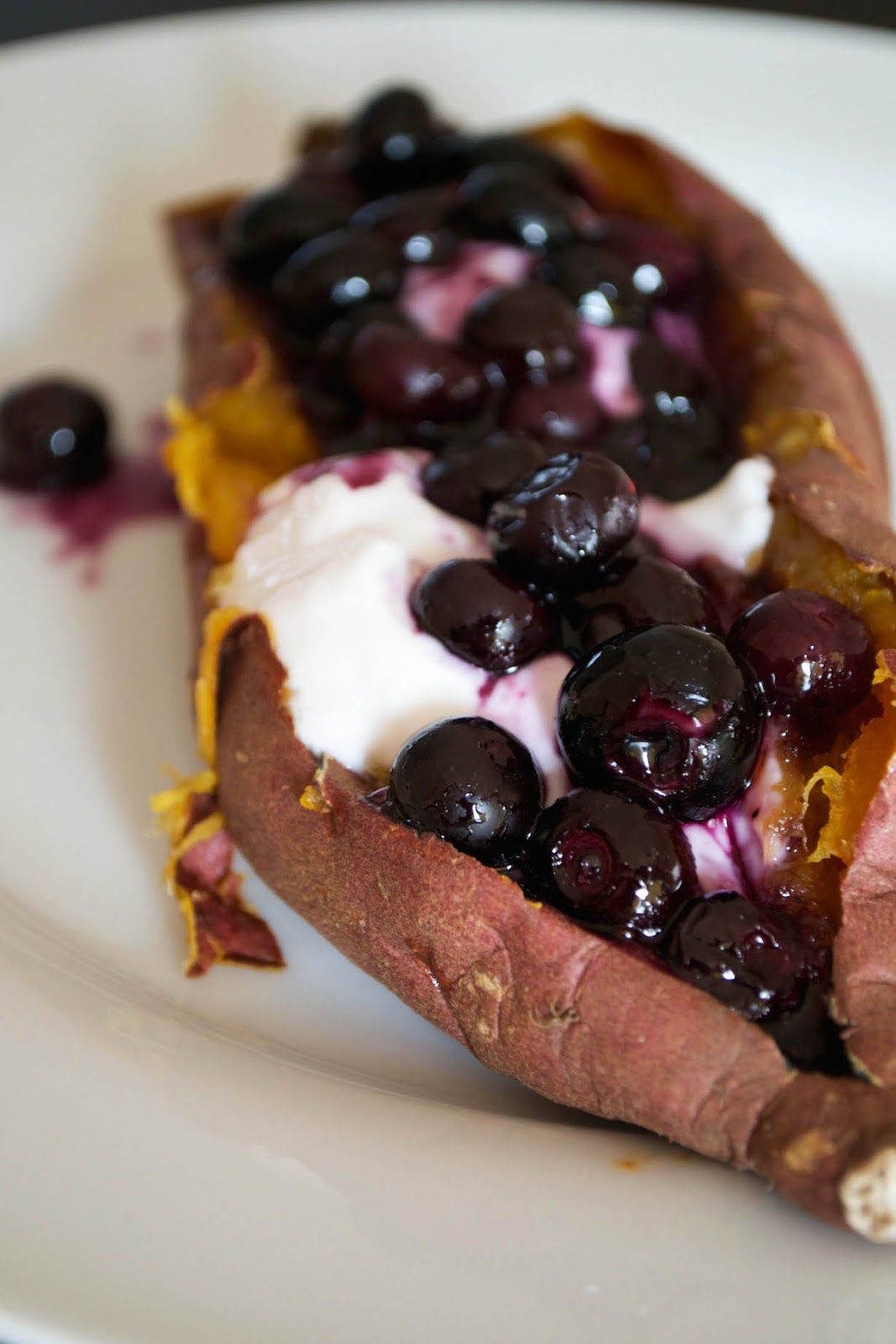
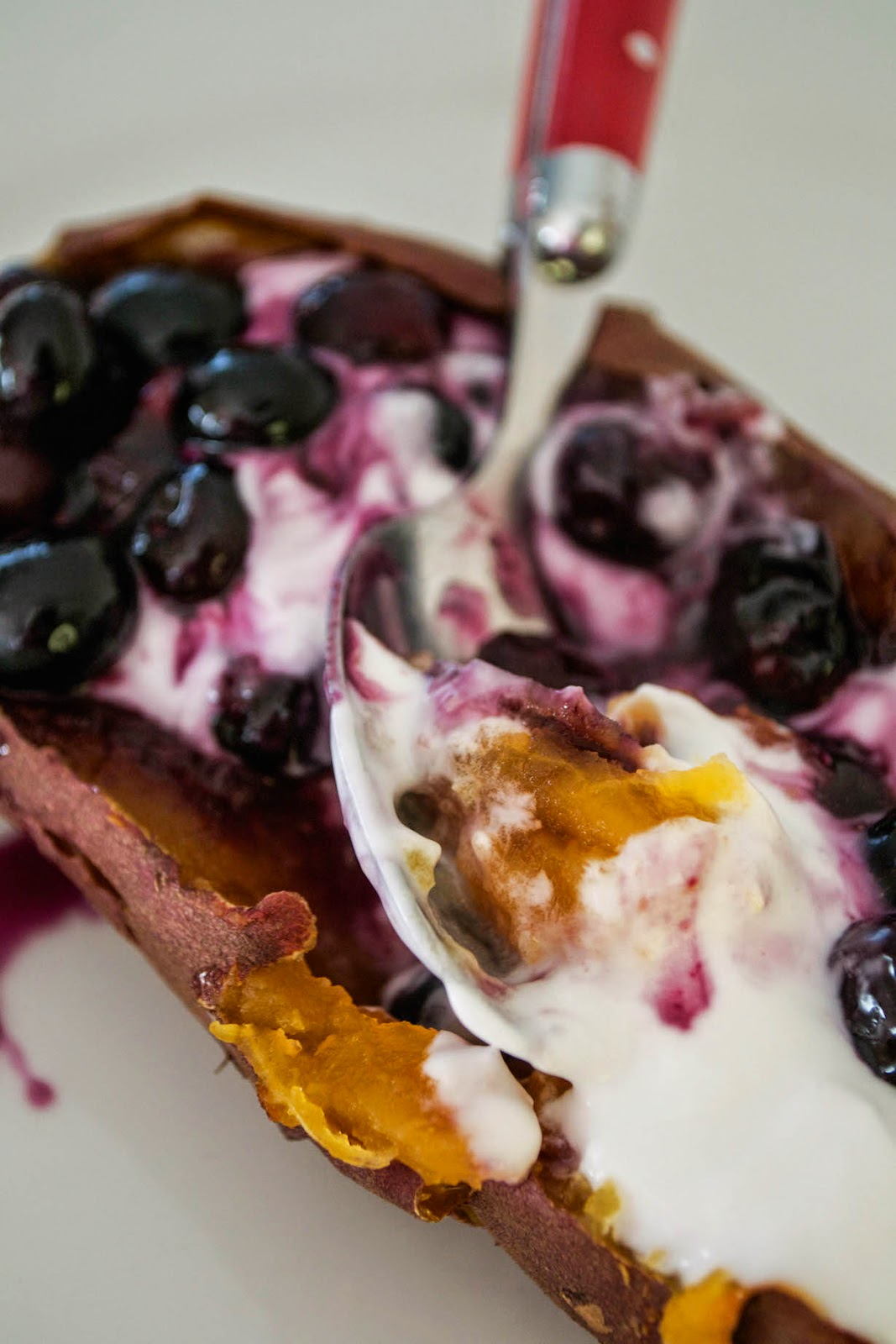
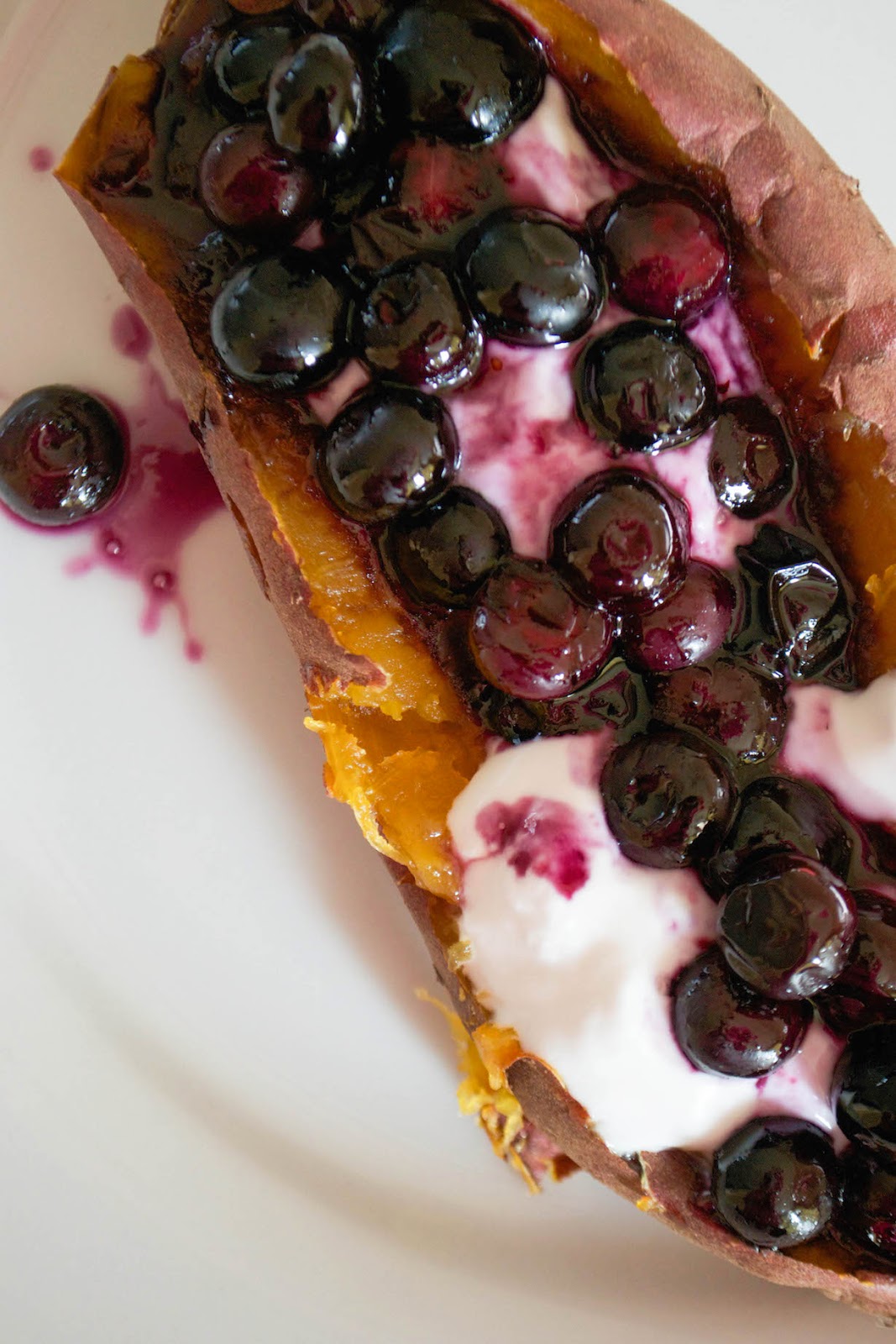
Blueberry Topped Baked Sweet Potato (AIP, Paleo, Vegan)

This is the stuff mornings are made of. 


Ever fancy sticky-sweet, vanilla-scented blueberries? I do. 


Bolstered by my first experience with sweet-toppings for a baked sweet potato (Caramelised Apple and Cinnamon) I started to consider other sweet toppings that would work. And I couldn’t get blueberries out of my head. And now, I can see what my brain was trying to tell me. 


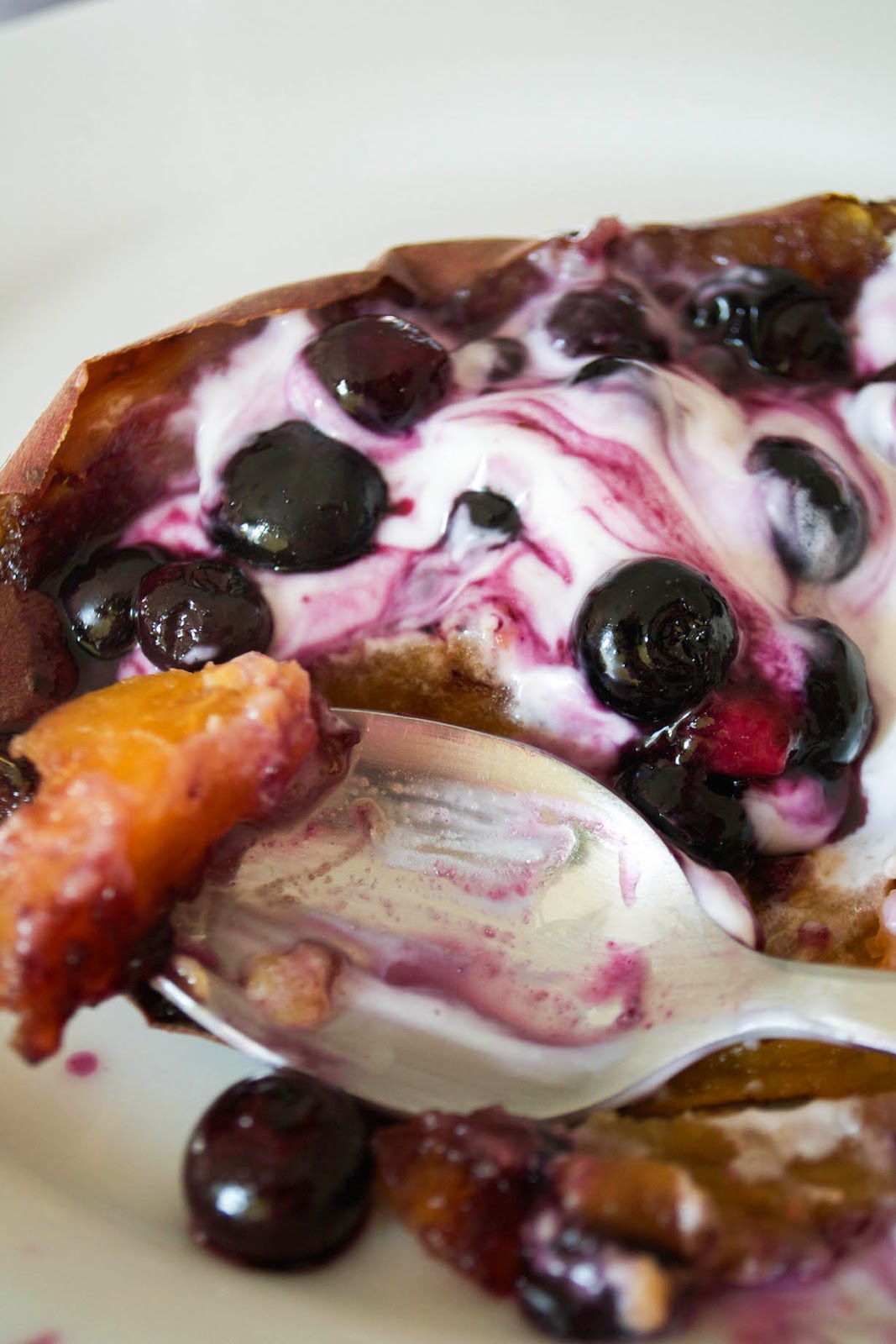
The colours are enough to make me happy: bright amber sweet potato flesh, with dark, rich blueberries and their stained juices rippling through the coconut yoghurt. But the flavours – there’s a touch of vanilla extract (it’s ok on AIP because it’s cooked) that makes this feel a bit like a fairground treat. There’s sweetness from the blueberries, maple syrup and the potato but then a nice tartness with the coconut yoghurt that contrasts it all beautifully. Need another reason to make it? You get the good starch and beta carotene from the sweet potato, powerful immune-boosting phytochemicals from the blueberries and wonderfully good bacteria and fats from the coconut yoghurt. 


I’ve said enough. Don’t take my word for it, make it yourself. This dish is vegan, vegetarian, dairy-free, gluten-free, autoimmune protocol friendly, paleo and primal. 

Blueberry Topped Baked Sweet Potato
Serves 1.
Ingredients
1 sweet potato, scrubbed and pierced all over a few times with a sharp knife
1 handful blueberries (I used frozen)
1 tbsp maple syrup
1 tsp vanilla extract
1-2 tbsp coconut yoghurt

Method
First, preheat your oven to gas mark 7/220ºC/425ºF. Line a baking tray with foil and place the sweet potato on it (I usually bake two or three sweet potatoes seeing as I’m having the oven on. This means I have soft sweet potato waiting for me in the fridge to reheat, without having to cook it first). Bake the sweet potato(es) until tender, about 40 minutes. 

Once the sweet potato is soft in the middle (test it with a sharp knife), get on with the blueberries. In a small frying pan, heat up the blueberries on a medium, fairly gently heat. Trickle in the maple syrup and the vanilla extract and allow it all to heat up and come to a gentle bubble in the pan. The juice from the berries will leak out as they cook, making a lovely sticky blueberry sauce. 

To serve, place the sweet potato on a plate, split down the middle and dump a tablespoon or two of the coconut yoghurt in the centre. Finish by spooning over the warmed, sticky blueberries. Eat while hot, with a spoon. 

What are your favourite sweet potato toppings? 


Wednesday, 19 November 2014

Chunky Tapenade

Something has been bugging me for a little while. 

For a few months now, I’ve had a feeling there was a really obvious recipe that I’d been missing, that was naturally dairy-free, gluten-free, nut-free and suitable for the paleo and autoimmune protocol diets. 

And when I picked up a tin of black olives in the shop, it suddenly dawned on me what it was. Tapenade. 


Tapenade is a mixture of olives, capers and some other bits and pieces, and you can serve it at parties, on crackers (or slices of cucumber) – or mix it up in a salad (it’s awesome with tuna). You can also pile it up on your burgers, if you like for added umami flavour. It’s supposed to originate from the south of France, and chances are, if you buy it in the shops, it’ll be smooth and purée-like. Well, I like mine chunky. 


You could add a little bit of raw, grated garlic into the tapenade if you like, or chop up a spring onion and toss it in, but I wanted to keep this FODMAP-friendly, too, so didn’t include it here. I actually prefer making this chunky tapenade than the smooth, food-processor version because a) you only need to wash up a board and a knife afterwards and b) you get a lot more ‘hands on’ with the ingredients. The sweet, aniseed flavour of the basil rises up from the board with salty, briny olives, anchovies, capers and citrussy parsley. Chopping that lot equals food therapy, that does.


Chunky Tapenade
Serves 1-2 or more if spooned onto crackers as a starter or party nibble
Ingredients
12 black olives, pitted
7 capers
juice of half a lemon
1 tbsp parsley, chopped
1 tbsp basil, chopped
2 anchovy fillets, from a tin
2 tbsp Extra Virgin Olive Oil

Method
With a sharp knife, chop up all the ingredients and stir together in a bowl, adding enough olive oil to bind the mixture and create a salsa-texture. Spoon onto crackers or cucumber slices – or scatter into your favourite salad. 


Monday, 17 November 2014

Why I’m Bored of People Slamming The Paleo Diet

I’m getting a bit bored of people slamming the paleo diet. BOOOORRRRING…. *rolls eyes*

And here’s why. 

There seem to be quite a few articles and infographics that keep getting published and shared on social media, saying that the paleo diet is a ‘fad’ – it’s ‘unhealthy’ – and, according to one I saw recently, “experts stated they took issue with the diet on every level.” 

Last week Michael Pollan was quoted as saying that humans could survive on bread alone. I respect Pollan as an author and for his enthusiasm for things like the American Gut Project but I don’t get it. Why are governments telling us to eat more veg if bread alone will give us all our nutritional needs? And he attacks the paleo diet as he says we can’t really replicate the ‘caveman’ diet anyway, in this modern world. But, as I’ve said before, that really isn’t the main point of the paleo diet. It’s to eat food that’s unprocessed and nutrient dense, not just to eat what Palaeolithic people ate, which I agree would be pretty much impossible because of the evolution of plants, grains and animals over thousands of years.

I often wonder if it wasn’t given a name, whether it would be more acceptable. I always find that as soon as you give a diet a name (“Atkins”, “the 5:2”, “Dukan”) you’re already admitting it’s going to be over in months before someone finds something terribly wrong with it and decides it was probably best avoided in the first place. 

I wonder if we re-named it “the get lots of sleep, eat loads of veggies and get regular exercise” diet, if we might get a few more doctors on board. Worth thinking about that one. I might trademark it, just in case. 

The way I see it, the paleo diet, to me, makes perfect sense: 


  • You eat when you’re hungry
  • You don’t eat refined sugar, which messes with your hormones and appetite
  • You eat lots of vegetables
  • You get lots of sleep (go to bed early)
  • You aim for unprocessed, good quality meats, seafood and fish
  • You cut anything out that doesn’t agree with your personal digestion – some paleo people eat dairy, while others reintroduce occasional grains.


Doctors, surgeons, archaeologists – all debate the whole point of the paleo diet – whether man evolved eating mostly meat or berries – whether they hunted or scavenged meat. And I read things like this, and they interest me a bit, but then I feel like they’re all missing the point. We didn’t evolve eating pizza, rainbow-coloured cereal and chicken nuggets, we all know that. As Chris Kresser recently said: “I adopted a diet and lifestyle that more closely matched what my body is designed for.” Natural, unprocessed foods. I don’t think you can argue with that. 

I think it’s the cutting out of food groups that gets doctors worried. But then, what if you decide to become vegan? Or gluten free and vegan? But because we’re deciding to cut out relatively new foods like refined sugar and gluten we’re damaging our health? Come on.

And these experts who “take issue” with the diet “on every level”. EVERY LEVEL. You sure? Like eating lots of different-coloured veggies every day? Getting lots of sleep and exercise? Reducing intake of refined sugar? If you didn’t know better, you’d think that all doctors and anyone with a PhD universally hate the paleo diet and think that it’s incredibly bad for you. Hmm. Let me have a think: 

“Thoroughly researched and self-consistent in its overarching principles, a Paleo Diet is a sustainable way of eating to achieve our best health. Even more, it is a comprehensive approach to health that is steeped in solid science. And best of all, it has worked wonders for me.” – Dr Sarah Ballantyne (The Paleo Mom)

“A PD (Paleo Diet) has a greater beneficial effect vs an NNR (Nordic Nutritional Recommendations) diet regarding fat mass, abdominal obesity and triglyceride levels in obese postmenopausal women.” C Mellberg et al, The European Journal of Clinical Nutrition (March 2014)

“Through his research, he has concluded that mimicking many aspects of the caveman lifestyle and diet, one that the human body has adapted to over millions of years, may have the greatest potential to fight obesity and chronic disease.” From the website of Colin E. Champ M.D.

“I firmly believe that nutrition should play a central role in the treatment of any chronic condition, and hopefully I can convince you of this as well!” Erin, SCD, GAPS and paleo blogger at Pure and Simple Nourishment and M.D. by day
 

So that’s it. 

I’m off to start my next book: “Good Comforting Food On The Get Lots of Sleep, Eat Loads of Veggies and Take Daily Exercise Plan™”.  What do you think? A bit wordy?

Edited to add: I just had the perfect response to this blog post by @schoolbalance on Twitter. I wanted to share it here, because it basically sums up exactly what I am trying to say: 


YUP! 


Friday, 14 November 2014

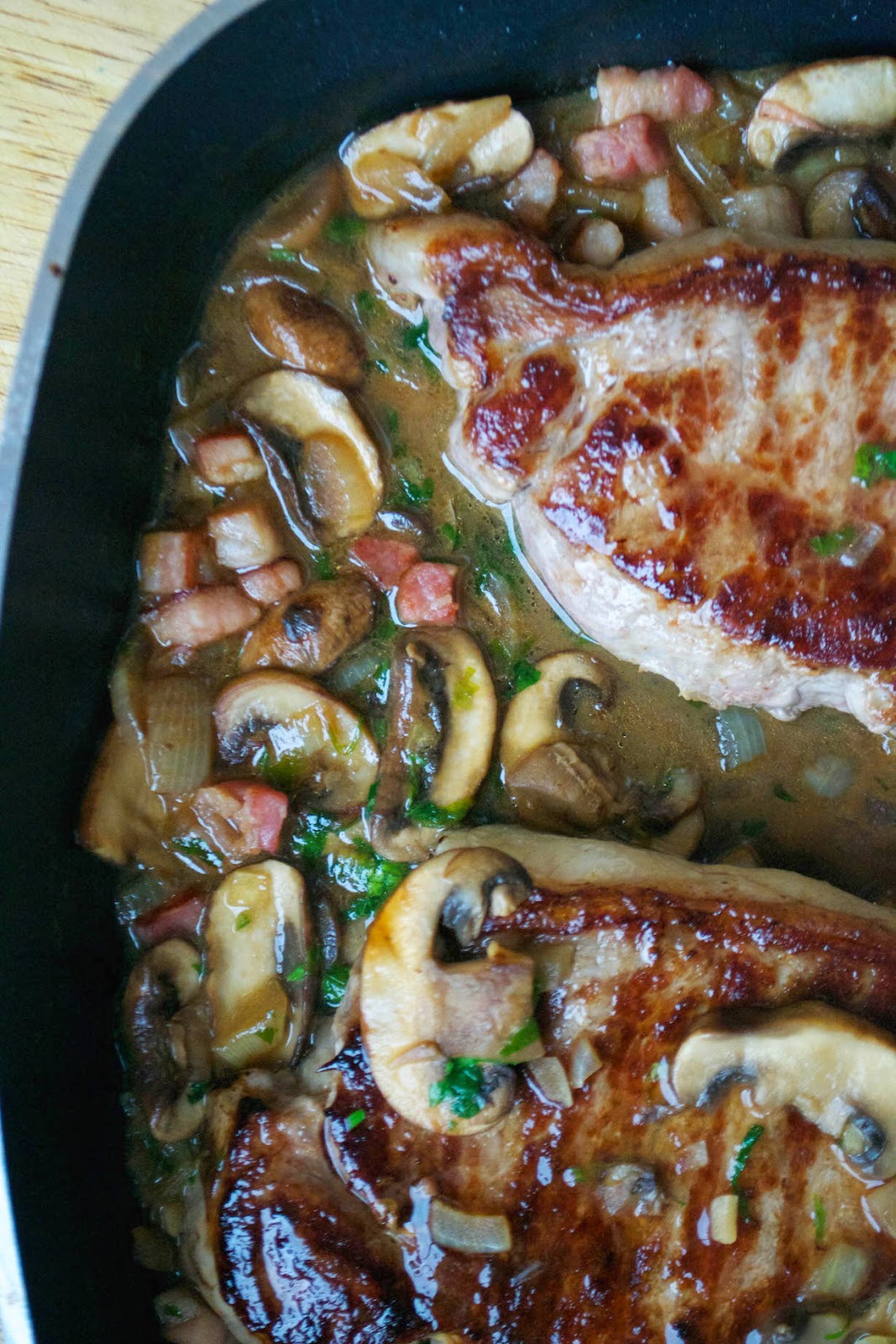
Pan-Fried Veal Steaks with Mushroom and Bacon Sauce

Veal is one of those meats that people don’t seem to cook a lot of, I think. 

I’m not really sure why. It’s sweet, rosy pink and really tender. And when Farmer’s Choice – the free-range butcher – sent me a couple of their veal steaks to try, I already knew what I wanted to do with it. And I knew that it would involve garlic and mushrooms. 


I asked a few friends how they liked to eat veal, and many of them came back and said they loved it with a brandy and cream sauce, with mushrooms and a big stack of Dauphinoise potatoes on the side. So I set about paleo-fying the classic recipe everyone said they loved. I took out the brandy – the alcohol completely, in fact – and made a rich, creamy gravy with mushrooms, bacon, onion, garlic and parsley. You want it creamier? Just add more coconut cream.


It was AMAZING. 


We’re even talking about having this for our Christmas dinner this year, which would be great, because the whole thing only took about 10 minutes to cook. Christmas dinner on the table in 10 minutes?  Now that’s what I’m talking about. 

The recipe is not only dairy-free, gluten-free and paleo – it’s also suitable for the autoimmune paleo (AIP) diets. It’s just good, honest and natural food. I really hope you like it. 

Pan-Fried Veal Steaks with Mushroom and Bacon Sauce
Serves 2
Ingredients
1 tsp coconut oil
2 x 250g veal steaks
2 cloves of garlic, peeled and chopped quite finely
1 small onion, peeled and chopped as finely as you like
40g smoked bacon, chopped
6 chestnut mushrooms, stalks trimmed and then tops sliced
50ml beef bone broth
1 tbsp coconut cream (use 2 tablespoons if you want it creamier)
1 tbsp chopped fresh parsley

Method
First, melt the coconut oil in a frying pan large enough to hold both the veal steaks. Set it on a medium heat and season the steaks with a little salt and fry for about 4-5 minutes on each side, until golden on the outside and cooked to your liking on the inside. Lift them out onto a plate and put to one side to rest. 

Quickly tip the bacon pieces into the pan, along with the onion and garlic. Stir-fry for a few minutes until golden and cooked through. Add the mushrooms and fry for another 2-3 minutes, turning up the heat to give them a little golden colour. Pour in the bone broth and bring to a simmer. Stir in the coconut cream and the parsley and add the steaks – with any juices that have collected on the plate – to the pan. Once it’s all hot and bubbling, serve straight away. 

I received a contribution for the ingredients to make the recipe, from Farmer’s Choice, who also supplied the veal. Go and check them out on their website – their meat is free-range and really good. 


Wednesday, 12 November 2014

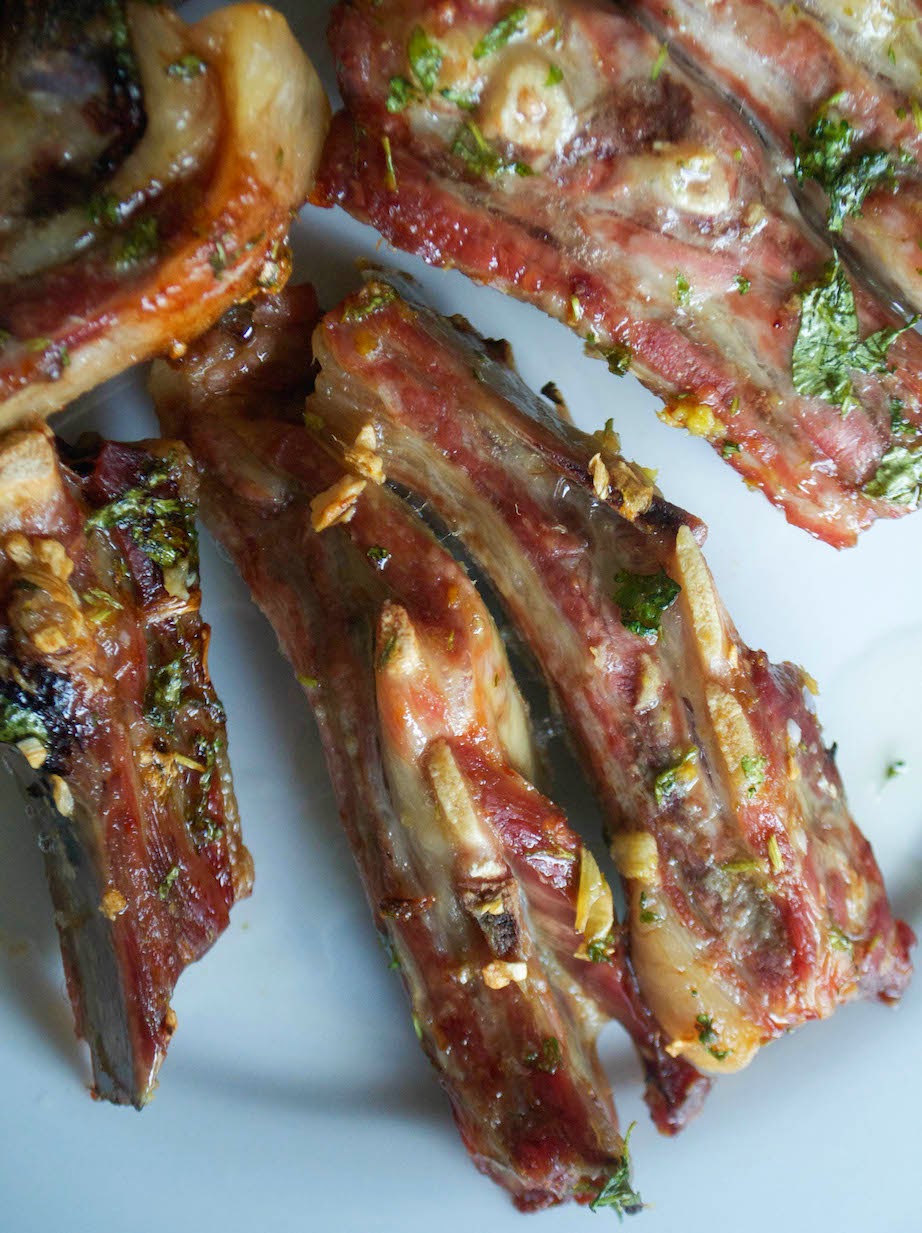
Roasted Lamb Ribs with Garlic and Parsley (Costillas de Cordero a la Provenzal)

Ever cooked lamb ribs? 


They’re cheap, and if you’re lucky, fairly meaty – although I’ve had bad experiences with supermarket ribs in the past that were all fat and bone. Now I get them from an organic, free-range butcher and they’re always lovely, with enough succulent, sweet meat you pull away from the bones with your teeth. And for the seasoning, I took a tip from Argentina and decided to keep it simple with garlic and parsley.

In Argentina, you might hear the word ‘provenzal‘ when describing a type of food. This will usually mean that at some point the food was marinated in garlic and parsley. So if you were being fancy, you could call this Costillas de Cordero a la Provenzal.  Lamb ribs with garlic and parsley.

Roasted Lamb Ribs with Garlic and Parsley
Serves 4
Ingredients
Approx. 1kg of lamb ribs or riblets
1 tsp coconut oil, for coating
2 garlic cloves, peeled and roughly chopped
small handful freshly chopped parsley leaves
good pinch of salt

Method
First, get your oven preheated to gas mark 6/200ºC/400ºF and get out a roasting tray. 

Take out the ribs and arrange them on the tray, in one layer if possible. Smear over the coconut oil – you won’t need much, just a thin coating on the ribs – and then scatter over the garlic, parsley and salt. Using your fingers, get everything rubbed in well. Roast in the oven for 45 minutes to one hour, until the meat on the ribs is tender and the meat is golden and aromatic. 

This recipe has been linked up to Phoenix Helix’s AIP Recipe Roundtable.


Monday, 10 November 2014

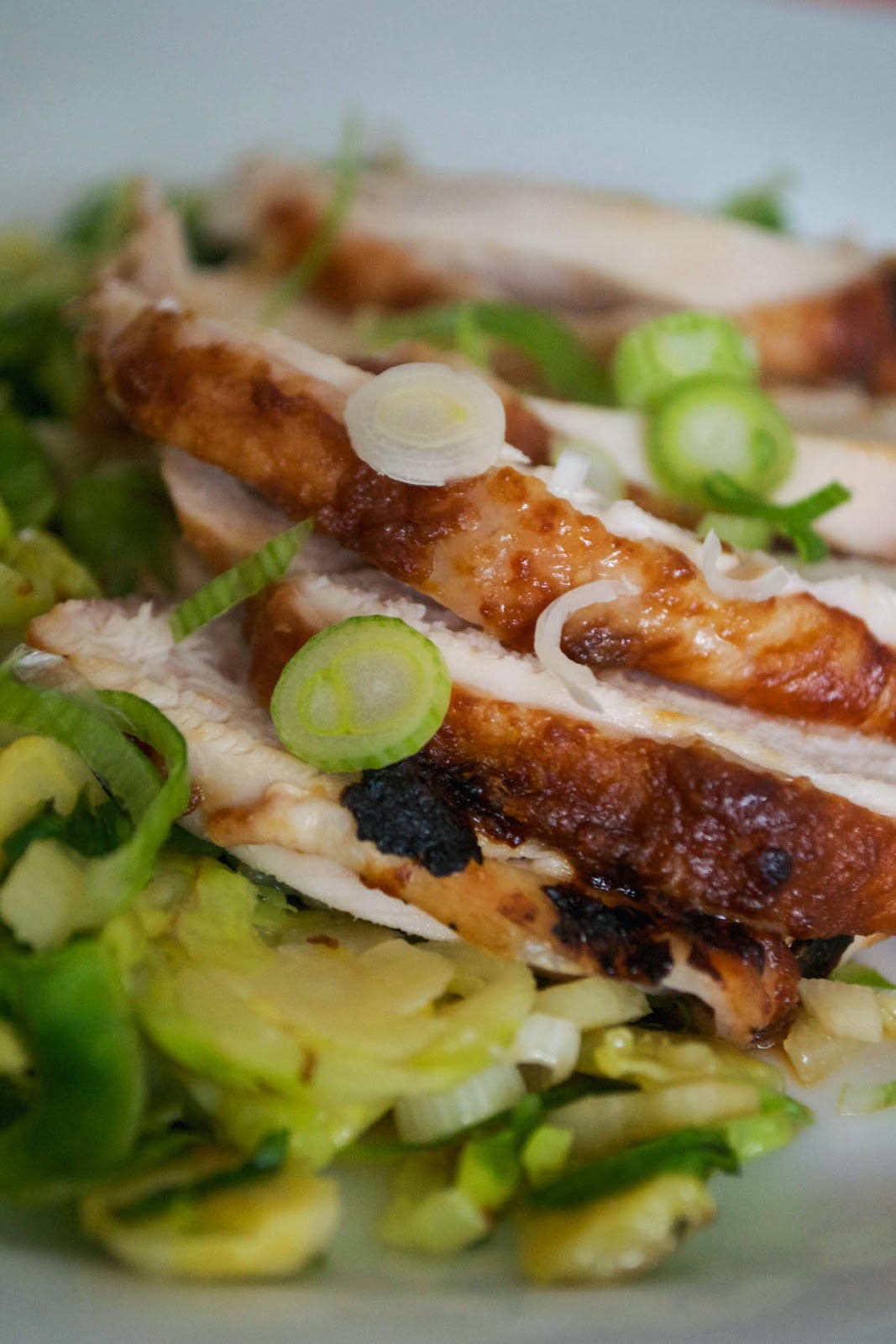
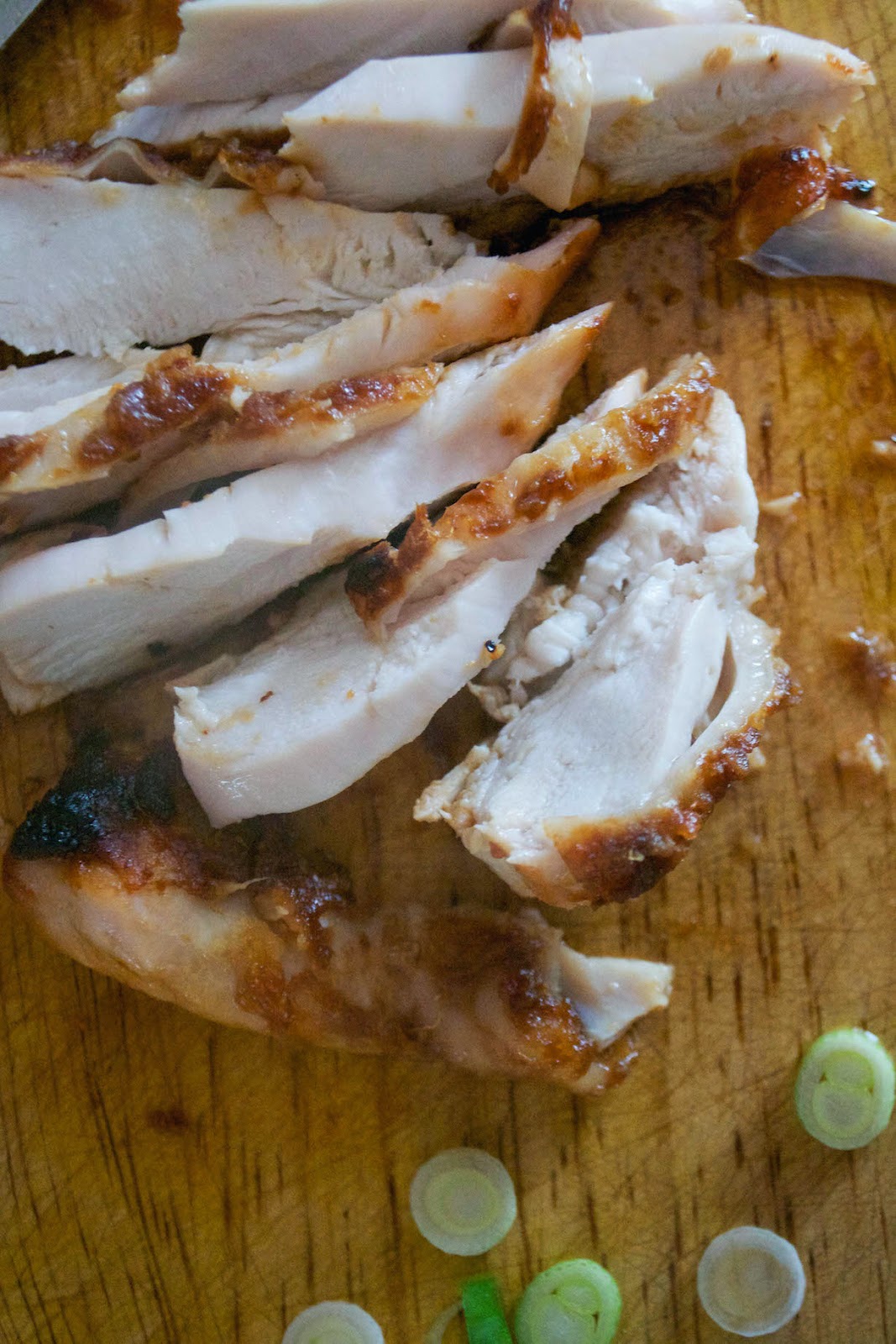
Miso-Roasted Chicken with Stir-Fried Brussels Sprouts

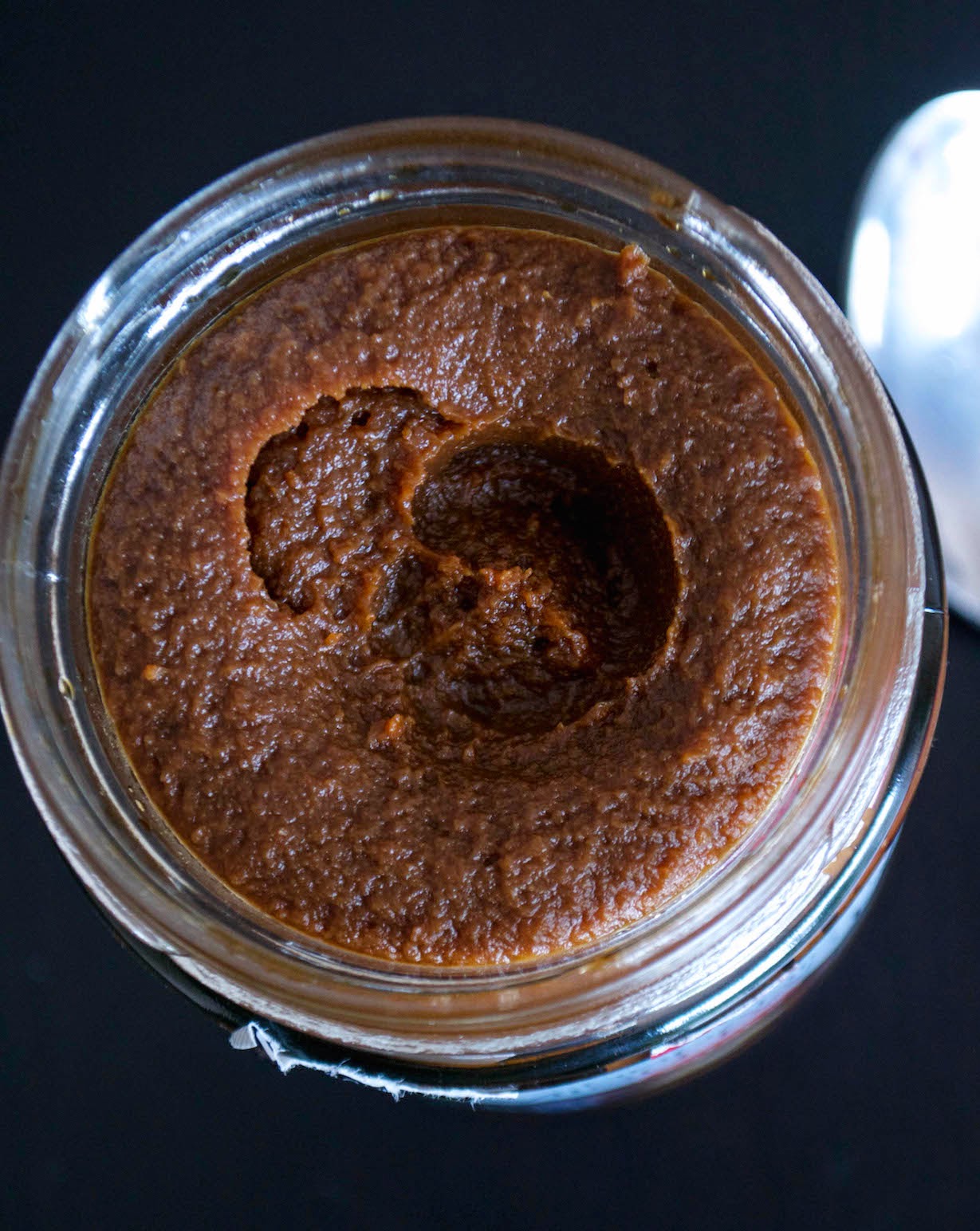
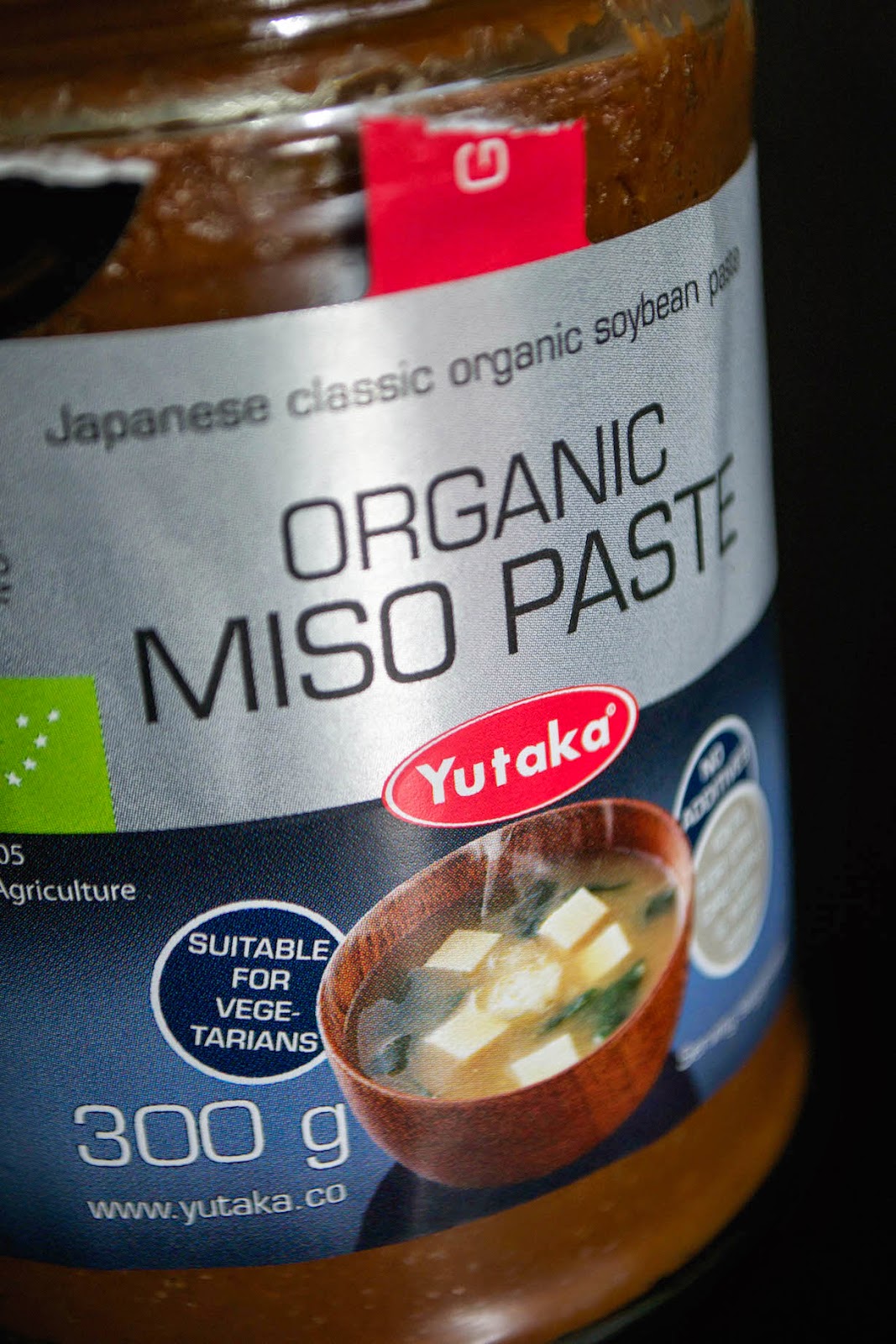
Hmmm. Miso paste.  


Some say that we should avoid soy altogether for the best health, while others argue that fermented soy products are actually really beneficial to health. I have decided, that although miso is not suitable for the elimination stages of the autoimmune protocol diet (sorry, guys), it does have a place in a healthy diet – and even a paleo or clean eating diet. Have a look at Eat Drink Paleo’s blog post on miso, where it’s argued that miso contains beneficial bacteria (because of the fermentation process), vitamins and minerals and is a good source of protein. 


Now. The most obvious thing to do with a jar of miso paste would be to make miso soup. But I wanted to do something a little different, so I made a marinade with it.


It was GORGEOUS. There was an intense savoury and also kind of sweet flavour, and the marinade gave the skin of the chicken a beautiful burnished, deep amber colour. It’s also relatively fuss-free to make. Quickly stir it together, slap it on the chicken and then roast it. It would be gorgeous with a pile of fluffy, white rice alongside too, although we stuck with stir-fried shredded Brussels Sprouts, which caramelised and turned golden as they sizzled in the pan. We’re defo having this again. 


Miso-Roasted Chicken with Stir-Fried Brussels Sprouts
Serves 2
Ingredients
2 chicken breasts, skin-on
1 tbsp miso paste (I used Yutaka Organic Miso Paste)
1 tbsp mirin (Japanese rice wine)
juice of 1 lime
1cm slice of fresh ginger, finely grated
1 garlic clove, peeled and finely grated
2 tbsp coconut oil
100g Brussels Sprouts, trimmed and washed
1 clove garlic, peeled and chopped
2 spring onions, chopped – plus extra for serving
a pinch of salt

Method
First, prepare the chicken. Take the chicken breasts out of the fridge. In a large bowl that will hold the chicken, mix together the miso paste, mirin, lime juice, ginger and garlic. Slather this mixture all over the chicken – underneath the fillets as well as over the skin. Place the chicken in the marinade and cover with cling film. Keep in the fridge for 1 hour. 

Preheat the oven to 200ºC/gas mark 6/400ºF. Lay the chicken breasts out on a roasting tray (lined with foil) and slide into the oven to roast for about 15-20 minutes. 

Once the chicken is cooked thoroughly (cut into a piece to make sure) take it out of the oven and leave to rest for a few minutes. 

To make the stir-fried Brussels Sprouts, quickly shred the sprouts with a sharp knife and heat the coconut oil in a pan. Add the sliced sprouts, the garlic and the spring onions and stir-fry for 3-4 minutes, until the greens are tender and starting to turn golden. 

When everything’s ready, slice the chicken breasts and serve with the greens. Sprinkle with some extra chopped spring onion over the top. Beautiful with a cup of green tea alongside. 


Thanks to Yutaka, who sent me the jar of miso paste to try. 

Friday, 7 November 2014

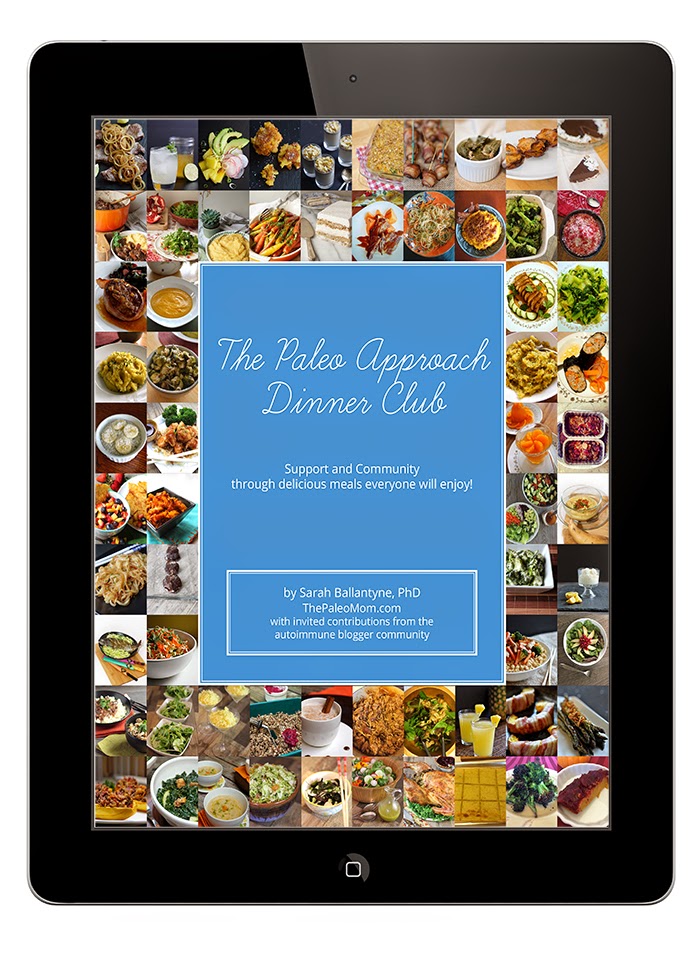
Review of The Paleo Approach Dinner Club

Socialising while you’re on a diet that excludes all grains, refined sugars, dairy, nuts, seeds, nightshades, lots of everyday spices and eggs? Sounds tricky, right? No alcohol. No pizza. No fries. No popcorn at the movies, and DEFINITELY no chocolate chip fudge brownie ice cream. 

But with a bit of practice, you can come up with AIP-compliant meals so you eat what you’re supposed to – and your non-AIP or paleo guests will actually LIKE it, too. And Sarah Ballantyne, The Paleo Mom has made this all even easier for you with her new e-book. 
Sarah Ballantyne’s The Paleo Approach Dinner Club

The idea of the dinner club is based around a group of people taking it in turns to meet up at each other’s houses, and bringing a dish to eat. It’s a great idea for those with special dietary requirements because then you know there’ll be something there that you can enjoy. And eating a restrictive diet for health reasons can be, well, quite lonely. So it’s a lovely way of getting like-minded people together, too. I know I’d love to meet up with all my AIP blogging friends, mostly for the fun and banter, but also because I’d hope that Mickey Trescott would bring her AIP coconut and raspberry cheesecake along. Aherm. So anyway. That’s how it all works. 

Sarah’s e-book contains 82 recipes – some are hers, while others are created by other AIP food bloggers – that are all suitable for serving at a dinner party, or a special meal. It’s laid out in 12-week meal plans, with a key so that everyone gets assigned a letter of the alphabet and then knows exactly which foods they’re bringing for the whole 12-week period, to each dinner. There’s Honey Balsamic Slow-Cooker Short Ribs, Bacon-Mashed Yams and Instant Raspberry Soft-Serve in week 4, for example. There are Asian-style foods, warm comforting foods and then really surprising and indulgent dishes, like the gorgeous Sea-salted Caramel Bon Bons (I have my eye on you, week 7). There’s also a paleo section on how to cook for a kids’ table – so they don’t get left out (this part is straight paleo, rather than AIP). 

There are suggestions on everything from laying the table to party games you can play. And a brief outline of the autoimmune protocol that recaps on which foods to avoid and why. 

I realise I’ve been very favourable about the book so far. I’m trying to think of something to say to balance it out a bit – a bit of constructive criticism. But I can’t. The photography and design are great, the information is thorough, and you have 82 recipes from Sarah and a host of other AIP bloggers, too, all for $16.99. Dinner parties and special occasions on the autoimmune protocol are now sorted. Another great AIP resource. 

I’ll be cooking up some of the recipes in the e-book over the coming weeks, stay tuned for photos on my Instagram, Facebook and Twitter

Want to find out more, or download your copy? Click here to visit ThePaleoMom (affiliate link).


Thursday, 6 November 2014

Pure Taste Paleo Restaurant in London Has AIP Compliant Dishes on The Menu *Squeee!*

So there I was, Tuesday night, on Twitter, when I saw Pure Taste Restaurants – the UK’s first dedicated paleo restaurant, based in London – start talking about their menu. And I saw the words “AIP’ on it. You can see my sort of double-take reaction…


I’d known about the restaurant for a while, and thought it was fantastic that they were having a completely paleo menu. But I admit that I doubted there would be meals reflecting the harsh restrictions of the autoimmune protocol. But I was wrong. 

I often hear it said that if you’re on AIP it’s easier just not to eat out at all – seemingly innocent seasonings like black pepper and seeds can be huge triggers for some people. But now, fellow AIP-ers in the UK, you’ve got something to get stuck into here. 


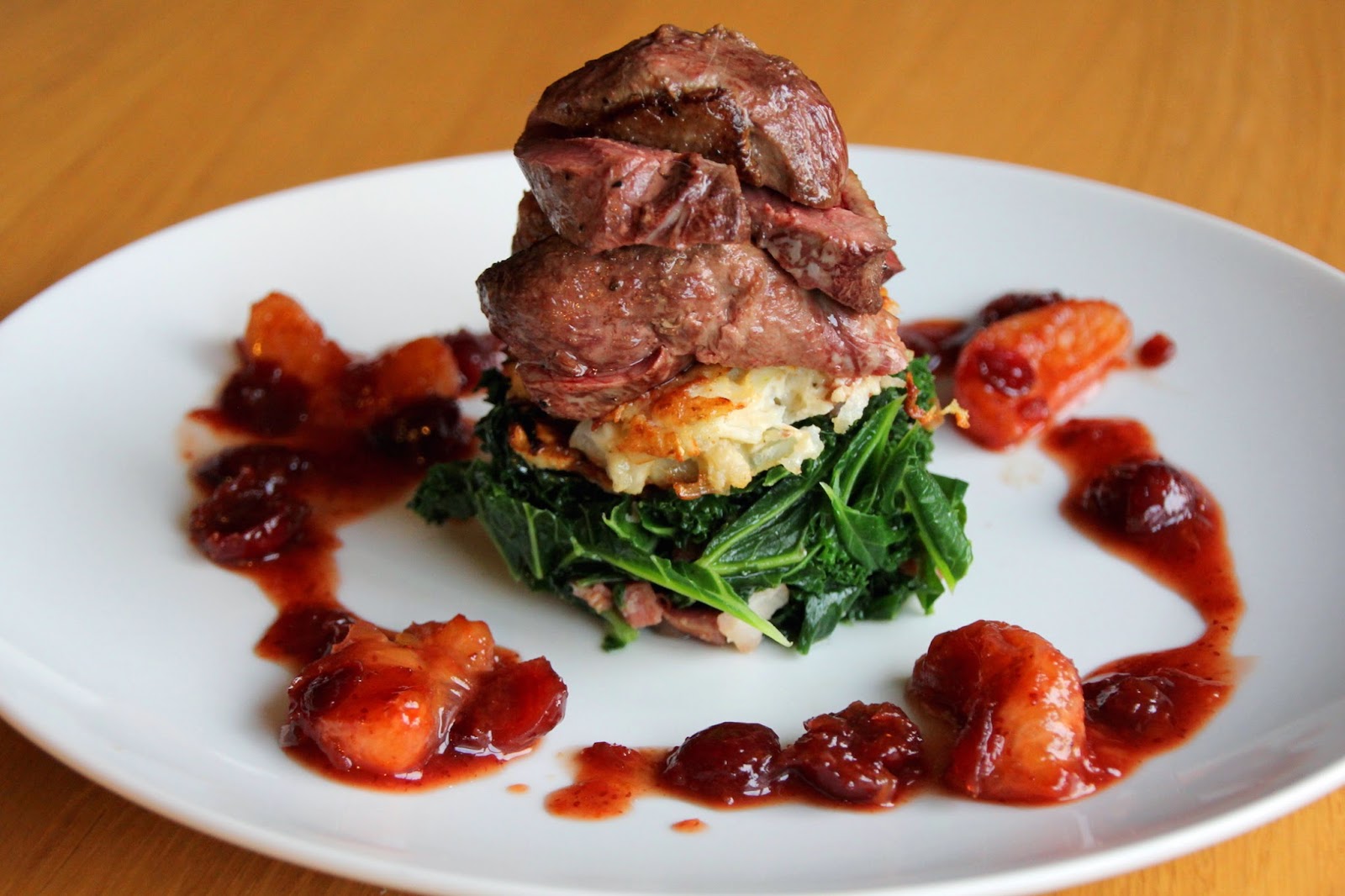
Pure Taste’s AIP-compliant Duck with Spiced Clementine and Cranberry Sauce (image by SPMF Photography)

The Pure Taste website states that their mission is to change the way people see free-from food – from an uninspiring dietary restriction to a mouth-watering way of eating that leaves you feeling less bloated and more energized.” And boy, have they done it. AIP-compliant menu items include rosemary plantain crackers, pan-seared breast of wild mallard duck, with celeriac rosti, sautéed kale, spiced cranberry and clementine sauce – and an organic, 100% grass-fed ribeye steak with salsa verde and vegetable wedges and salad. And there’s an AIP-compliant pudding too – a beautiful-sounding lemon posset. This is exciting news, indeed. 


Pure Taste Restaurant at work (Image by SPMF Photography)
Pure Taste include other dietary restrictions – that all fit into the paleo diet – including the Whole 30, Low FODMAP, egg-free, vegan and vegetarian preferences. It’s a huge step up from what you’d normally have to settle for when you dine out on AIP: the usual chicken salad (no dressing or seasoning) with a cup of camomile tea for ‘pudding’. From what I’ve seen on their website, Pure Taste are offering thoughtfully constructed, beautiful, professional dishes. It’s due to open early December. And I honestly can’t wait to go along and try it. 

Pure Taste can be found at 115 Westbourne Grove, London, W2 4UP, Tel: 0207 7275000. It’s due to open in early December 2014 – watch out for news and have a look at the menu for yourself at the Pure Taste website


Monday, 3 November 2014

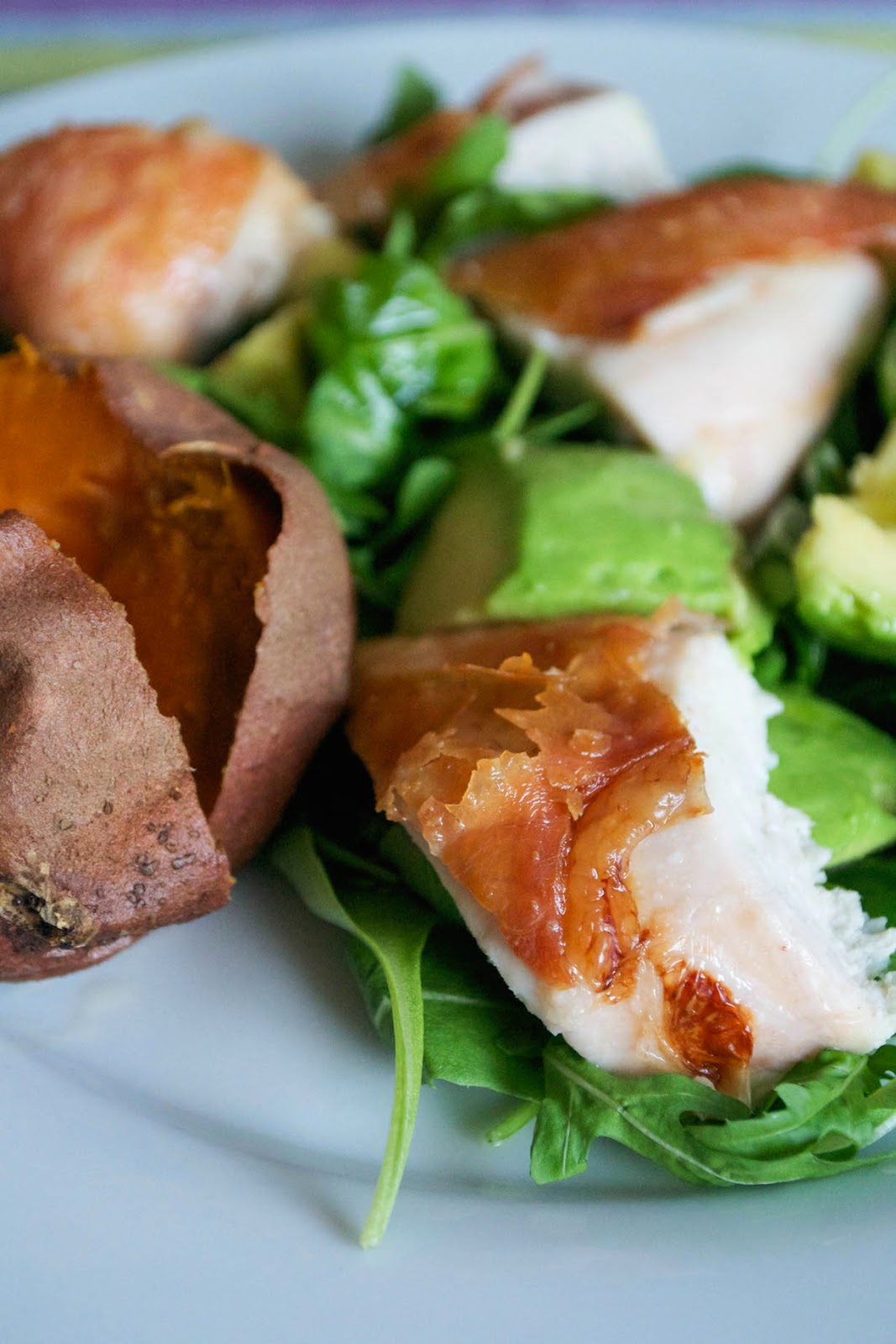
Crispy Chicken with Sweet Potatoes, Avocado and Rocket

So Nigella Lawson casually took a photo of her dinner and uploaded it to Twitter, and changed my life FOREVER (dramatic, but true).


Now. Chicken, sweet potato and avocado isn’t anything new or radical, but up until I saw that photo, I’d never thought of all those flavours on a plate, at the same time. Sounds ridiculous now, but there you go. 


Crisp-skinned, really succulent roasted chicken with soft, caramelly sweet potato and then cool avocado. And then there’s the peppery rocket (I’ve used watercress too – it’s also gorgeous with it) and the rich extra virgin olive oil poured all over the top. I think I read in an interview that Nigella mentioned a chicken and sweet potato dinner she made in LA that had lime in it. Not sure if this is the same one but next time I can tell you that lime juice – and probably freshly-chopped coriander leaves – will be ALL OVER this. 


Crispy Chicken with Sweet Potatoes, Avocado and Rocket
Serves 2
Ingredients
2 free-range chicken breasts, skin-on
good pinch of sea salt
2 small sweet potatoes
2 big handfuls of rocket leaves
1 avocado, peeled and the stone removed, flesh chopped roughly
extra virgin olive oil

Method
Preheat your oven to 200ºC/gas mark 6/400ºF. Get out an ovenproof tray and line it with a little foil. This helps stop the sweet potato sticking. Pierce the sweet potatoes all over with a sharp knife and place on the tray. Bake for 15 minutes. 

Once the 15 minutes are up, arrange the two chicken breasts next to the potatoes and sprinkle a little salt over the skin. Slide the whole lot back into the oven and bake for a further 25-30 minutes. Your sweet potatoes should be soft and crisp-skinned, and the chicken should be cooked through and golden. 

Take them out of the oven and arrange on a plate with the rocket leaves, avocado and a good drizzle of extra virgin olive oil over the whole lot. 


LinkWithin

Related Posts Plugin for WordPress, Blogger...