Thursday, 29 November 2012

Bacon-scented Shaving Cream. Really? (Yes…)

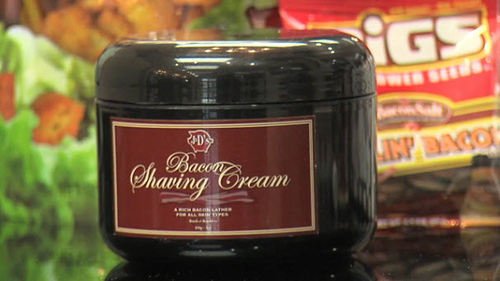
You might love the smoky aroma of crisp, grilled bacon wafting from the kitchen for breakfast, but would you smear your face with it? Weirdly, J&D’s in America have just launched a shaving cream with bacon scent. 

J&D's Bacon Shaving Cream


The limited edition shaving cream costs $14.99 and only 2,500 jars have been made. They call it a ‘pork scented lather of the gods’. 

What do you think? Personally, I’m all for the smell of a sizzling rasher of bacon, but not on someone’s face. But then again, it’s not the first bacon-scented non-food product to grace shelves the world over (OK, mostly in America). There’s also a bacon-scented perfume, an air freshener and even toothpaste. 

Weird, right? Or do you think it’s a great idea? 

Wednesday, 28 November 2012

Pan-fried Ribeye Steak with Tarragon Butter

Whenever I go out to a restaurant and order steak, I always, always order a side of Béarnaise sauce. I love the way the rich sauce and the aniseedy tarragon mingles with the savoury, charred outside of the steak and the juicy red meat within. But I most often cook steaks at home, and I don’t usually whip up a batch of Béarnaise just for myself. But by placing a couple of slices of this flavoured butter on top, I get that buttery, tarragon kick in seconds. I hope you enjoy.

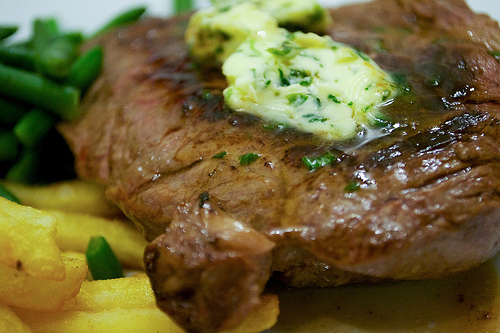
Pan-fried Ribeye Steak with Tarragon Butter

Ribeye steak with tarragon butter

Ingredients:

  • 150g salted butter, softened
  • handful of tarragon leaves, chopped
  • pinch of salt
  • 1 Rib-eye steak
  • olive oil

Method:

  1. Lay out a square of cling film, about the size of an A4 piece of paper. On it, dab on the butter and sprinkle over the salt and the chopped tarragon. Using the cling film, press and knead the herbs into the butter until they are pretty much combined evenly through the butter. Push the butter into a small log-shape and wrap in the cling film. You can chill this for an hours or so until firm before using, or pop it in the freezer (as I do) and slice chunks off just before you put your steaks in the pan. 
  2. To cook the steak, rub the steak with a little olive oil and heat up a dry, non-stick frying pan. Lay the steak into the hot, dry pan and cook for 5-6 minutes on each side. This will give you medium-rare steak. 
  3. Rest the meat in a warm place for at least 5-10 minutes and then arrange the slices of herbed butter over the top. 
Other uses for tarragon butter: 
  • Try arranging slices of the butter over roasted chicken portions
  • Toss through fish or chicken pasta dishes
  • Add to parcels of fish before putting into the oven


Tuesday, 27 November 2012

The Science Behind Your Calming Cup of Tea

A lady, out shopping, slips on some ice in the street – the nearest shop-keeper brings her out a cup of tea. Your friend comes round, red-eyed and visibly upset. What do you do? You flick the kettle on. We’ve come to view tea as something soothing – a fragrant hot drink that can either pick you up if you’re feeling tired or calm your nerves if you’re anxious. But it seems there’s more to it than we think. The science behind our cuppa reveals that a cup of tea really could be beneficial to our health and our minds…

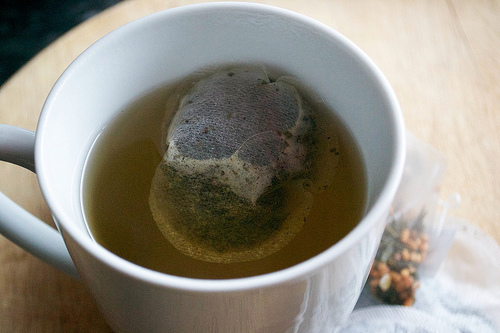
 cup of green tea

Drinking green tea helps the brain release the feel-good neurotransmitter dopamine
A study published in 2009 found that camomile tea actually helped calm people. The research, published in the Journal of Clinical Pharmapsychology, found that subjects that consumed camomile tea  over an eight-week period showed less anxiety than those who didn’t. Green tea also contains L-theanin, which is thought to release dopamine into the brain and research found that you’ll enter a more relaxed state 30-40 minutes after drinking it. (Source: Livestrong)

Black tea could help fight stress… and be good for your blood
Much is usually made of green tea, camomile tea and Rooibos tea, for example, but we don’t usually hear about the benefits of good old-fashioned black tea. However, research conducted by University College London in 2010 changed all that. They found that when they observed tea drinkers vs a placebo group (the placebo drink had no real tea in it at all), and subjected them to stress, the tea drinkers returned to their calmer, pre-stress levels quicker. They also found that blood platelet activation (responsible for the risk of blood clots and heart attacks) was lower in the tea drinking group. Mine’s milk, no sugar, please…

Three cups of tea a day could reduce your chances of having a stroke
According to research by the UCLA, at least three cups of either green or black tea drunk every day could reduce your risk of having a stroke. Tea drinkers were 21% less likely to experience a stroke than those who didn’t drink tea, and the risk was reduced even further (another 21%) as tea consumption went up.   

I’m off to put the kettle on…

What do you think about this? Do you feel calmer after a cup of tea? Let me know in the comments below…


Wednesday, 21 November 2012

Raspberry and Lemon Ricotta Muffins


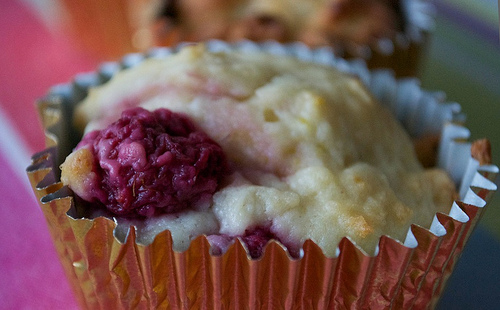
After topping a pizza with ricotta earlier in the week (it’s good), I had half a tub left in the fridge. Keen not to waste it, I decided to do a quick search on the internet for ways to use up leftover ricotta. And then I found these muffins, on the Food Network site. Why I’d never thought of stirring this milky-white cheese into muffins before is beyond me – it works so well with the tart raspberries I substituted for the blueberries. I have adjusted the quantities of sugar, vanilla and added the lemon and so these make a great breakfast muffin without being too sweet. Milky white inside, bouncy and stained with deep-pink raspberries: leftovers never tasted so good. 


raspberry lemon ricotta muffin by joeybinx77


Raspberry and Lemon Ricotta Muffins
Makes 12
Ingredients:

  • 100g butter
  • 180g ricotta cheese, brought to room temperature
  • 2 eggs
  • 1 tsp vanilla extract
  • 120g caster sugar
  • 300g plain flour
  • 2 tsp baking powder
  • good pinch of sea salt
  • zest of 1 lemon
  • Splash of milk
  • large handful raspberries, frozen if you have them
Method:
  1. Preheat your oven to 200ºC and line a muffin tin with paper baking cups.
  2. Melt the butter and leave to cool. Beat the ricotta, eggs and vanilla in a bowl until smooth and creamy. 
  3. In a separate, larger bowl, combine the sugar, flour, baking powder, salt and lemon zest and give it a quick whisk with a fork. 
  4. Pour the ricotta and egg mixture into the dry ingredients and stir to combine. The mixture will be thick and doughy so if you really need to, add a splash of milk to loosen things up a little bit (but not too much – a tablespoonful will be enough). 
  5. Tumble in the raspberries, give it one stir and divide the mixture between the muffin cases, making sure each case gets a raspberry or two. 
  6. Bake in the oven for 25 minutes. They’ll be golden on top and bouncy when gently pushed. Eat warm and preferably on the day you make them. 
What are your favourite ricotta recipes? 

Bubble Tea at Formosan Tea Bar, Oxford

Blink and you’ll miss the entrance to the alleyway where Formosan Tea Bar is hidden. So next time you’re walking up Oxford’s High Street keep them peeled so you don’t miss it. I’d heard about Formosan over Twitter and on the internet generally, and decided that as I had never tried bubble tea, this was a good place to start. 

After we ordered, we watched our teas being sweetened, iced and then shook – and then finally sealed with a layer of plastic. A chunky, over-sized straw was popped into the top and off we went to try them out. 


Black tea and green tea bubble tea at Formosan in Oxford

Although the lady at the counter told us that black tea was their best seller, the green tea was tasty, fragrant and really refreshing. The teas were sweet and milky and of course topped (or, rather, bottomed) with a layer of black tapioca balls, which you suck up through the plastic straw. She told us the tapioca itself had no real flavour, it was the flavour of the tea that you went for. And the tapioca was chewy and filling – and not slimey or off-putting at all. 

  One thing you do have to do with bubble tea is ration the quantity of your tea to your tapioca balls. To start with, I started drinking back the tea and then found I had a pile of tapioca balls to chew through at the end. Not the end of the world at all, but just better if you eat them as you go along. I loved bubble tea – it was satisfying and I’d happily go back again, especially on a hot day. In fact, on a hot day I’d make the trip into Oxford especially. 

Have you tried bubble tea? Where do you go for yours? 

Monday, 19 November 2012

Everything in Moderation? Could it be portion sizes, and not fatty foods, that are to blame for growing obesity?

We all love a cheeseburger. Or a wedge of pizza, oozing with stringy mozzarella. But these foods are fattening. When trying to lose weight, we tend to cut out calorific foods completely and switch to veggies, salads and lean cuts of meat as well as fish. Quite often, cravings for our favourite comfort foods could be so much that we ditch the diet completely when the smell of a bacon double cheeseburger becomes too much for us to continue to resist. 

But could it be possible that we can still enjoy all these foods and still be healthy? The people at National Eating Out/In Week think so. The key is in the portion size. They reckon that portion sizes have risen so much over the last few decades that it’s the quantity of the food we’re eating, rather than just the type of food, that’s contributing to rising levels of obesity. Ever struggled to force down a plate of lasagne in a restaurant, eating more than you would at home just because it’s there in front of you and you don’t want to waste it? Then you’re not alone. A recent survey found that 69% of people finished a meal put down in front of them at a restaurant. When customers did leave food, they blamed inflated portion sizes. 

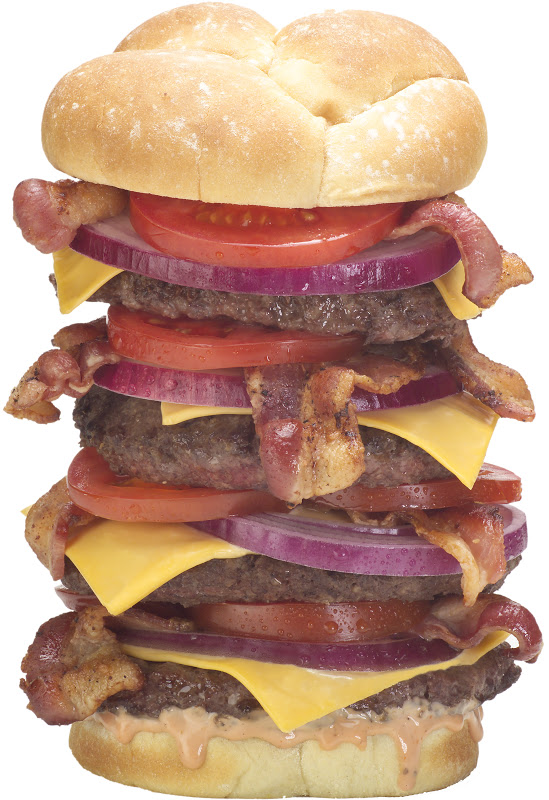
The Quadruple Bypass Burger® at the Heart Attack Grill, USA

It makes you wonder. We’re served an 8oz steak here in the UK at restaurants, even though the recommended amount for us to digest easily is just 4oz. Peter Grove, organiser of National Eating Out Week has also cited research conducted in the US, which found the portion size of a hamburger has risen by 115% and a serving of pasta by 480% in the last 20 years. And the well-known fact about low obesity in France when they regularly eat food laced with butter and cream could, in the end, be down to portion size: research found that meal portions are 25% smaller in France than they found them to be in Philadelphia, USA. 

Peter Grove said in a statement: ‘restaurants should certainly continue to innovate with exciting new tastes and combinations, but why not make a conscious effort to reduce portion sizes? This way, costs are controlled, prices could even be reduced, leading to more numbers served and customers may still  be healthy enough to continue dining with them for a good few more years than might otherwise have been the case. It’s all a question of education.’

But don’t just blame the restaurants. Eager not to be seen as frugal, restaurants are increasing portion sizes, but it’s out of customer demand.  Should we all ask them to serve less food, while reducing prices accordingly (and also reducing waste)? And what about those with heartier appetites? Maybe we should have a system of small or large portions, which we can choose depending on how hungry we are. But doesn’t that make the whole dining out experience a little clinical and uncomfortable? And will we all end up going to the restaurant down the road just because they serve bigger burgers? It’s a tough one and it seems that the restaurants can’t please everyone, all of the time. Or can they? 

What do you think? Are portion sizes served in restaurants skyrocketing out of control? Have you eaten a restaurant or takeaway meal that was just far too large for one person? 


Wednesday, 14 November 2012

A Jellybean Flavour That Sums Up Great Britain

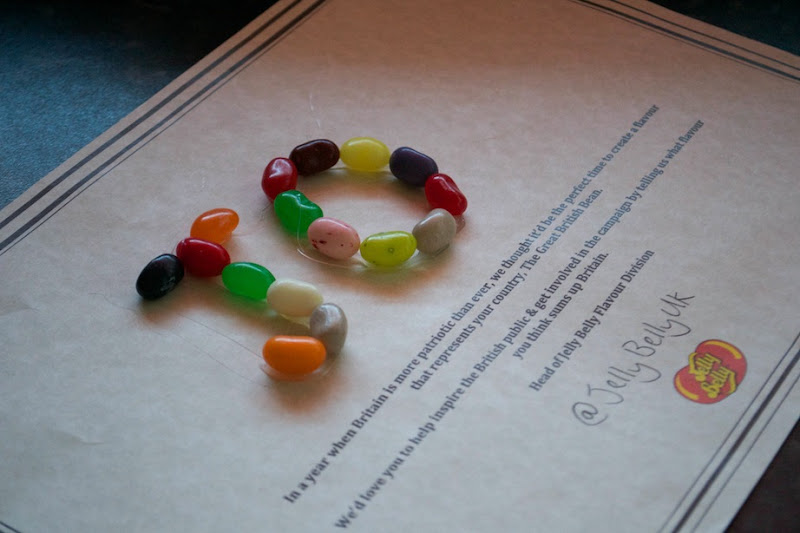
What’s better than seeing your name up in lights? Well, seeing them in jellybeans of course! 


Jelly Belly are currently running a competition for people to decide on the flavour that sums up Great Britain, on their Facebook page. 

They asked me to have a think and come up with an idea for a proper ‘British’-flavoured jellybean and I reckon I’ve got a good one. 

The first flavour that sprung to mind is roast beef and Yorkshire pudding flavour. Or a Chicken Tikka Masala flavour, to represent our national dish. But then I quickly realised that sweet flavours seem to work much better with a jellybean, and I don’t think even I could stomach a fish, chips and mushy pea-flavoured jellybean. 


Jelly Belly beans: could you stomach a fish and chip flavoured jellybean?


So I thought about Eton Mess, with flavours of meringue, cream and ripe strawberries, but it just didn’t seem to hit the spot. Ripe, English pears, too. And then I cracked it. Apple crumble with custard. You could have the tartness of the Bramley apples and the sweet vanilla-scented custard, which would all work so well with the chewiness of the jellybean. Genius! What do you think? 

Share your idea on Jelly Belly’s Facebook page and you might win the chance to travel to California to see your flavoured bean being made. Visit the link here: http://www.facebook.com/jellybellyuk 

Which flavour do you think sums up Great Britain? Do you think it’s possible to choose only one flavour? And get yourself on the Jelly Belly Facebook page to enter!

Tuesday, 13 November 2012

Dining in the Dark at The Living Room, Oxford

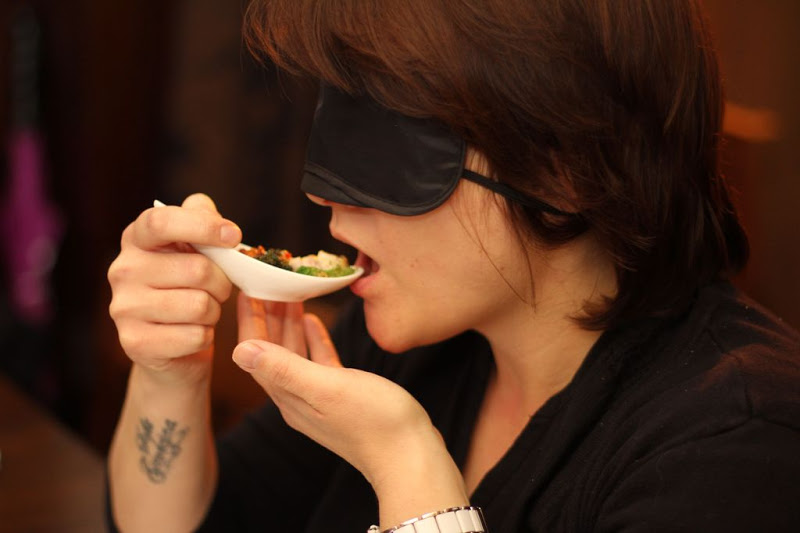
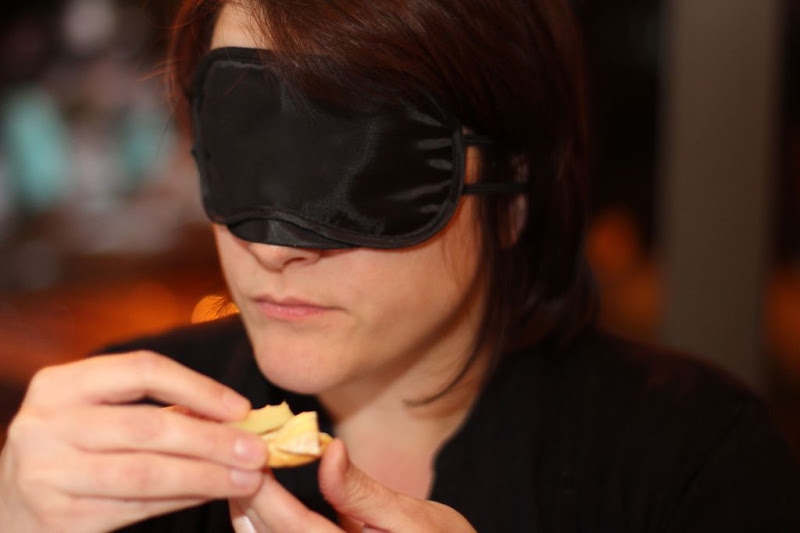
As a blogger, you do get invited to some foodie events over the course of the year. Restaurant reviews, tastings, cooking with chefs. But this was different. For this event, I was blindfolded and given food. The aim was to try and guess the ingredients that were in the food, obviously without the aid of sight. ‘Hmph’, I sniffed – this would be EASY. But it honestly wasn’t.


The Living Room have been running the event at their restaurants all around the country over the last few weeks and at each event, the blogger who identifies the most number of ingredients wins themselves a trophy.

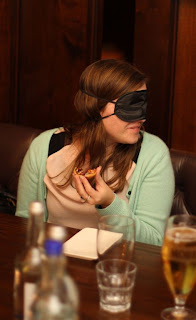
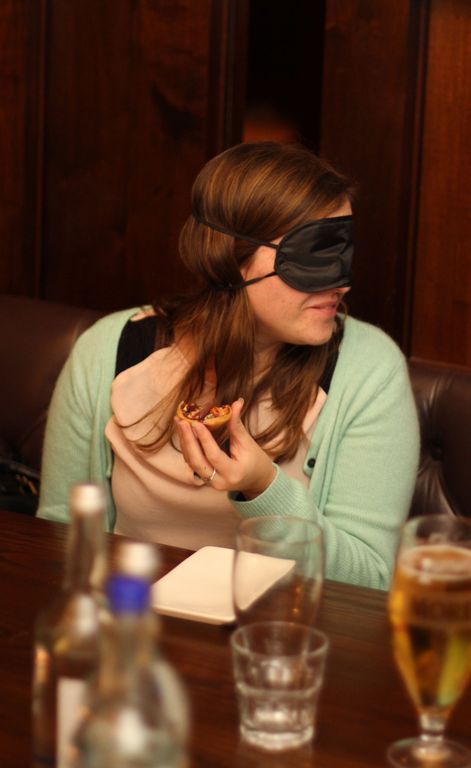
Caroline, of All That I’m Eating

We made a start, slipped on our blindfolds, and the serving began. The first thing I would say is that eating without seeing is really messy (napkins at the ready). The second thing I would say is that it’s much more difficult than you think it’s going to be. I got the walnut in the tart we were given but couldn’t trace the Dolcelatte or the butternut squash that was in there. Caroline (from the blog All That I’m Eating) detected the truffle in the macaroni cheese, but I thought it was some mild blue cheese in there that was the secret ingredient. And although I got the coconut in the creme brulee, I thought it was raspberry in there too, not passionfruit. 


There were real highlights of the menu – one of them was the vegetarian Glamorgan sausage which we later discovered contained Caerphilly cheese and leeks as the main ingredients (I’d lost the plot by then and thought they contained some sort of ale, but they didn’t).  They were delicious – and I’d probably make the trip specially to have them again. Also, the Moroccan lamb on giant couscous was another one we all agreed was tasty. A piece of seabass was served on some coconut and coriander rice, along with a piece of broccoli: the crispy skin on the sea bass cracked as I bit into it – something I’d probably not have noticed so much if I was eating with my eyes open.  It just goes to show how your other senses are exaggerated when you deprive yourself of one of them.

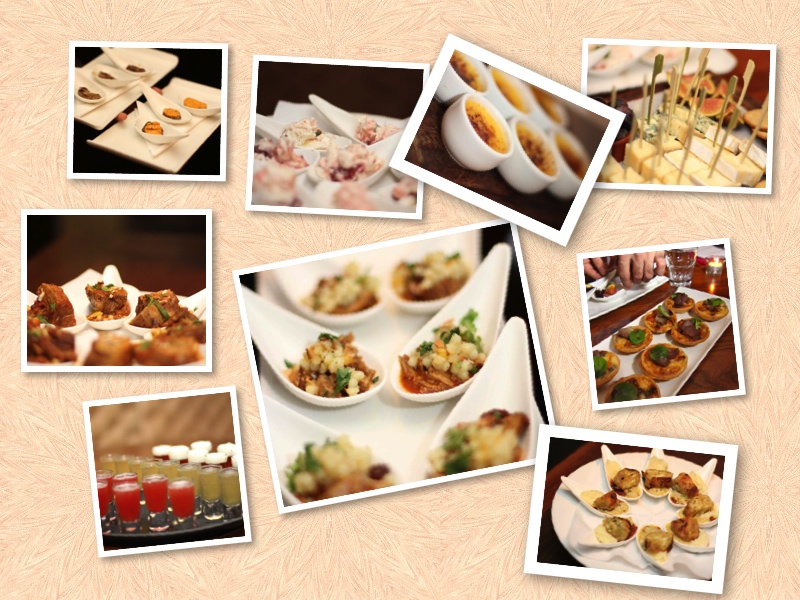
The dishes we tried… we only saw these pictures once we’d got home


The experience was fun, valuable, and showed me just how important sight is when you’re eating. I loved the dishes (especially the vegetarian sausages, the Moroccan lamb and the sea bass) but found the cocktails a bit too sweet, but then I’m not a cocktail person anyway. But if I’m being completely honest, the actual process of eating without seeing anything wasn’t 100% enjoyable, and I think that’s the whole point. As I walked out into the dark evening after the event I couldn’t wait to see the pictures of what we’d been eating, which were emailed over later. You miss the vibrant colours of the food, indicators of what ingredients went in to making it: a frilly coriander leaf, a fleck of red chilli. You miss the grains on a piece of cheese, which tell you it’s going to be crumbly, or the crisp, golden-grey skin of a pan-fried fillet of seabass. I think eating like this is something everyone should try once – you’ll think differently about your food afterwards. I know I do.

I attended the event as a guest of The Living Room Oxford, on New Street near Oxford Castle – a 10-minute walk from the railway station. For more information visit the website or call 01865 260210.


Monday, 12 November 2012

Cheese and Onion Tart

Some people buy shoes, clothes, perfume or music to cheer themselves up. I buy cheese. Probably once every few weeks I’ll go on a cheese splurge and pick up wedges of Cornish Yarg, Aged Red Leicester, Capricorn goat’s cheese and Cropwell Bishop Stilton. We’ll have a cheese and crackers night and then at the end of the week after some sandwiches there will usually be a pile of ends of cheese wedges that need using up. And then I make this tart. 

It’s easy to make, and will feed 6 people, generously. The slices are fairly thin, but as you’d expect, the tart is quite filling and rich. I like to eat this with some greens or a dressed green salad, or skinny fries. 


Cheese and onion tart 
Serves 6-8
Ingredients

For the pastry: 
250g plain flour
pinch of salt
90g butter
30g Trex
4 tbsp ice cold water

For the filling:
1 medium-sized onion, peeled and thinly sliced
olive oil, for frying
250g cheese – for this one I used 100g soft goat’s cheese, 75g Tasty Lancashire and 75g Blue Stilton
150ml double cream
2 eggs

Method

  1. Mix the flour and salt together in a large bowl and then add the cold diced butter and the Trex. Rub with your fingertips until it looks like breadcrumbs and then pour in the iced water. Mix to form a dough, wrap in cling film or drop into a polythene bag and chill in the fridge for 15 minutes, while you get on with the filling. 
  2. Fry the onions in a little olive oil until soft, and then put to one side. 
  3. In a bowl whisk together the eggs, the cream and season lightly with salt and black pepper. 
  4. Take out the pastry and roll it out, using it to line a tart or flan dish. Cover with greaseproof paper and baking beans (or rice) and bake at 160ºC for 15 minutes. Remove the paper and baking beans (careful – they’ll be hot!) and then bake uncovered for another 10 minutes. 
  5. Once the pastry case is golden, break up the cheese and arrange in a thin layer into the tart case. Scatter over the fried, softened onions and then pour in the egg and cream mixture. Slide straight into the oven again and bake for another 35-40 minutes, until the tart filling is set. Best served slightly warm. 
Do you have any tips for using up leftover cheese? 
 

Friday, 9 November 2012

Cocoa Pasta with Vanilla Mascarpone and Raspberries


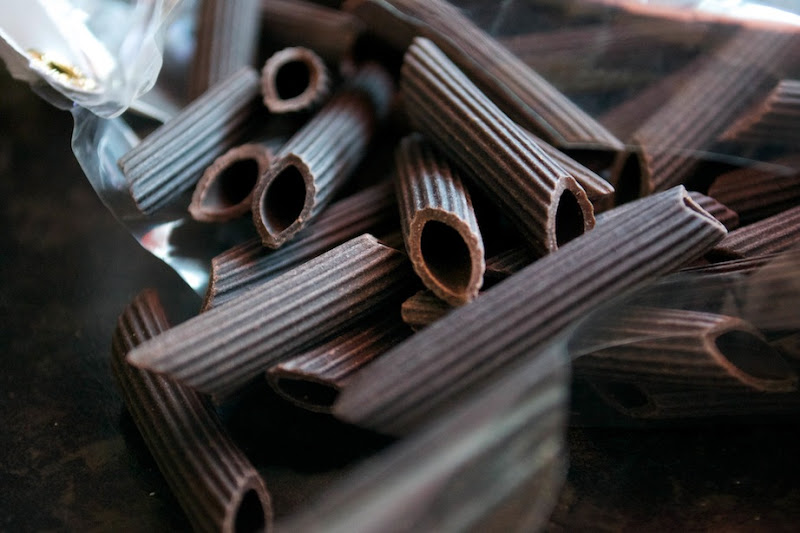
Yeah, I know, it’s a bit weird. Hotel Chocolat’s cocoa penne. I was browsing in my local Hotel Chocolat (and schnaffling up the free samples) when I saw this and knew I had to try it. 

It’s pricey stuff, at £5 for 250g – but for a special occasion it’s kind of cool. The taste of it, once cooked, is more like the flavour of hot chocolate I suppose rather than dark, proper chocolate, and although I’d been told on Twitter by @swcfood that it went well with tomato and chilli sauce, I decided to try something sweet with it. 

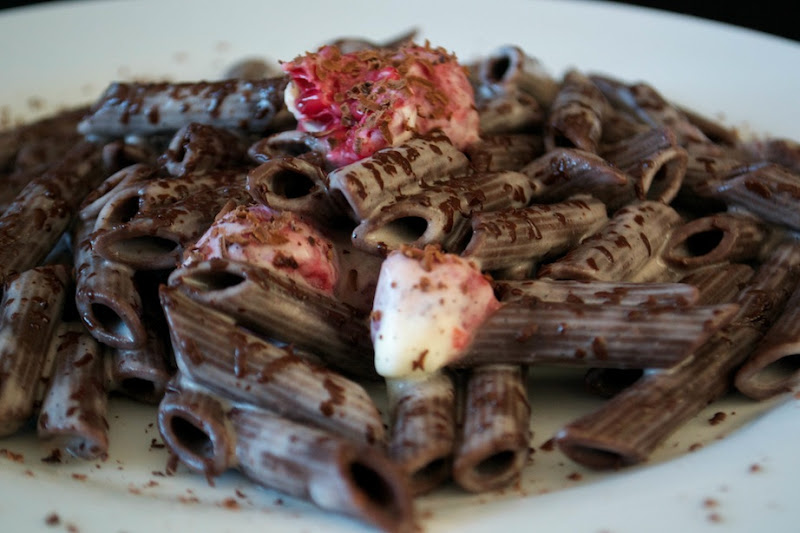
The cocoa pasta is unsweetened, which is worth remembering because the whole dish here doesn’t taste as sweet as you expect it to. The vanilla seeds in the mascarpone lend a musky sweetness, and coat the penne. The raspberries add a tartness to the whole thing, and then I finished off the pasta with a grating of a Parmesan equivalent: dark chocolate. 


Cocoa pasta with vanilla mascarpone and raspberries
Serves 2
Ingredients:
100g cocoa pasta
2 tablespoons mascarpone
the vanilla seeds from half a vanilla pod
4-5 raspberries
dark chocolate, for grating over

Method:
  1. Cook the pasta in boiling water for about 10 minutes, until cooked. 
  2. Meanwhile, combine the mascarpone and vanilla seeds in a bowl until the cheese is evenly freckled, and dump in the raspberries, whole. 
  3. Drain the pasta and immediately toss it in the mascarpone mixture. Serve, with some more dark chocolate grated over the top. 
Check back for more chocolate pasta adventures soon – I’ll try something savoury with it next time…


Have you tried cocoa pasta? What do you think works best with it? What did you think of it? 


Thursday, 8 November 2012

4 Out of 5 People Buy Christmas Food, Even if They Don’t Like It

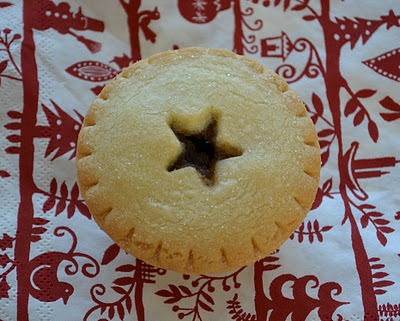
With the shops now packed full of Christmas food (yes, I know it’s only just November) we’re buying up mince pies, stollen and Christmas puds because we love them, right? Well, maybe not. According to a survey carried out this year by oven manufacturer Neff, four out of five people said that they bought Christmas desserts such as Christmas pudding, mince pies and Christmas cake even if they didn’t really like to eat them. It seems that tradition takes over more than we think when we make plans for our Christmas food. 

And, while we’re on the subject, what about turkey? We might crave a slow-cooked lamb shank or some sticky roasted pork belly, but you don’t often hear about anyone craving turkey, at any time other than Christmas. 

Interestingly, the survey also found that the often-ridiculed Brussels sprout is actually our fifth most important ingredient for the Christmas dinner and was even more popular than turkey. 
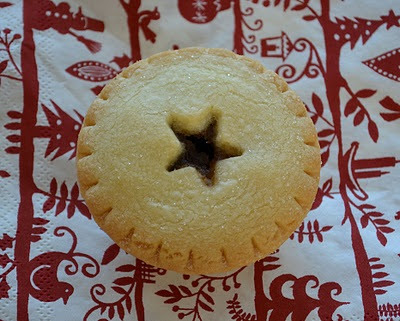

Do you buy mince pies and Christmas pud even if you don’t like to eat them? Four out of five of us do…

Do you buy mince pies at Christmas even if you can’t stand them? And do you all sit down to a roast turkey for tradition’s sake, when you’re really craving slow-cooked lamb or beef? Personally, I mark my traditions in a different way. We send cards, decorate the tree, and go and watch carol services as well as our local town lights being switched on. But in the kitchen, I make food only that the family will like and eat. This was after one Christmas, when I spent months feeding a huge 30cm wide Christmas cake that I later topped with a blanket of royal icing and marzipan, only for my husband and children to come clean and admit they didn’t really like it.  I ate more Christmas cake that year than I’d like to admit. 

I’m not saying that tradition should go out of the window completely – but tweak it so you can actually enjoy and look forward to what you’re eating. Like burgers? Fish and chips? Then why not enjoy them on Christmas Day? I’ve heard of some families that order a Chinese or Indian takeaway on Christmas Eve and then reheat it on the big day. We won’t be having turkey this year – I’ll probably roast a chicken instead. And for pudding, it won’t be Christmas pudding or trifle but a chocolate and coffee cake, with whipped cream.  I’m looking forward to it already. 

What do you think? Do you eat Christmas foods even if you don’t like them? Do you think we should keep to these food traditions in case they die out, or move on with the times instead of slaving in the kitchen all day? Let me know what you think in the comments box below…. 

Wednesday, 7 November 2012

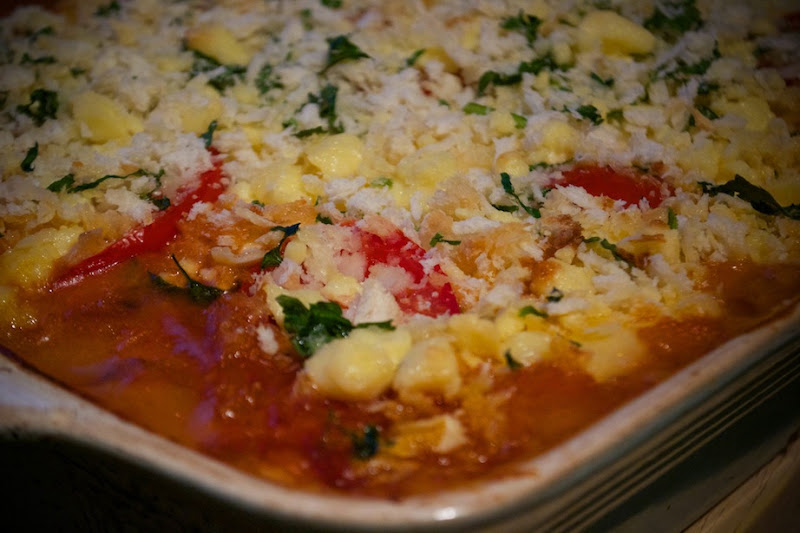
Roasted Vegetable and Cheshire Cheese Bake

Do you know what I hate? I hate when I pick the girls up from school and then after a quick 5-minute chat to find out how their day was, settle them down in front of the telly and then disappear into the kitchen to cook dinner for an hour. What I’d rather do after they get in from school, is walk into the kitchen, slide something into the oven and leave it there to cook for 45 minutes while I help with homework, read their reading books with them and generally just enjoy their company before they go to bed. And for those days, I make this. 

First of all, this is a bit labour intensive, but you can choose when to do it. I like to cook and layer up the bake in the afternoon, after lunch, so I know I have time for a cuppa and then any last minute emails/trips to the shops/housework before I go and get them. I then just leave it on the side to cool down and then slide it into the oven an hour before I want to eat. 


I got the idea for the bake from a Neff cook book that I got at the Cake and Bake Show at Earl’s Court. There’s a recipe in there for a vegetable moussaka, which uses Parmesan and Feta for the sauce. I cast my mind back to my chat with Nigel White, secretary of the British Cheese Board, and he said that Cheshire cheese often makes a good alternative to Feta. And I prefer the nutty flavour of Grana Padano to Parmesan and so used that instead. In short, I switched a few things around. I hope you enjoy the bake, do let me know if you make it. 


Roasted vegetable and Cheshire cheese bake
Serves 6-8 (freeze any leftovers in individual portions and reheat for quick dinners or lunch on a cold day)

Ingredients
For the roasted veggies:
2 medium aubergines, washed and sliced into thinnish rounds
2 red onions, peeled and chopped into 4 wedges each
2 red peppers, washed and each sliced into 8 chunky wedges
3 medium-sized courgettes, washed and sliced into fairly thin rounds
olive oil

For the tomato sauce:
1 red onion, peeled and chopped into small pieces
4 cloves garlic, peeled and roughly chopped
2 x 400g cans chopped tomatoes
1 tsp sugar

For the cheese sauce:
600ml milk
100g plain flour
100g unsalted butter
2 egg yolks
40g Grana Padano, coarsely grated
100g Cheshire Cheese, crumbled

For the breadcrumb topping:
30g Panko breadcrumbs
100g Cheshire cheese, crumbled
Handful fresh flat leaf parsley, chopped roughly
3 medium-sized tomatoes, sliced

Method:

  1. First of all, prepare the vegetables and toss them in a drizzle of olive oil to coat. Roast (you might want to use two trays) in a 220ºC oven for 25 minutes. 
  2. While the veggies are roasting, fry the chopped onion and the garlic in a little olive oil until softened and then pour in the cans of chopped tomatoes and the sugar. Season with salt and pepper and leave to bubble away for about 4-5 minutes. Turn off the heat. 
  3. Now make the cheese sauce. Melt the butter in a large-ish saucepan and tip in the flour. Whisk to make a roux and to break up any lumps. Cook for about 2 minutes. Slosh in the milk, gradually, and whisk to combine, cooking over the heat, until you get a smooth, fairly thick sauce. Turn off the heat. 
  4. Whisk together the egg yolks and pour into the white sauce, whisking quickly so they incorporate into the sauce. Crumble in the Cheshire cheese and the Grana Padano and whisk. Don’t worry if there are some grainy pieces of cheese left in the sauce, but try and whisk out the large lumps. 
  5. Take out the roasted vegetables and arrange half of them into a large roasting dish. Pour half of the tomato sauce over the top and then arrange the rest of the veg over the top. Pour the remaining tomato sauce and smooth over. Next, tip the thick cheese sauce over the bake, spreading it on like a big blanket. Top with the tomato slices. 
  6. Combine the breadcrumbs, parsley and crumble in the remaining 100g Cheshire cheese. Toss to combine and then scatter it all over the top of the bake. At this point you can leave it to cool for cooking later, or if you’re cooking it now, slide into a 190ºC oven for 45 minutes. Serve while hot, with a green salad and some garlic bread. 


Tuesday, 6 November 2012

Heston Creates Super-Sized Full English Breakfast on Channel 4

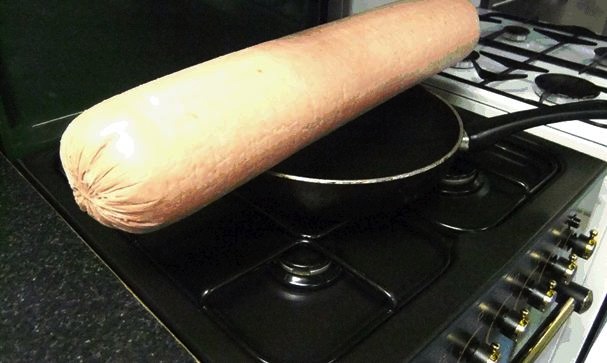
We love a spot of weird and super-sized food here at Comfort Bites, but this really is a monster. Wall’s contacted me to let me know that they have created a huge sausage for Heston’s first programme in the series of Fantastical Foods, which airs on Channel 4 this evening at 9pm.

The sausage (the actual one cooked by Heston in the show is pictured below) measures 24″ long and weighs 6.2kg (the equivalent of just over 6 bags of sugar). 


Heston will cook the sausage on the show, which also features some super-sized cereal and the world’s largest boiled egg.  

We love a good cooked breakfast once in a while, but with this sausage clocking in at 109 times the size of a regular Wall’s sausage, it could feed 54 people….

Impressive, huh? Will you be tuning in?


Monday, 5 November 2012

Parsleyed Lamb Cutlets with Pan Roasted Potatoes

When I saw Nigella on telly cooking lamb cutlets in a frying pan and then dumping some cooked potatoes into the oil left in the pan after the lamb was taken out, I knew I had to try it. But instead of mint, I thought that parsley, with its grassy undertones would work especially well with lamb. And we all loved it. 

One of the things to remember if you want a decent amount of colour on your lamb cutlets, is to leave them alone while they’re in the pan. That means no shifting, pushing or turning them over too soon. You’ll end up with beautiful succulent, caramelised lamb. Also, because you’re not adding any extra oil to the pan, it will look at first as if there’s not enough. Don’t worry, the fat will melt down and you’ll have plenty to toss the potatoes into later. 


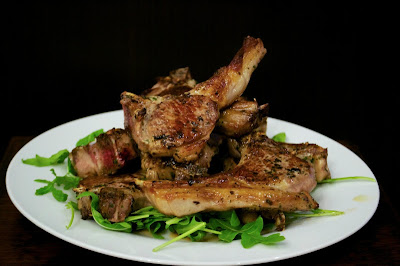
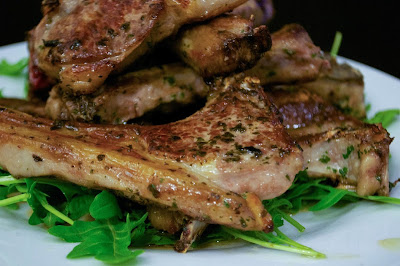
Parsleyed lamb cutlets on rocket leaves

Parsleyed lamb cutlets with pan roasted potatoes
Serves 4
Ingredients
  • 900g (about 8) lamb cutlets
  • small handful fresh flat-leaf parsley, chopped
  • 3-4 tablespoons garlic infused olive oil
  • large handful rocket
  • 250g new potatoes, halved or quartered if large


Method
  1. Arrange the lamb in a large dish and drizzle over the garlic oil and sprinkle over the parsley. Massage it all into the meat and leave for minimum 30 minutes or longer for the lamb to absorb the flavours. If you’re leaving this for longer than about 30 minutes, keep it in the fridge. I usually leave it at room temperature if I’m cooking it within half an hour as the lamb will cook more evenly as well, if it’s not fridge-cold.  
  2. Arrange the rocket on a serving plate and put to one side. 
  3. Put the potatoes on to boil in a pan of salted water, and simmer until they’re just tender. Drain and leave to one side. 
  4. Just before you want to cook the lamb, season the cutlets with a good pinch of sea salt and immediately lay them out in a large, dry non-stick frying pan. Sizzle away on a medium to high heat for about 5 minutes. After they’ve had the first 5 minutes, turn them all over and continue to cook for another 3-4 minutes. This will leave you with lamb that’s medium-well done, so adjust your timings if you want them more or less well done. Once they’re cooked to your liking, tke them out with tongs and arrange them on top of the rocket leaves and leave them to rest. 
  5. Next, get on with the potatoes. Keep the pan on a highish heat and dump the cooked potatoes into the pan you cooked the lamb in, along with a couple of unpeeled cloves of garlic. Leave these to sizzle away and turn golden – they’ll absorb all the lamby flavours from the oil in the pan – and sprinkle in a little sea salt. 
  6. Serve the lamb along with the potatoes and some greens – a perfect and very quick dinner for 4. 

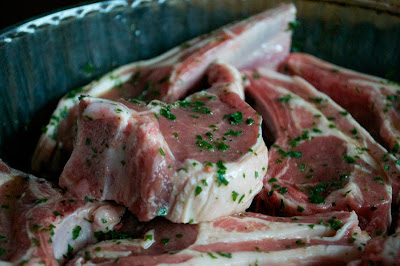
The raw lamb cutlets, marinating in garlic oil and parsley


New potatoes cooked in lamb juices… mmmmm crispy…

LinkWithin

Related Posts Plugin for WordPress, Blogger...