Friday, 30 August 2013

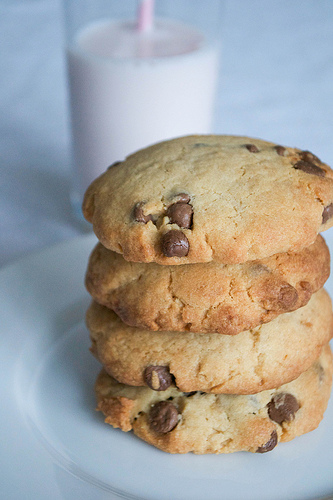
Classic Giant Chocolate Chip Cookies

Ah, classic chocolate chip cookies… 


classic chocolate chip cookies

We all need this from time to time – soft cookies with a hint of vanilla, and little bursts of chocolate. These are larger than the average cookie, and have a mixture of dark brown muscovado and caster sugars so you get that slight toffee flavour. I’ve adapted the recipe from one on the Betty Crocker website, to reduce the sugar and add a few tweaks to the method.

Even better, you can make the cookie dough the night before, cover with cling film and store in the fridge. When you get up, heat the oven, divide the mixture onto a baking tray and bake for breakfast cookies. There’s no better alarm than the smell of these bad boys baking. And somehow chilling the dough makes a better cookie – I baked two batches, one from dough that’s been chilled and the other from dough baked from room temperature and everyone preferred the chilled recipe best. 

Eaten just slightly warm from the oven, with a frosty glass of milkshake or a dark, strong coffee, we love them. I hope you like them too.  

Classic Giant Choc Chip Cookies
Makes 12. 
Ingredients
100g caster sugar
70g dark brown muscovado sugar
220g very soft (but not melted) butter
1 tsp vanilla extract
1 egg
280g plain flour
1 tsp baking powder
good pinch salt
50g plain or milk chocolate chips

Method
The day before (or at least 3-4 hours) before you want to bake the cookies, mix the sugars into the soft butter and whip until pale and fluffy. Add all the other ingredients except the chocolate chips and mix well to form a light toffee-coloured, stiff dough. Stir in the chocolate chips and then cover with cling film and place in the fridge. 

Once the dough is suitably chilled (I make it the night before), heat your oven up to 200ºC and line a couple of baking trays with greaseproof paper. Give cold cookie mixture a bit of a stir if it needs it, and divide into 12. Place each ball of cookie dough a distance apart from the one next to it onto the tray and flatten slightly (only slightly) with the palm of your hand.

Bake for 10-12 minutes – 8-10 if you like them soft and chewy. Just let them cool for a bit on the baking tray after you’ve taken them out, before scooping off and finishing their cooling on a wire rack. 


Thursday, 29 August 2013

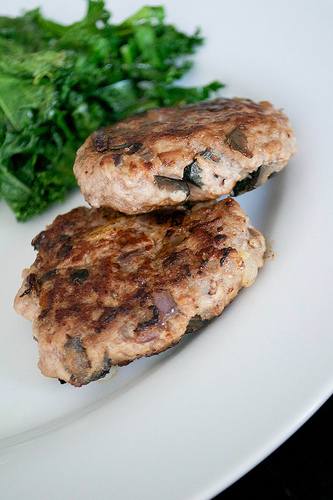
Lamb, Red Onion and Olive Burgers

I’ve been trying out a Paleo diet for the last couple of weeks, in an attempt to try and get various health problems under control. So far, it’s going brilliantly – once you get used to not adding breadcrumbs and flour to everything you cook. 

Like burgers. I’ve been eating quite a lot of burgers (without the bun).

These ones have a real savoury flavour, helped along by the olives and red onion – perfect partners for the lamb. I love them, and they’re suitable too for anyone following the Paleo or Auto Immune Protocol diets, or anyone really who likes lamb. 


paleo lamb olive and red onion burgers

Lamb, Red Onion and Olive Burgers (Paleo and Auto Immune Protocol-Friendly)
Makes 8 smallish burgers
Ingredients
500g organic lamb mince
2 fat cloves garlic, chopped
1 small red onion, peeled and finely chopped
9 black pitted olives, roughly chopped into small pieces
salt and black pepper
1tsp olive oil (or solid fat if you’re on Paleo/AIP diets), for frying

Method
Heat the oil in a non-stick pan and gently fry the garlic and red onion until just softened. Set to one side to cool down and then tip into a bowl with the lamb mince , the chopped olives and a good pinch of salt and black pepper. Divide the mixture into 8, and form into little burger-shaped patties. 

You should have a slick of oil in the pan from frying the onions and garlic, so heat the pan up again and fry the lamb patties (in batches) for 3-4 minutes on each side, until cooked through and browned on the outside. Serve hot, with some freshly cooked greens, or if diet allows, some hummus, salad and pitta breads. 

Tuesday, 27 August 2013

6 Myths About Food in Argentina

As you know, in March this year I went to Argentina for the first time. Nothing has inspired me so much in my cooking as that trip – and it might sound cheesy but it’s also changed the way I live my life, since I got back. Everything’s slower there, a bit less hassle and all done with lots more hugs, and kisses on the cheek (always nice).

But there are quite a few misconceptions about Argentinian food, and I’d like to set the record straight. Here are six food myths about Argentina that always seem to be doing the rounds…

They celebrate cinco de mayo
I saw some recipes doing the rounds featuring some of Argentina’s most famous creations (chimichurri salsa, asado, etc) to mark Cinco de Mayo. And I was confused. They don’t celebrate cinco de mayo in Argentina. There’s nothing wrong with using any of it in a recipe to mark any occasion (any excuse for the stuff is good if you ask me), but it’s a bit like cooking roast beef for Burn’s Night, or celebrating St George’s Day with a haggis. That being said, Brazil do celebrate Cinco de Mayo and they do have their own version of dulce de leche, called doce de leite. In Mexico it’s called cajeta, but don’t call it that in Argentina (it’s a rude word there!).

The food is spicy
I have a little bee in my bonnet about how everyone seems to think that Argentinian food is somehow packed with chillies. They do use aji molido (chilli powder) but in very small amounts, as a seasoning, rather than a feature of the dish. Argentines love their food to have flavour, but not so the chilli kick overtakes everything and you spend the rest of the meal gulping down iced water. While I was over there, I got absolutely addicted to chorizo sausage (a coarse pork sausage) and was thrilled to track down an online butcher that claimed to sell them in the UK. But when my order came, we could hardly finish them – they were too fiery, with chopped red chilli – and its seeds – inside. And if you’re dished up a red hot and spicy chimichurri salsa it might be the chef’s interpretation of the sauce, but it’s not real, traditional chimichurri.

They eat their steaks rare
If you go to Argentina you’ll eat a lot of beef. But it’ll be cooked medium – just blushing pink as you cut into it – or completely well done. They don’t like their steaks bloody, so if you’re eating at a restaurant and want your steak cooked rare, ask especially. You need to ask for it ‘bien jugoso’ (pronounced ‘bee-en hoo-goss-oh’). 
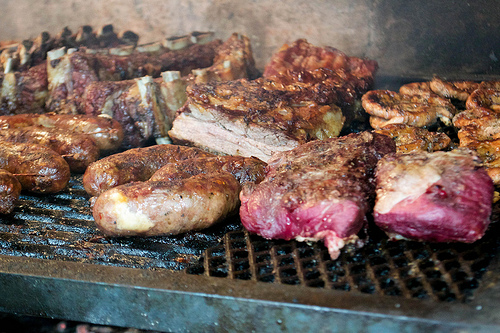

asado tio ruben
Corned beef? I don’t think so.

They eat lots of corned beef
My husband gets quite a bit of stick about corned beef here in the UK – it seems a lot of people we know think Argentinians are wolfing down the stuff every chance they can. It’s true that South American countries do export quite a bit of corned beef. But most people I spoke to when I was in Argentina didn’t even know what it was, and if they did, they certainly didn’t eat it very often at all. Put it this way: if you could buy 2kgs of prime steak (bife de chorizo) for the equivalent of £7, would you eat the tinned stuff? Didn’t think so.

They don’t eat many vegetables


squash tart

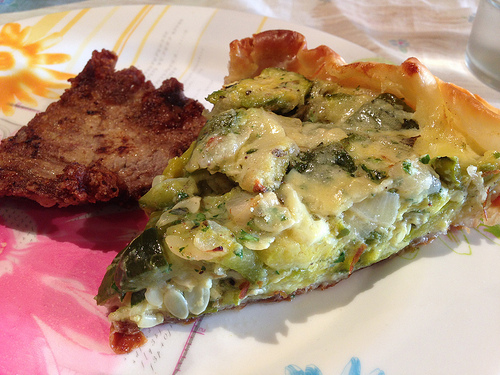
When my mother in law came to stay with us a few years ago, she cooked a few times. And she never served vegetables with any of her meals. And I thought that’s how they ate in Argentina. And then I went there and found out it was just my mother in law. Veggies are served at every meal, but not like we’d dish up carrots and peas alongside a pie. They make tarts with green squash and sweet red peppers, put spinach in their pasta and whip up creative and delicious Argentinian salads. In winter, veggies are cooked in stews. It’s more a case of putting the veggies in something than dishing it up on the side, but they’re still there.

They drink lots of wine


fernet

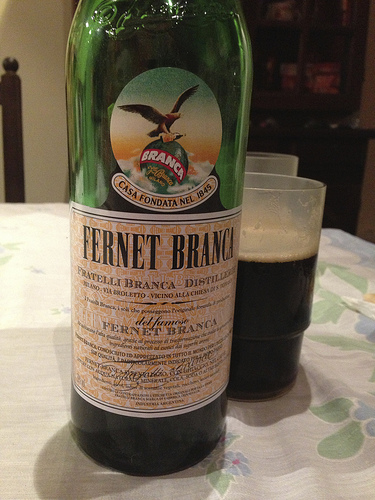
Just because Argentina has, quite rightly, become a huge exporter of some gorgeous wines, there’s a bit of a misconception that they all drink a lot of it. I went to a lot of family gatherings, parties and meals at restaurants there, and although there was wine on offer at a few of them, I noticed most people stuck to Coca Cola, lemonade or soda water flavoured with Terma, a refreshing squash made from citrus fruit and herbs. If they were drinking alcohol it was ice-cold beer, ánana fizz (pineapple cider) or a small glass of Fernet, a spirit with a slight licorice flavour, often served with Coca Cola. Argentines will have a little glass of wine with a meal, as a treat, but they’re certainly not knocking it back as some people think. Alcohol isn’t even served at football games – at the San Lorenzo stadium near Buenos Aires they served either coffee or cola.


Did any of this surprise you? What do you think about Argentine food?

Monday, 26 August 2013

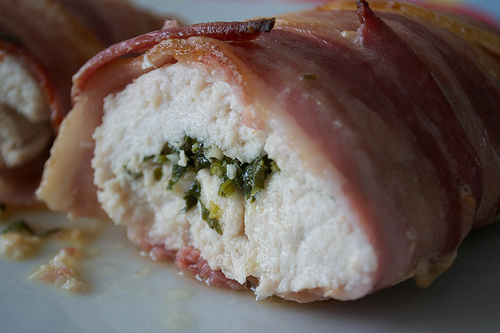
Bacon-Wrapped Chimichurri-Stuffed Chicken Breast

Argentinian food seems to have taken off big in the last few months, especially. You see chimichurri (in all its variations) in UK restaurants, served atop a slab of medium-rare beef, still sizzling from the grill. But while I was over there, I found it more commonly served with chicken. 

When I last made a batch of chimichurri, I inhaled the green, pungent mixture and chicken was all I could think about. My sister in law in Buenos Aires roasts chicken portions drizzled with oil and then scatters chopped garlic and parsley over the top just before serving. And so I made this, with the addition of the salty, smoky bacon which protects the chicken while it’s cooking. Best served with chips or a salad.  


bacon wrapped chimichurri stuffed chicken breasts

Bacon-Wrapped Chimichurri-Stuffed Chicken Breast
Serves 4
Ingredients
4 free-range chicken breasts
18 rashers of smoked, streaky bacon
4 teaspoons freshly made chimichurri salsa

(for AIP, just make the chimichurri without the paprika or black pepper in the recipe above – you’ll still get the pungent main chimichurri flavour)

Method
Get your oven on to 200ºC. 

If the chicken breast still has the small strip of fillet attached, gently remove it. Then, with a sharp knife, make a cut along the side of the breast, being careful not to cut all the way through to the other side. Make the cut along the length of the breast, so you taste the chimichurri all the way through the chicken portion. 

Once you’ve cut a pocket into the chicken, dab one teaspoonful of chimichurri onto each breast (being careful not to touch the chicken with the spoon and then stick it back in the sauce if you’re saving more sauce for later). With your fingers, smear the chimichurri along the whole of the breast and then close it up, pushing the fillet in to help seal the gap, if you can. 

Gently wrap with the bacon and place on a shallow roasting tray – it helps if you make sure the loose ends of the bacon are underneath the breast so it doesn’t unravel while cooking. 

Cook for 15 minutes and rest for 5. Cut into the chicken to make sure it’s cooked – if not, put them back in for a little longer until the chicken is completely cooked through. Serve hot.


Friday, 9 August 2013

A Short Blogging Break

Just a quick update to let you all know I’ll be taking a short blogging break for health reasons – but will be back soon with more posts and recipes… Even though I’m not 100%, I bet I won’t stop thinking (and talking) about food!!

Please feel free to check out my recipes so far, using the search bar, previous posts or ‘what are you craving’ tab to the right…

Catch you soon,
Jo
xx

Wednesday, 7 August 2013

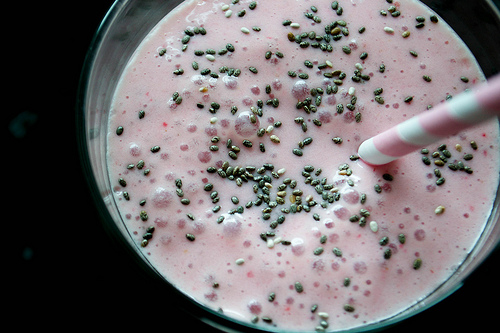
Raspberry and Chia Smoothie Milkshake

Is it a smoothie or a milkshake? I can’t really decide, so I’ve named it both. 


raspberry chia milk smoothie

I’ve recently been dabbling with adding chia seeds to my smoothies – they’re expensive but the pack will last you ages – and they’re full of protein and other good things like omega-3s and fibre. The only thing to remember is that once you add them to liquid they swell up and the outside goes jelly-like (chia seeds can be soaked in water and then used as a substitute for egg whites for exactly this reason). You don’t notice this in the smoothie, by the way.

This ‘smoothie milkshake’ gives you that protein fix from the milk and the chia seeds, along with a boost of Omega-3s, while the natural yoghurt tops up your tum with those ‘friendly’ bacteria. The raspberries give flavour, colour and of course digestion-friendly insoluble fibre. 

Feel free to use almond milk instead of cow’s milk, to make this smoothie vegan, elimination and paleo diet-friendly, if you want to… 

I hope you like it!

Raspberry and Chia Smoothie Milkshake
Makes 1
Ingredients
200ml semi-skimmed milk (or almond milk, if you prefer)
half a frozen banana (no skin)
a handful of frozen raspberries
1 tbsp plain, natural yoghurt
maple syrup, to taste (start with about half a teaspoon and see how you go)
2 pinches (about a quarter of a teaspoon) of Chia Seeds

Method
In a jug, blend together the milk, banana, raspberries and yoghurt until smooth. Trickle in the maple syrup and add a pinch of the chia seeds. Blitz again. Serve, with a small pinch of chia seeds sprinkled on top of the smoothie. Drink straight away.


Tuesday, 6 August 2013

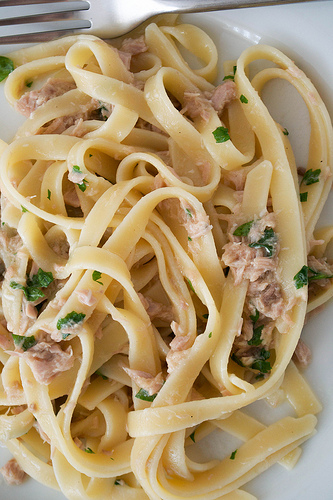
Quick (and Cheap) Tuna and Lemon Pasta…

A few weeks ago, we tried the tuna spaghetti dish in Nigellissima, but no one in our family liked it. My usually tuna-loving 8-year old left most of hers, saying it was ‘too spicy’, while my husband reluctantly ate it and said it was just ‘OK’. The 5-year old refused to eat any at all. 

Being drawn to the recipe for its handy cheapness (tinned tuna, lemon, dried pasta) I couldn’t let it go. So, after a few attempts I made this one, which finally got the family’s seal of approval. I’ve taken out the garlic, chilli and spring onions – they were just too punchy for the children, mixed in raw. The lemon and tuna is a great combination, and I know cheese and fish is a bit of a faux pas but the Pecorino works so well, giving a slight creaminess to the flavour of the dish. (I don’t adhere to that fish and cheese rule anyway, as a long-time fan of tuna and cheese toasted sandwiches). 

Anyway, as long as you have pasta and tinned tuna in the cupboard, a lemon in the fruit bowl and some olive oil on the side, you’ll be able to make this – it’s a much softer version of the original Nigella recipe – just be sure to grind in some black pepper or toss in some rocket leaves as per the original, if you like. 


tuna and lemon pasta

Tuna and Lemon Pasta
Serves 2. 
Ingredients
200g dried tagliatelle, or pasta shape of your choice (something big and chunky will work well here, like pappardelle, fusilli or rigatoni). 
juice of 1 lemon
160g tin tuna in olive oil or sunflower oil
1 tsp chopped fresh flat-leaf parsley
2 tbsp Pecorino, grated finely (plus more to serve, if you like)
Good glug (abot 3-4 tablespoons) extra virgin olive oil
black pepper

Method
Bring a pan of slightly salted water to the boil and cook the pasta until just cooked. 
While the pasta’s cooking, drain the tuna and tip it into a large bowl. Drizzle in the olive oil and add the lemon juice, parsley, Pecorino and olive oil. Season well with black pepper (don’t worry about salt – the pasta water and Pecorino will be salty enough). 

Once the pasta is cooked, remove it with tongs into the waiting tuna mixture, letting the starchy water that clings to it follow too. Toss together, adding a little more pasta water if you want a looser ‘sauce’. Serve hot, with extra Pecorino grated over the top, if you like. 

What are your favourite quick and cheap pasta dishes? 

Monday, 5 August 2013

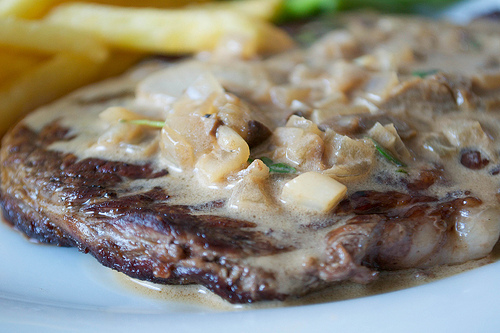
Rib-Eye Steak with Marsala and Porcini Mushroom Sauce

This is the kind of dish you want to cook for a special occasion – an anniversary, birthday or just because you feel like eating something indulgent. I buy my porcini mushrooms ready to eat (from the Merchant Gourmet range) but use dried if that’s what you have – just soak them before you start the recipe. 

I’ve also used rib-eye steak (my favourite) but if I was making it again I’d choose a less fatty cut, like a fillet or even rump steak – just because you already have the creaminess of the sauce going on in there already. 


steak with porcini and marsala sauce

Steak with Marsala and Porcini Mushroom Sauce
Serves 4
Ingredients
4 steaks of your choice
1 tbsp olive oil
salt and black pepper
1 very small onion, chopped finely
4 porcini mushrooms, ready to cook
100ml Marsala
1 heaped tbsp creme fraiche
couple of sprigs of thyme

Method
Heat a frying pan and rub your steaks with a little olive oil. Season and cook in the dry pan until cooked to your liking. Transfer to a plate and cover with foil, while you get on with the sauce. 

To make the sauce, trickle in a little more olive oil into the pan if it needs it and then fry the onion gently until softened. Scrape up any juices left by the steak, and then chop the porcini mushrooms and add these in too. Pour in the Marsala and turn the heat up, letting it bubble away for a couple of minutes. Turn the heat down and stir in the creme fraiche and the leaves from the sprigs of thyme. Check the plate with the steaks and pour any juices left behind while they were resting into the sauce. Taste and season with salt and pepper and serve poured over the top of the cooked steaks. 

Friday, 2 August 2013

Quinoa and Goat’s Cheese Fritters

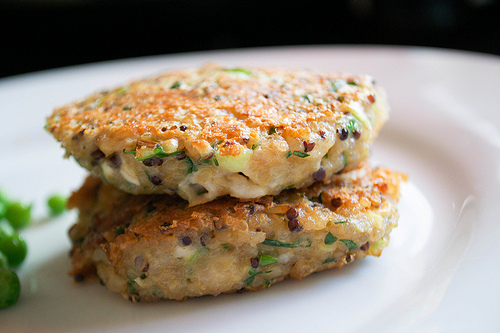
Having had half a packet of the Quinola Mothergrain red and pearl quinoa left over, I decided to have a go at making fritters with them. And boy, were they good. 

My eight-year old asked for seconds, although it took a while for my five-year old to relax (the little red quinoa pieces signalling to her that this dinner was far too wholesome to be giving in that easily). But she ate them, and I can’t wait to make them again. They’re cheesy too – because of the goat’s cheese and an extra spoonful of Pecorino to give it that rounded flavour. They take just a few minutes to make, so they’re definitely one for when time is tight. 


quinoa and goats cheese fritters

You can use quinoa that comes in a packet ready-cooked, or just cook your own and leave to cool. I hope you like them. 

Quinoa and Goat’s Cheese Fritters
Makes 6-7 fritters
Ingredients
100g goat’s cheese
140g cooked quinoa (I used Mothergrain Quinola Red and Pearl)
1 heaped tablespoon (about 10g) Pecorino cheese, finely grated
small handful freshly chopped parsley
1 heaped tablespoon plain flour
1 spring onion, washed and chopped finely
1 egg, beaten
pepper, to season

Method
Chop or mash the goat’s cheese (depending on the consistency) and place in a large bowl with the quinoa, Pecorino, parsley, flour and the spring onion. Stir to mix well, and then pour in the beaten egg, giving it another stir to combine and a grinding of black pepper. 

Heat a couple of tablespoons of olive oil in a non-stick frying pan and pick up a heaped dessert spoon of the mixture, forming it into a disc. Repeat with the rest of the fritters and fry for 3-4 minutes per side, being careful not to crowd the pan (cook them in batches if you have to). 

These are great with a green salad or veggies and I reckon they’d make a delicious breakfast too, with baked beans, spinach and mushrooms.  

What do you think? Fancy giving these a try? 

LinkWithin

Related Posts Plugin for WordPress, Blogger...