Monday, 30 March 2015

AIP Mutton and Spinach Curry

A lot of the time, people don’t often cook with mutton. 


But it’s actually really tasty. 

You get all the flavour of lamb but it’s even richer and more mellow than that. And although many people think it’s going to be a tough, chewy meat and difficult to cook, it’s not. 


This curry is AIP-compliant, meaning there are no seeds, nightshade spices or tomatoes in this dish, and you can enjoy it even if you’re on the initial, strict part of the autoimmune protocol. It’s also paleo and dairy, nut and gluten-free. The mutton is cooked in the slow cooker, although if you wanted to cook it in the oven go for about 2-3 hours on a low (something like gas mark 2/160ºC) heat, in a lidded pot. Likewise, if you wanted to cook this with diced lamb or goat, then go ahead.


I ate my curry with a little white rice (not AIP-compliant) but you could eat it on its own or cook up some veggies – or make an AIP-compliant pitta bread to mop up all the delicious sauce. I always love to pile a handful of fresh coriander leaves on top of mine, too.

AIP Mutton and Spinach Curry
Serves 4
Ingredients
2 tbsp coconut oil, lard or ghee
1 white onion, peeled and chopped
2 garlic cloves, peeled and chopped roughly
thumb-sized piece of ginger, peeled and chopped
pinch of salt
400g mutton, diced (you could use lamb or goat, instead, if that’s what you have handy)
1 tsp turmeric
large handful (about 100g) fresh spinach leaves
3 heaped tablespoons coconut yoghurt (I use Co-Yo)
1 red onion, peeled and sliced
Coriander leaves, to serve

Method
Melt 1 tablespoon of the coconut oil in a large frying pan and fry the onion until it’s quite well-browned. I usually leave mine until each piece is tinged golden-brown at the edges. Throw in the garlic and ginger, followed by a pinch of salt and stir-fry for a minute or so until it’s aromatic. 

Add the mutton pieces and stir so that the meat gets evenly browned. Add the turmeric and the spinach leaves. Once the leaves have wilted down, stir in 2 tablespoons of the coconut yoghurt. Add a splash of water and transfer either to the crockpot of your slow cooker (cook on high for 3 hours) or into a casserole dish with a lid (cook in the oven for 2-3 hours on low). 

Just before serving (take a look at the mutton and squish a piece with the back of a spoon – it’ll be meltingly tender) fry the onion slices in the remaining tablespoon of coconut oil until just golden. Taste the curry and adjust for seasoning, adding more salt and another spoonful of coconut yoghurt or a splash more water if needed and stir through. Serve with the onion rings scattered over the top and a good handful of the coriander leaves. 


Wednesday, 25 March 2015

How Modern Living Has Affected Our Gut Microbiome

You’re out shopping for handwash. You scour the shelves. What do you choose? Almost certainly, you’ll see antibacterial hand wash on display somewhere. But it’s not just handwash that we use to kill bacteria living on our skin – there’s travel-sized antibacterial spray, antibacterial cleaning products, facial cleansers and wipes and now antibacterial washing powder.

If you judged from our shopping habits, you might think we’re a population scared of bacteria. But not all bacteria is bad, is it?

The short answer is no. No it isn’t.

We actually rely on trillions of microbes every single day just to complete basic bodily needs: digesting our food, keeping infections out of our bodies and maintaining healthy skin. Bacterial cells actually outnumber our own human cells 10 to 1. You are 10% human and 90% microbes. That’s a LOT of microscopic bugs that we’re carrying around with us. The human microbiome is a whole new (and exciting) area of research and scientists think that an imbalance in these good bacteria could be responsible for the onset of autoimmune diseases, obesity, personality and even mental disorders. In short, we need to look after these bugs, not kill them off.


We need to look after the good bacteria in the gut
Image courtesy of Ohmega1982 at FreeDigitalPhotos.net

So how is modern life treating them? Well, while antibacterial sprays and handwash are important (when there’s an infection in the house, or in hospitals where there’s a risk of cross-contamination of serious disease) I’m not so sure they should be an every day thing at home. Here’s why…  

Antibiotics
When I was a child, doctors prescribed antibiotics at the merest hint of an infection. I remember during my first pregnancy nearly ten years ago, the doctor printed off a prescription for some ‘just in case’. That wouldn’t happen now. Medical professionals have acknowledged that antibiotic medicines, while very important to help us see off serious infections, also see off many of the good bacteria that are only doing good things. Now, doctors are likely to assess whether your body can fight off the infection by itself first, before prescribing you with antibiotics. Studies have shown that when exposed to antibiotic treatment, the gut microbiome suffers a big hit in microbial diversity- but does recover after a period of time. However a 2012 Spanish study noted that: “The results demonstrate that ABs (antibiotics) targeting specific pathogenic infections and diseases may alter gut microbial ecology and interactions with host metabolism at a much higher level than previously assumed.” Being prescribed some antibiotic treatment? Eat lots of vegetables and probiotics like raw sauerkraut to help them replenish.

Antibacterial Products
Look in your cleaning cupboard and where you keep your toilertries. See lots of ‘kills 99% of bacteria’? Then you may be killing good bacteria off as well as bad. Problem is, that could also be creating an environment where every time bacteria are wiped from a surface (your skin, for example) only the strongest microbes remain, meaning we could end up making certain bugs stronger and developing a resistance to them. ABC reported that experts were concerned over people using too much antibacterial soap, quoting them as saying that “antibacterials may also kill bacteria that actually are helpful to the body because they keep other troublesome bugs in check.” 

Diet
I’ve heard it said quite a lot lately: ‘You are what you eat.’ Basically, this is true. The New York Times reported on an Israeli study carried out in September 2014 that found using artificial sweeteners altered the gut microbiome and gave mice an intolerance to glucose. Not good. And if you’re eating pre-packed, processed foods – whether sweet or savoury – you’re probably eating artificial sweeteners without knowing it (read the labels). I did a course recently on the gut microbiome and it was said that a diet particularly rich in vegetables is good for keeping your gut microbiome balanced and healthy. And our sugar-rich, Western diets? A study by Payne, Chassard and Kacroix in 2012 noted that “these sugar compounds, particularly fructose, condition the microbiota, resulting in acquisition of a westernized microbiome with altered metabolic capacity.” In short? Sugar has been found to alter the natural balance of our gut bacteria. And it doesn’t sound good.

Lifestyle
When I was a kid, my sister and I spent the weekends out making mud pies, digging up artefacts (we lived in a 1940s semi and there seemed to be a lot of buried, cracked pieces of china in the back garden), and climbing trees. Often, in the middle of play, we’d just rub our hands on our jeans before eating a quick sandwich in the garden. My parents’ attitude was that a little bit of dirt was good for you. Quite different, I suspect from the mostly sanitary lifestyle of many young kids nowadays – in from school and then playing on their X-Boxes or watching films on the iPad while their mum makes them a sandwich on a board regularly doused with antibacterial spray. A study carried out in 2012 found that mice who had been exposed to everyday microbes actually had better health than germ-free mice. The germ-free mice ended up with more inflammation in the lungs and colon, leaving us humans to scratch our heads and suggest that maybe exposure to a little dirt while you’re growing up might actually be good for you

What do you think? Anyone want to come out Saturday and make mud pies?


Friday, 20 March 2015

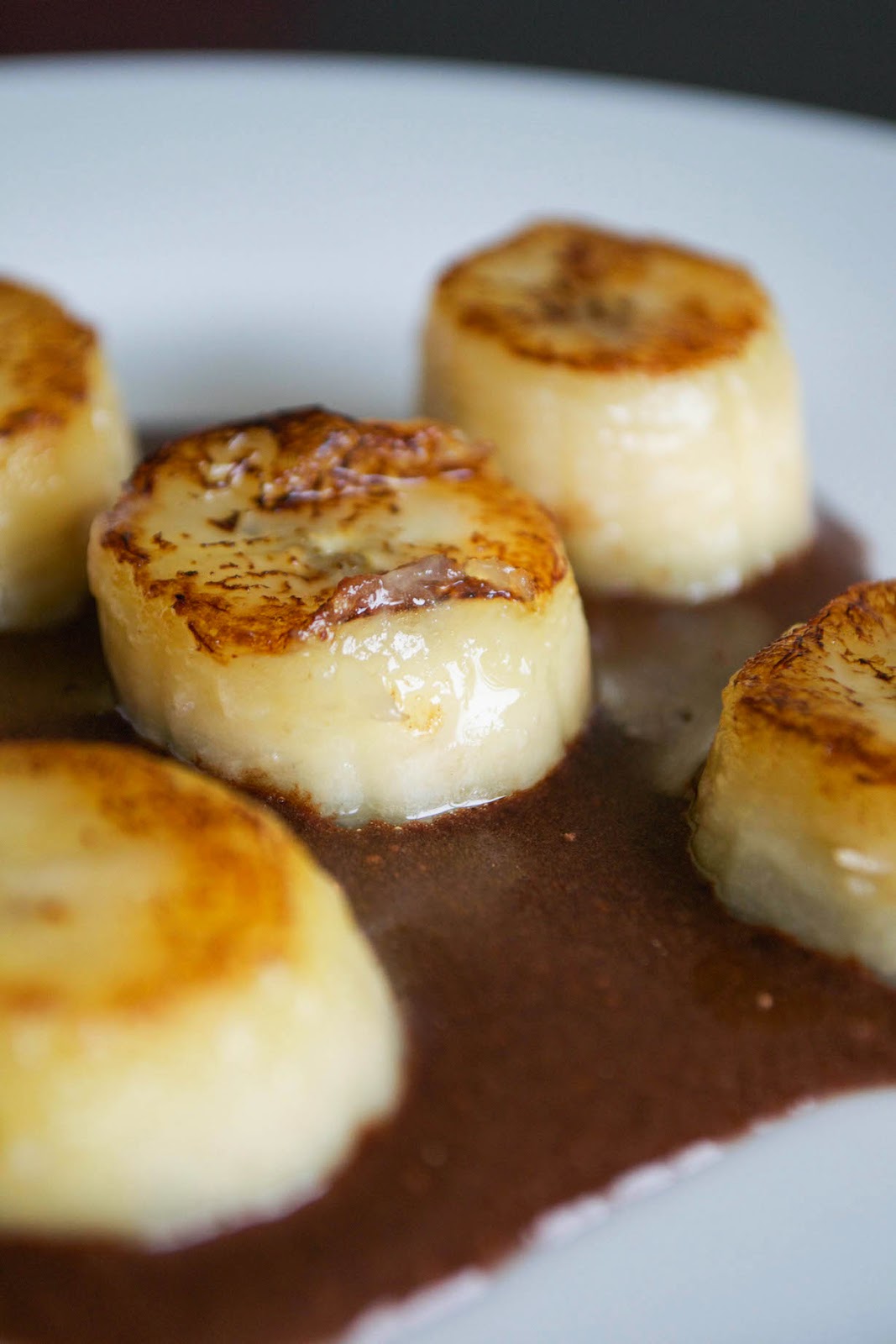
Caramelised Fried Bananas with Paleo Chocolate Sauce

So this all started when I saw a bottle of maple syrup in the supermarket that said ‘flavoured with carob.’ Carob?? That’s kind of like chocolate, isn’t it? 

Chocolate maple syrup. Hmmmm……… 


I didn’t buy it, but instead went straight home and mixed up some maple syrup with cocoa powder and look what happened. PALEO CHOCOLATE SAUCE. Lovely with fried banana slices, and it’ll keep you away from the Kit Kats should you get a chocolate craving. At least this way it’s kind of safe… right?


This recipe isn’t AIP compliant because cocoa and vanilla are eliminated in the early stages of the diet. But if you’ve reintroduced them then you’re good to go, as long as you can tolerate the rest of the ingredients. The recipe IS paleo and gluten, nut and dairy-free. 

Caramelised Fried Bananas with Paleo Chocolate Sauce
Serves 2
Ingredients
1 tsp coconut oil (I use a mild coconut oil that has no taste)
2 yellow bananas, not too ripe
3 tbsp maple syrup
1 tsp cocoa powder
quarter teaspoon vanilla extract
small (tiny) pinch of salt 

Method
Heat the coconut oil in a medium-sized frying pan and peel and slice the bananas. Fry them (in batches if you need to) for about a minute on each side, until they look golden. Flip them over and fry on the other side. 

Meanwhile, quickly whisk together the maple syrup, cocoa powder and the vanilla extract until it forms a smooth, but quite runny sauce. Taste, adding more cocoa or maple syrup if you need to, or indeed, a drop more vanilla. Sprinkle in a little salt and taste again. 

Serve the fried banana slices with the chocolate sauce. 

It’s good. I promise. 


Wednesday, 18 March 2015

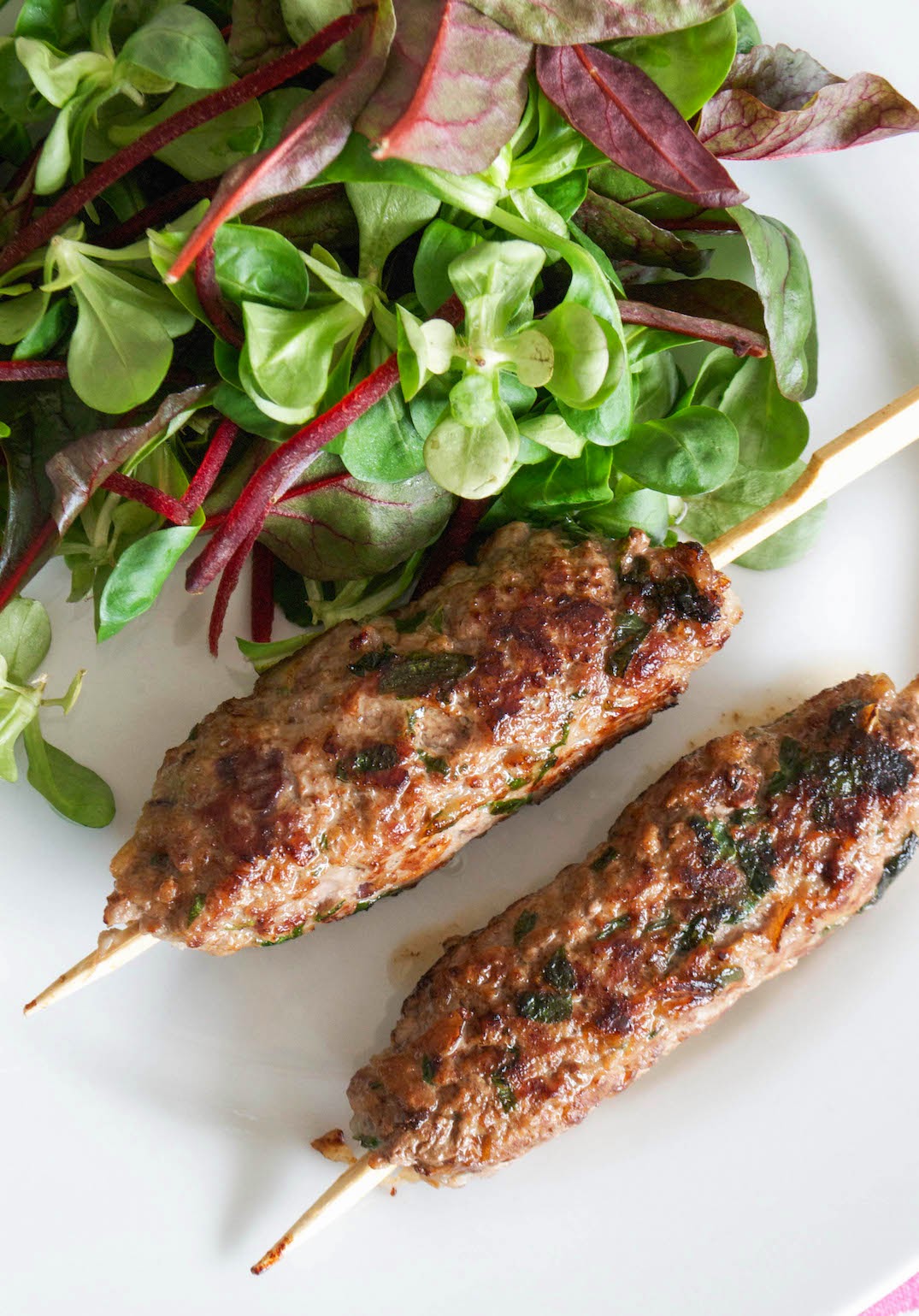
Lamb, Red Onion and Herb Koftas

I’m back! (hurray!)

And while I’m by no means 100%, I’m no longer crying over birthday card shopping or wading through a foggy brain each day. I’m getting up in the mornings, my head is clearer and my psoriasis patches are now stable. I am, more or less, functioning normally. So the blogging begins again *cue fanfare*.

And what a recipe to start with…  


It’s gorgeous. 


Minced lamb, with red onion and herbs served alongside a hooooge pile of salad greens (always the best way). 


This recipe is suitable for the AIP (autoimmune protocol diet), paleo, primal and elimination and clean eating diets. There are no grains, no dairy, no gluten – just a big plate of nutritious loveliness. 

I was sent the lamb mince for this recipe by a company called Farmer’s Choice. They’re based in the UK and deliver free-range meat (including game) up and down the country. Their meat has only ever been brilliant, in my view, and they’re very worth checking out. 

Now, on to the koftas: 

Lamb, Red Onion and Herb Koftas
Serves 4 (makes 8 koftas)
Ingredients
515g pack lamb mince (my pack contained 515g but 500g will be fine for this recipe)
1 red onion, grated
2 cloves garlic, peeled and grated
5 fresh mint leaves, washed and chopped
6-7 fresh parsley leaves, washed and chopped
good pinch of salt
8 medium-sized wooden skewers

Method
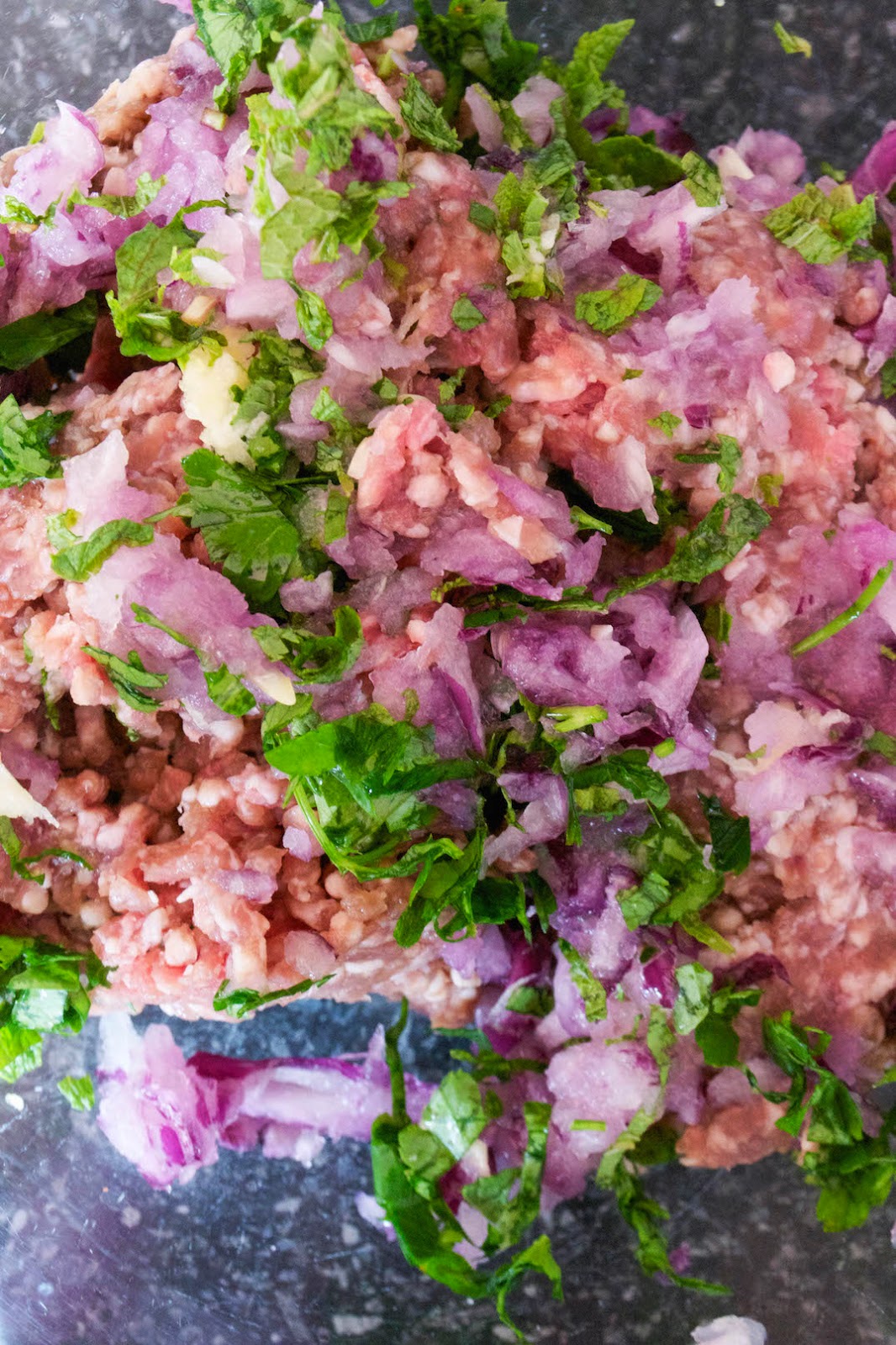
Place the lamb mince into a bowl and grate in the red onion and garlic. Add the chopped herbs and the salt and gently mix with your hands to combine. Don’t over-mix or the meat might become overworked and tough. 

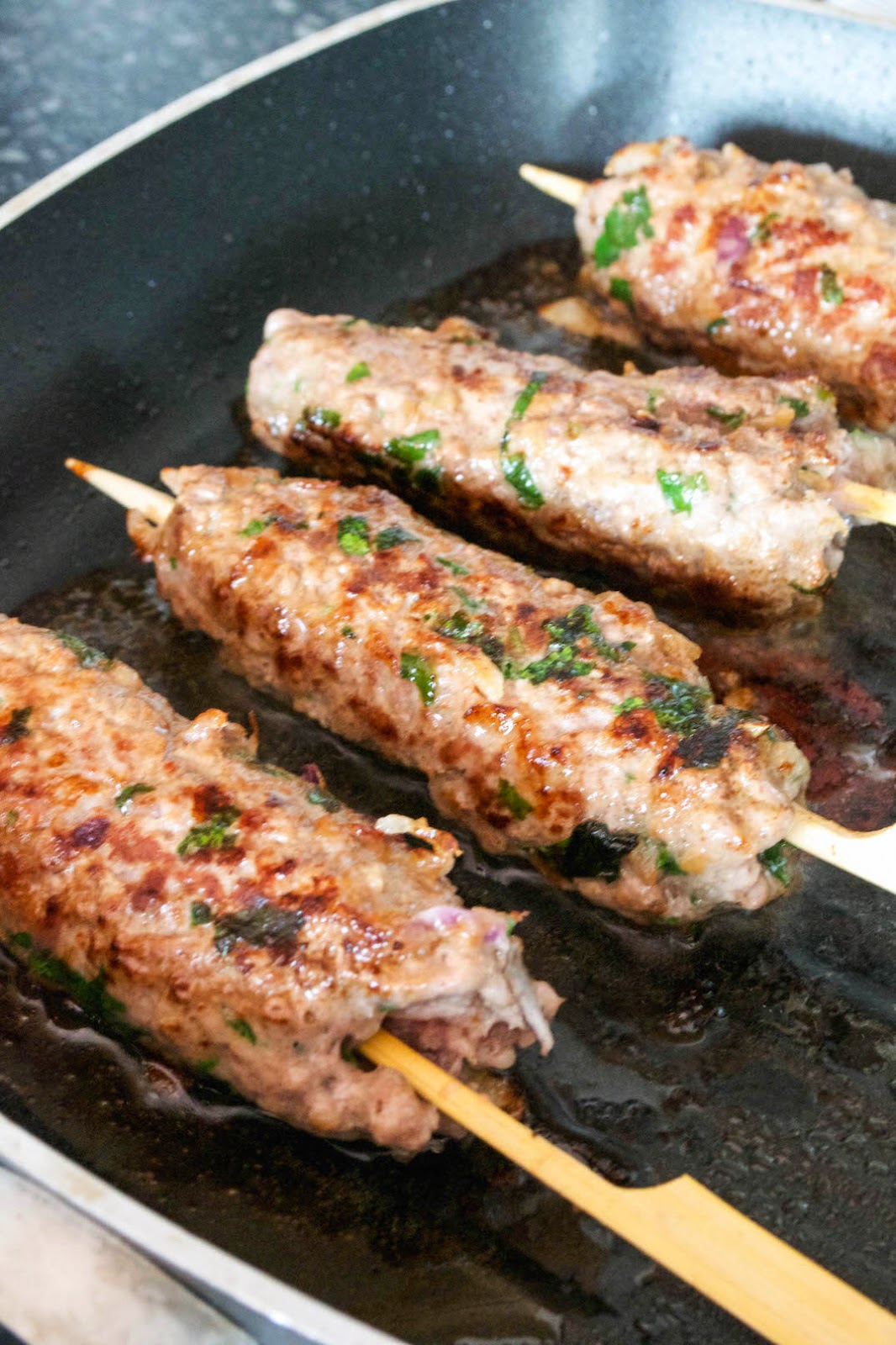
Heat a griddle or frying pan to a medium heat. Pick up a skewer with one hand and with the other hand grab a small handful of the lamb mixture. Mould the meat around the stick, squeezing it so it’s a uniform thickness all the way along. Place gently into the heated pan. Repeat with the rest of the mixture. You might have to cook the koftas in batches depending on the size of your pan – I cooked mine in batches of 4. Add a little coconut oil or olive oil if you think it needs it. 

Turn the koftas regularly, so they brown on all sides, and continue to cook for 10-12 minutes, until no pinkness remains (cut into one if you like, to make sure). 

Once thoroughly cooked through, serve with salad. 

Don’t want to make koftas or don’t have skewers? Just form them into burgers instead and fry for 5-6 minutes per side. 

Want extras alongside this? 
Try Meatified’s AIP Paleo Hummus and serve the koftas with black olives and paleo wraps or pitta breads. 

I received a contribution towards the ingredients for this recipe from Farmer’s Choice. 


Friday, 6 March 2015

Knowing When To Stop For a Bit

Lovely readers. 

I can’t tell you how happy and healthy the paleo and autoimmune protocol diet and lifestyle has made me. It cleared my psoriasis (one patch left and counting!), it made me a healthy weight for my height for the first time EVER and gave me lots of confidence and energy. But, although I was buzzing with energy, I think, along the way, I got a bit complacent. 

Christmas was an especially hectic time for me: we had visitors staying, and my paid work doesn’t stop – in fact, often it will get busier at that time of year and continue all the way through, no breaks. So I decided to do double the work the week before and double the work after, so I could have Christmas with my family (and not end up sitting at the laptop while the sprouts were cooking on Christmas Day). 

Leading up to Christmas, I had school plays, concerts, music lessons, kids’ parties and then the everyday things to sort out and arrange for the children. I stayed up late, trying to make some progress on the book I’m working on, keeping up with social media (I love you all) and, of course, blogging, as well as my normal work. 

One morning in mid-January, I woke up at 6am with a stiffness in my neck and a heavy, dull ache at the base of my skull. Thinking I must have slept funny, I flicked on the light, and I could see double of everything. I got out of bed and stumbled to the bathroom. My balance had gone, slightly, but this was still worrying. I found my phone and called the out of hours doctor. As I tried to speak, I found my speech was very slurred and I had to think very hard to answer simple questions. The doctor on the phone told me to take a painkiller and see if it went away. I managed to get the children to school that morning (I don’t know how) but it didn’t go away. It got worse. I phoned them again, at just after 9am. I was told to get to the emergency hospital. By now, I had a tingling in my arm and my confusion and slurred speech was much, much worse. I looked in the mirror. I was an attractive shade of grey.

This was really scary. My husband made his way home from work and took me to the hospital. After 9 hours in the hospital with a CT scan, heart trace, lights being shone in my eyes, MANY other tests and being bashed about the knees with a hammer (for checking reflexes) it was decided that I had had a very severe migraine. The neurologist told me to go home and REST. 

Yeah, RIGHT. 

For two weeks, my brain was foggy and I felt like I had a massive hangover. It took two days for my speech to return completely to normal, but my brain was fuzzy for a long time. But I didn’t really stop. My husband needed to go back to work so I was back to housework, washing, taking the girls to school, clubs and other things and I was basically back to normal. My work was great, they offered me all the help they could. But I wasn’t helping myself. 

Over the past few days, I’ve found the dull ache returns and with some yoga and sleep, it’ll usually go away. But I haven’t been feeling completely 100% for a little while. I LOVE blogging and talking to all of you on social media (I really do) but my body (and brain) is telling me I really need to take a rest. I’m exhausted, sometimes tearful and get anxious over tiny things (I burst into tears the other day because I couldn’t think how I’d find time to go to the shops and buy my daughter a birthday card for her friend on Saturday. Exactly). I get headaches every couple of days, and a foggy brain most days. My one remaining psoriasis patch has started to turn white and dry so yep – it’s coming back.

I’m telling you all this, because this episode has taught me three things: 

1. AIP can help clear chronic symptoms and make you feel amazing. But it doesn’t make you invincible. 

2. From what I’ve known and written about the AIP and paleo lifestyle, I’ve always said that when you’re tired you need to make time for yourself and stop. Well now I need to practice what I preach. 

3. When a top neurologist tells you you need to rest, you really DO need to go home and REST PROPERLY. 

So I’ll be back soon, readers. I will still be posting up articles I think you might find useful and the odd meal on Instagram and Facebook, there just won’t be any blog posts here for a little bit. I love you all, and I’ll be back soon x


LinkWithin

Related Posts Plugin for WordPress, Blogger...