Thursday, 30 January 2014

Trying out Côtes du Rhône Wines with Chinese Food

What do you drink with your Chinese takeaway? White wine? Beer? Soft drinks? I was sent some Côtes du Rhône wines to try with a Chinese takeaway. Here’s how I got on… 

We’re not big wine drinkers, but a glass of something chilled is often called for when we kick back and stuff ourselves with a Chinese takeaway. It seems to cut the richness of roasted duck or the oiliness of a wok-fried tangle of noodles. 

I was sent a couple of bottles of Côtes du Rhône wines – one red, one rosé – to try with a Chinese takeaway. Would they be refreshing enough? Would they complement the flavours and spices in the food? And are they worth the money? 

pairing wine and chinese takeaway pics

Cairanne Villages, Domaine de l’Ameillaud, Cave de Villedieu, 2012 (Retailer: The Wine Society RRP: £9.50

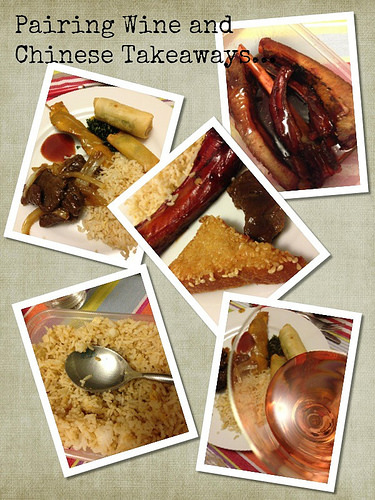
The red wine was first up – the Cairanne Villages, Domaine de l’Ameillaud 2010. It was full-bodied and rich – not as acidic as some other reds I’ve tasted in the past and so perfect for drinking with a meal or for sipping on afterwards with your tummy full, amidst empty plastic cartons. We enjoyed it. It went well with the duck and hoisin spring rolls and fantastically with the barbecued spare ribs. It was good too with the Cantonese beef fillet, with its sweet but beefy sauce. It’s not a break the bank kind of wine, but again it’s not cheap at £9.50. But to be honest, you could taste the quality. Definitely a wine I would buy (especially if I was cooking barbecued ribs). 


cotes du rhone red wine

Côtes du Rhône Cuvée des Templiers, Cave de Villedieu 2012 (Retailer: The Wine Society RRP £7.95)

And then onto the rosé – a peachy number – Cuvée des Templiers, Cave de Villedieu 2012. We found it fruity and citrussy – perfectly refreshing and sweet sipped while munching on prawn toasts, spring rolls, fried rice and chow mein. In fact the red went well with the special chow mein too – but this one was refreshing enough to clean the palate after every sip and made the takeaway even more pleasant than it was already. This one was less pricey than the red, at £7.95 and again I’d say it was worth the money. Especially when you consider the cheapest bottles in the supermarket cost from about £4 – and you’d get nowhere near the quality you get here. 


cotes du rhone rose wine

In all, the wines were great – and I was surprised at how well they complemented the Chinese food. They also cemented my belief that even with a standard Chinese takeaway it makes sense to shell out an extra few quid on a good bottle of wine to go with it – you’ll really taste the difference. 

For more information on any of these wines, or others in the range, visit the Côtes du Rhône website

10 Foodie Treats Not to Miss in Argentina

Off to Argentina? Then don’t miss these 10 foods you have to try while you’re there…

Beef

asado tio ruben

Ah, yes. The stuff Argentina’s famous for. And it’s cheap. We picked up a large amount of prime bife de chorizo (the same cut as sirloin over here) for the equivalent of about £10, in a butcher’s in Buenos Aires. So as it’s so cheap, it’s unsurprising that Argentines eat quite a lot of it. But be prepared – it won’t be served rare unless you ask, and you won’t usually find it drenched in sauces like we do over here – they say it takes the flavour away from the beef, and you definitely don’t want to do that. It cuts like butter, is full of flavour and is usually served in gigantic portions. Desperate Dan, eat your heart out. 

Empanadas


beef empanada cut in half

Like little pasties, but the pastry isn’t shortcrust or puff – it’s a special, more elastic blend of flour and lard. Empanadas aren’t usually spicy but are filled with minced beef, egg, cheese, veggies, chicken – anything really. You’ll find empanadas in supermarkets, where as well as being sold ready to eat, you can also buy just the frozen packs of pastry discs (‘masa’) ready for filling and baking. Make sure you buy the right ones: ‘para horno’ means they’re to be baked, while ‘para freir’ means they need to be fried. 

Fernet and Ananá Fizz


fernet
Fernet Branca – a drink enjoyed in Argentina
Two amazing drinks enjoyed in Argentina. They’re both alcoholic – Frenet is often served with cola and has a slight aniseed flavour – it’s actually an Italian drink that’s caught on over there in a big way and contains a blend of spices and herbs. Ananá fizz (pronounced ‘an-an-A-fiss’) is pineapple cider – a sweet and refreshing fizzy drink that slips down all too easily. Don’t get too tipsy, now. 

Asado
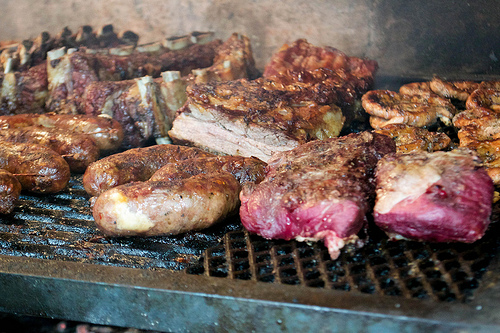
asado tio ruben 1
Asado – the Argentine barbecue
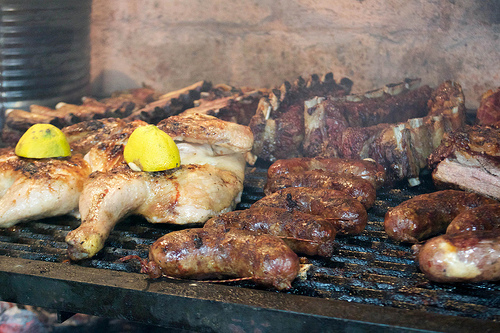
The Argentine barbecue. In summer, many families will cook asado outside, and many homes have indoor asados used during the winter. Argentines see barbecuing meat almost as an art form, so if you’re invited to an asado make sure you ask them for tips, because you’ll want to recreate it back home. Unlike the British barbecue where we cook quick cuts most often, Argentines slow-cook their meat on the grill, leaving cuts and whole joints there sometimes for a few hours. Expect to see some unfamiliar cuts, like intestines, heart, lungs and even cow’s udders alongside steaks, chicken legs and chorizo sausages. My post on an Argentine asado will explain more. 

Fresh pasta


pasta shop - in the shop at front
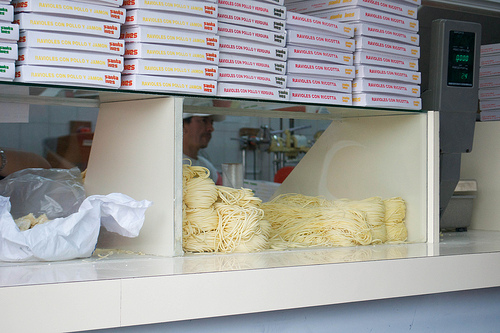
Fresh pasta for sale in Haedo, Buenos Aires
Not an obvious Argentine food, but the country has a big Italian heritage and you can find some gorgeous, light fresh pasta there. There are even shops – like delis – that sell just fresh pasta – where you can take home fresh ravioli for heating at home and serving with your favourite sauces. 

Alfajores
You can’t head back home until you’ve tried an alfajore or, preferably, at least a dozen. They’re little biscuits sandwiched with dulce de leche (Argentine caramel) and then coated either in chocolate or crushed meringue. You can buy them in newsagents, supermarkets, corner shops – they’re the go-to sweet snack. Havannah is considered a good quality brand – but a bit pricey  – while Jorgitos taste very similar but slightly less rich. 

Mate
This is the drink of the gaucho, the Argentine herdsman used to camping out at night and sipping on an ornate mate cup as the sun goes down. It’s a green tea – the dried leaves are spooned into the cup and then boiling water is added for each person. It’s then passed around, a fresh drink made for each person at the table. A few tips on manners: don’t stir the bombilla (the metal straw that you sip the tea with), drink all of the drink before passing back to the person with the kettle and for goodness’ sake never blow into the bombilla or be squeamish about sharing it with everyone else. When in Argentina, etc etc etc. 

Pizza
provensale pizza
Argentine Pizza Provencale – with parsley and garlic
I know what you’re thinking. We get pizza back at home – why should this be any different? Well, it is. The dough is yeasty, with toppings such as hearts of palm, garlic and parsley, and ham. There’s cheese too – but just enough – not that duvet of mozzarella that slides off the base that we’re used to in Britain. Look out too for fainar – it looks like a dense garlic bread alongside but it’s actually made from chickpeas, giving it a nutty, wholesome flavour and chewy texture. I know people who left Argentina decades ago who still get cravings for fainar. 

Garrapiñadas

Garrapiñadas
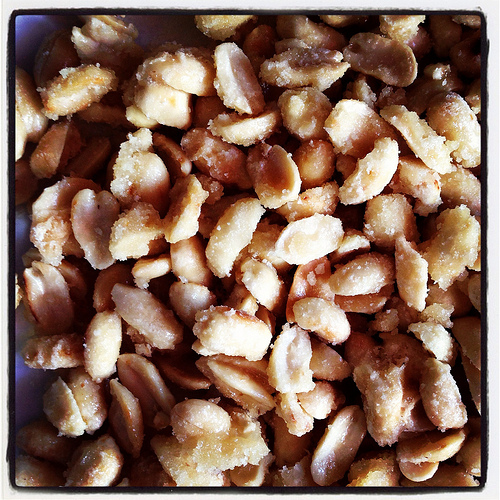
Sweet and crunchy garrapiñadas – peanuts roasted in caramel
Peanuts, roasted in caramel. They’re crunchy, they’re sweet, and you can’t stop at one handful. Sold in cellophane cones at football matches, at stalls on the subways and at markets, they’re the typical Argentine street food. If you’re lucky you’ll get them while they’re still warm. 

Chorizo


asado tio benicio chorizo
Argentine chorizos on an asado
Forget Spanish chorizo, with its dark red, paprika-stained meat. These are Argentine chorizos and they’re basically a really coarse, good quality sausage, with a casing made from intestines, just like back at home. The difference is that they taste exactly like meat – a few seasonings perhaps, a few pieces of very mild chilli maybe – and that’s it. Coarse minced meat – usually pork – served at asados, parillas and often at the roadside by guys who have just set up a grill and a cardboard sign. Try them in choripan – a chorizo sliced lengthways and placed between a white bread roll. I love mine with chimichurri sauce for a punchy, grassy flavour that cuts the richness of the meat. 

Have you been to Argentina? What foods would you recommend that visitors don’t miss out on? 


Wednesday, 29 January 2014

Blueberry, Cream Cheese and Maple Syrup Muffins

These blueberry muffins are lower in fat than many regular recipes because they contain a naturally fat-free cream cheese. Chuck in a handful of blueberries and you’re set for a great start to the day. 

You’d think it would be easy to make a blueberry muffin. But it isn’t. There are so many variations on recipes out there. For example. Do you use sour cream? Oil? Butter? Yoghurt? Cream? It seems that with a blueberry muffin, it’s not enough to just knock up a regular muffin mix and tumble in some blueberries. You need some creaminess there – as I found when I tried making them with Quark. 


blueberry and quark muffins
Blueberry muffins with maple syrup and Quark


Quark is a low-fat cream cheese that looks a bit like thick yoghurt in the tub – it’s spreadable and you can bake with it too. And so, because the Quark was so innocent (the label stated it was ‘naturally fat-free’), I decided to stick with the butter (but less of it than usual). And after I made the first batch I missed something – a rich, smoky-syrup kick – so I swirled in some maple syrup. They didn’t last long in our house. 

Blueberry Muffins with Cream Cheese and Maple Syrup
Makes 12
Ingredients
75g butter
200g plain flour
2 tsp baking powder
50g golden caster sugar
pinch of salt
100g cream cheese (I used Quark)
1 egg
150g blueberries, washed and dried

Method
Melt the butter in a small pan (or do it gently in the microwave) and set to one side. 

In a mixing bowl, combine the flour, baking powder, sugar and the pinch of salt. In a jug, combine the cream cheese, egg and the melted butter. Pour the wet ingredients into the dry and mix together until just mixed – don’t over-mix or your muffins will be tough. Fold in the blueberries, reserving a handful. 

Spoon the batter into cupcake cases in a muffin tray and using the blueberries you reserved, dot a few over the top – I always find some muffins more sparsely blueberried than others and this helps even it out. Bake in a preheated oven for 15-20 minutes at gas mark 6/200ºC. 

Once slightly golden and firm, cool on a wire rack. Gorgeous enjoyed while just still warm. 

Monday, 27 January 2014

Paleo Lamb Biryani (AIP, Paleo, Gluten-free)

On the Auto Immune Protocol diet and can’t eat any grains or nightshade and seed spices? Bit fed up and missing curry too much? Don’t worry – here’s a simple recipe that’ll also help you use up any leftover lamb… 

Being on the Auto Immune Protocol, I can’t eat any seed or nightshade-based spices. And this means that I miss curry very much. Before I started the diet, I’d eat a curry at least once a week, but it had really fallen by the wayside. Until I made this. Leftover Lamb Biryani.

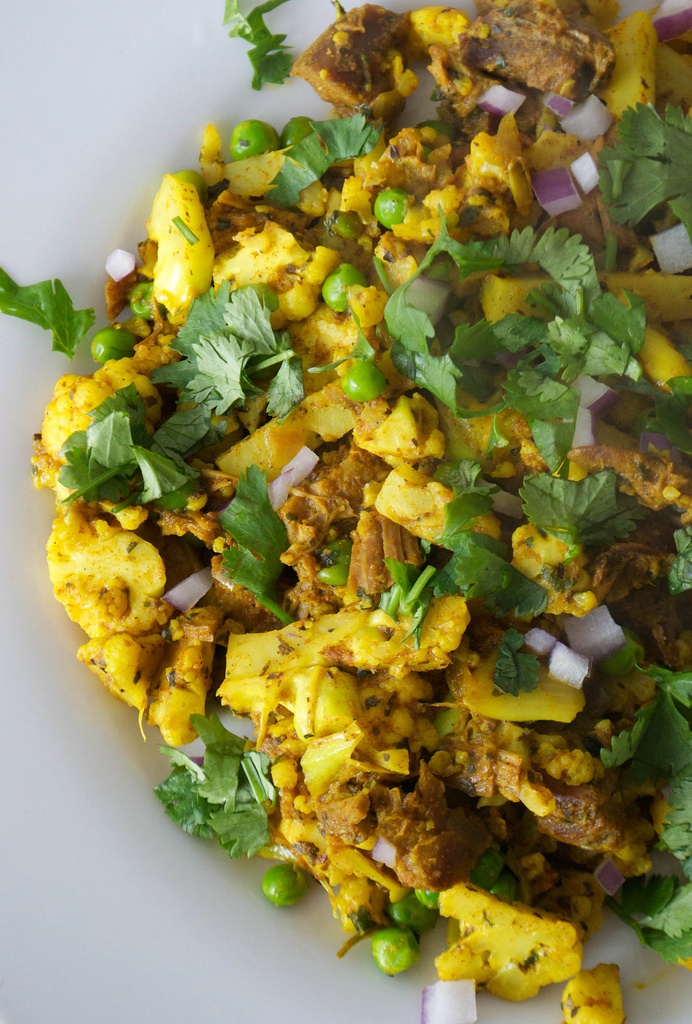
It doesn’t contain any rice – chopped cauliflower forms the base of this dish. The red onions add colour and sweetness and it’s all contrasted by the bright green peas and coriander leaves.

I’ve used the AIP-friendly curry spice blend from the Feed Me Rachel blog – it has ingredients like granulated garlic, turmeric and cloves. If you’re just after the grain-free element and you can tolerate seed and nightshade-based spices then by all means use your favourite curry blend. Combine it with cauliflower ‘rice’, some leftover roasted lamb and a scattering of coriander and red onion and you’re set. 

Friday night here we come. 

16th July 2014 – Note: Since this recipe was published, Sarah Ballantyne, one of the key figures in researching the facts behind the autoimmune protocol has announced in the last couple of days that she considers peas, green beans and black pepper now ‘foods to avoid’, whereas they were previously just ‘use with caution’ foods. If you’re starting out on the AIP and in the elimination phase of the diet, it’s best to avoid using the peas in this recipe. The recipe is still paleo. 


paleo aip lamb biryani

Paleo and Auto Immune Protocol Lamb Biryani

Serves 2

Ingredients
1 tsp duck fat or coconut oil (or other saturated cooking fat of your choice)
2 tbsp AIP friendly spice blend (or your own curry blend, if you prefer)
1 small head of cauliflower, chopped finely (so it looks like rice)
2 handfuls frozen peas (avoid if on elimination phase of AIP)
large handful leftover cooked lamb (I used lamb shoulder), shredded into chunks
1 small red onion, chopped finely
small bunch of coriander, roughly chopped
salt, to season

Method
First, melt the fat in a non-stick frying pan and then add the spice blend. After a few seconds, when it’s warmed up and sizzling, tip in the chopped cauliflower and stir so it’s covered in all the spices. 

Add a splash of water and allow the cauliflower to cook for 4-5 minutes. When the cauliflower is tender and most of the water has evaporated, tip in the peas and the lamb. Stir well and continue to cook until the lamb is heated through and the peas are cooked – another 5 minutes or so. You can always add a little more water here if you think it needs it.

Taste and season with salt, and then serve immediately, with the red onion and coriander scattered over the top. 

I’ve entered this into Phoenix Helix’s AIP recipe roundtable – check out the other entries (and previous roundtables) for more inspiration… 

Are you currently on the Paleo or AIP diet? Which foods are you missing the most? 


Friday, 24 January 2014

Caerphilly Cheese, Walnut and Leek Filo Parcels (Vegetarian)

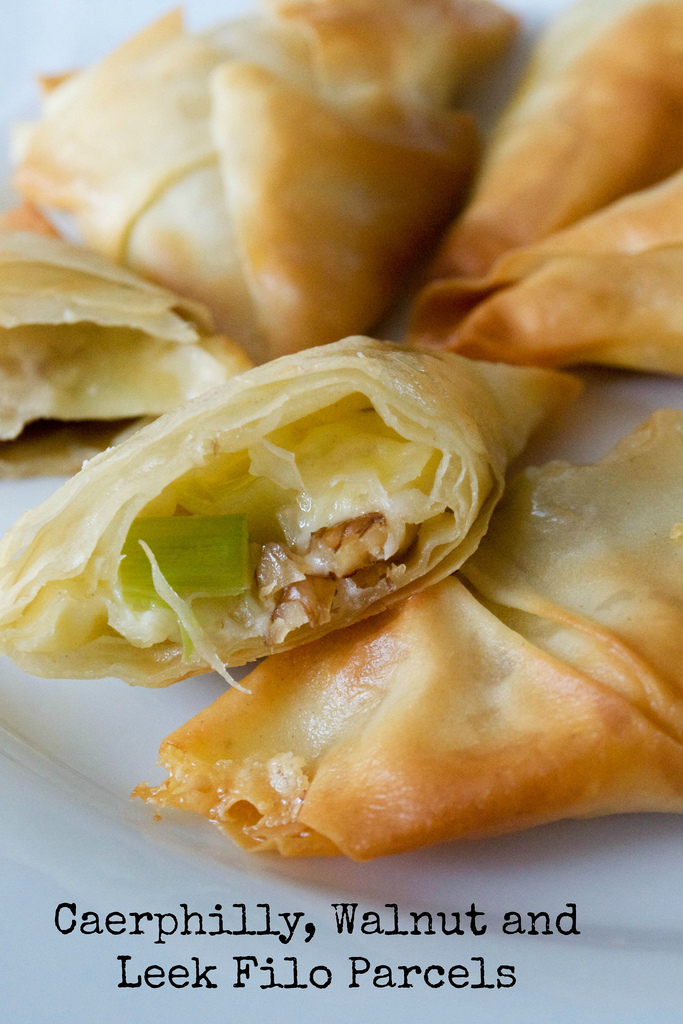
Flaky filo pastry, surrounding melting Caerphilly cheese, sweet leeks and crunchy walnuts, and they cook in just 10 minutes… 

When I made the Nutella Filo Bites, I felt I needed a savoury companion for them. And here they are. I’ve always loved the combination of walnuts with cheese and so decided to use Caerphilly (which is a nutty cheese in itself) along with leeks, too. They’re perfect for parties, to serve as a nibble alongside other canapés or just make a batch one Sunday afternoon. 

caerphilly cheese leek with walnut filo parcels

Caerphilly, Walnut and Leek Filo Parcels
Makes 16-20 depending on size
Ingredients
270g pack filo pastry, thawed if frozen
approx 200g salted butter, melted
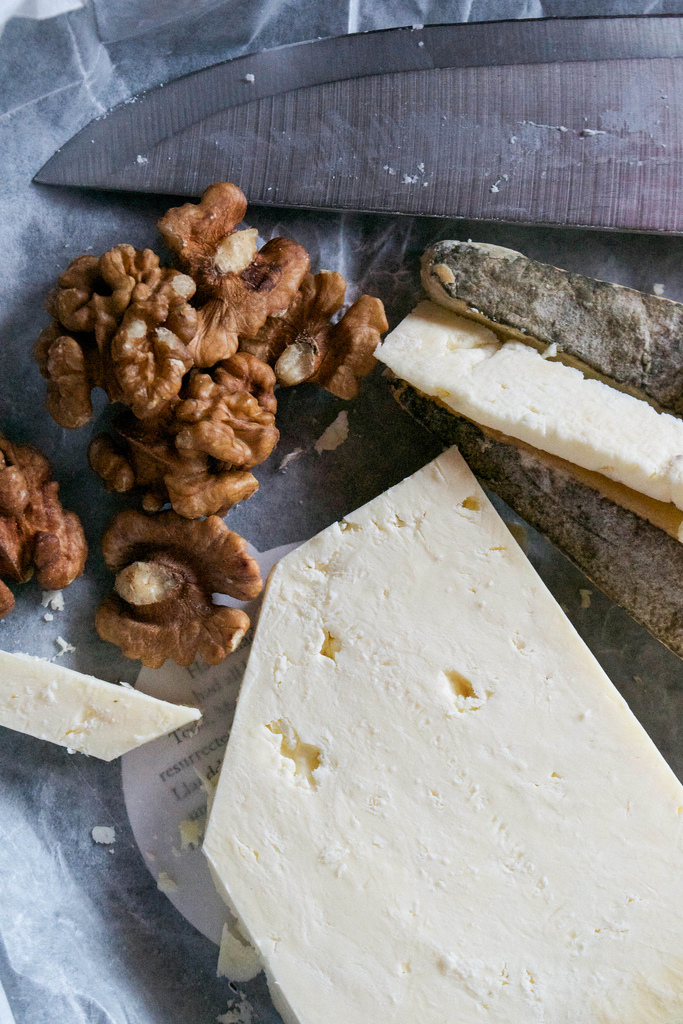
220g Caerphilly cheese, chopped
1 large leek, washed, trimmed and sliced fairly thinly
16 walnut halves, chopped

Method
First, cook the leek. Melt one teaspoon of the butter in a frying pan and add the sliced leek, stir-frying for about 5 minutes until softens and begins to turn golden. Take off the heat and leave to cool.

Meanwhile, open out the sheets of fill pastry in front of you, with the longest side facing you. With a sharp knife, cut three equal strips down the filo, so you have four piles of long thin rectangular sheets of pastry. Brush the pastry with a little butter. 

Now you can start to fill your parcels. Take a small pinch of the cheese, then the leeks and then a few pieces of chopped walnut and place it, in a little pile, in the top right-hand corner of one of the strips. 

Fold this corner down to form a triangle with the pastry and then fold downwards to make a parcel in a samosa shape. Add a bit more butter to the pastry if you think you need to. Lift the finished parcel onto a baking tray lined with greaseproof paper. Repeat for the rest of the parcels until the filling and pastry is all used up.  

Bake in an oven preheated to 200ºC/Gas mark 6 for 10 minutes, or until golden and crisp. These parcels are wonderful just slightly cooled from the oven and served warm, but can be served cold too. 


caerphilly cheese with walnuts


Thursday, 23 January 2014

Muddy Boots Beef and Chorizo Meatballs in a Chunky Tomato Sauce

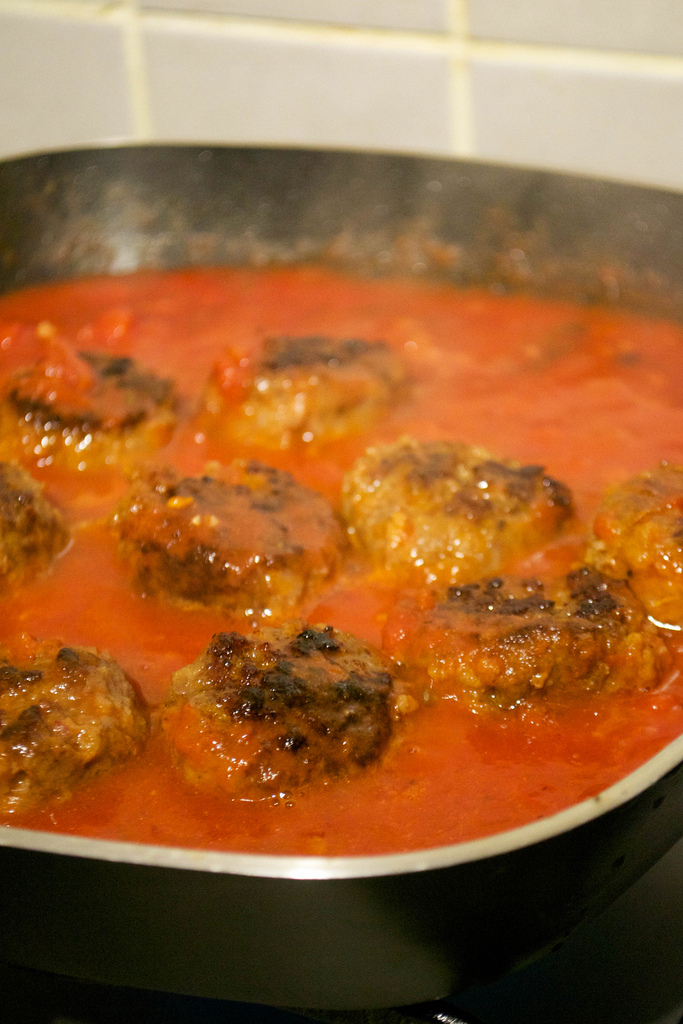
Muddy Boots, the burger company, recently launched a range of meatballs, including these, with Aberdeen Angus beef and pieces of chorizo. Perfect with a simple tomato sauce…  


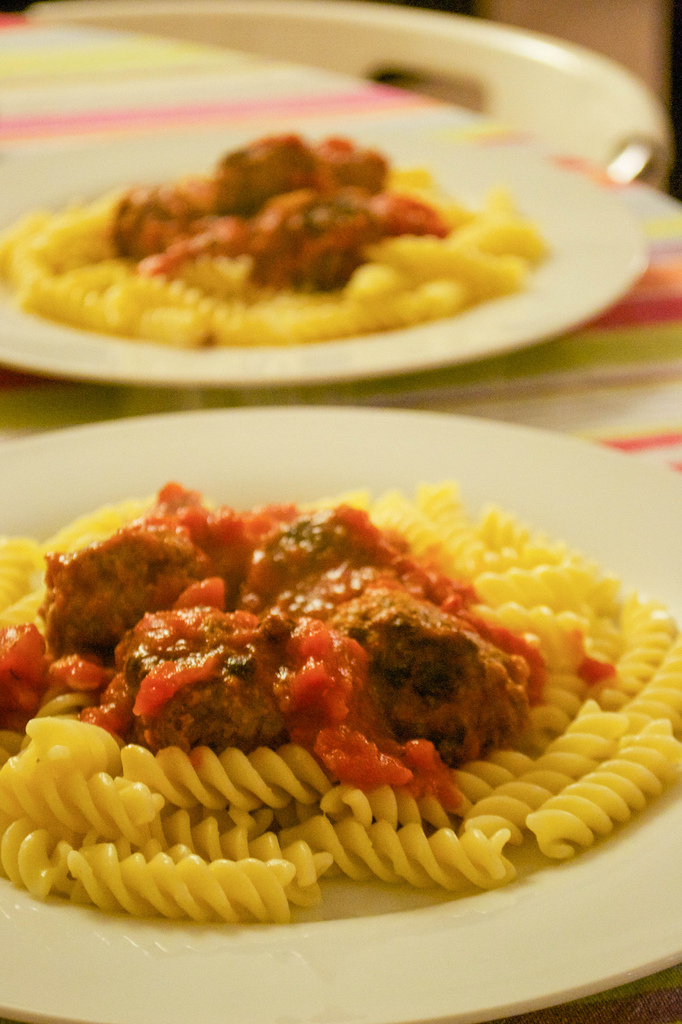
muddy boots meatballs in sauce with pasta


I’ve been a fan of Muddy Boots foods for some time, and a pack of their gluten-free beef burgers are never too far from the depths of my freezer. The reason is that I don’t think their burgers are like many of the other burgers you can buy. The beef is great quality and produced ethically – they focus on British farmers and, with their witty email updates and tweets, well, you kind of feel a bit as if you know them, too. 

But it doesn’t stop at burgers. As well as some unusual burger flavour combinations (beef, cheese and cranberry, anyone?) Muddy Boots have also launched a meatloaf and now meatballs. They sent me some to try, and, yes, I was hooked. 

The meat is of the same good quality – no sinewy bits – and also stays juicy after a quick flash-fry in the pan. I realise it doesn’t take much to make meatballs yourself – but these pre-packed ones are perfect for when time is really tight. A gluten-free version would be great, though.

I decided to serve ours – spiked with punchy chorizo as well as Aberdeen Angus beef – with a simple chunky tomato sauce. 

Muddy Boots Beef and Chorizo Meatballs with Chunky Tomato Sauce

Serves 4 (based on 3 large meatballs each)

Ingredients
Pack of 12 Muddy Boots Aberdeen Angus Beef and Chorizo Meatballs
1 tsp olive oil, or your chosen fat (coconut oil/duck fat, etc)


For the sauce:
2 garlic cloves, chopped
half teaspoon duck fat
400g tin tomates
pinch of salt and pepper

Method

Melt the oil or fat in a large non-stick frying pan and fry the meatballs for 5-7 minutes, turning them regularly, until golden brown and sealed all over. They will release a little more fat so drain this off if you want to. Lift out the browned meatballs onto a plate while you get on with making the sauce.

To make the sauce, leave a little of the fat in the pan (it’ll have that lovely chorizo flavour to it) and add the chopped garlic cloves. Fry for 30 seconds or so, until it becomes fragrant, and then add the tomatoes, breaking them up with your spoon as you stir. Season the sauce with a pinch of salt and pepper. Half-fill the tomato can with water and stir into the sauce. Add the meatballs back in, simmering for another 15 minutes – making sure the meatballs are thoroughly cooked and the juices all run clear.  


muddy boots meatballs in sauce

Saturday, 18 January 2014

Comfort Bites' Comfort Food Challenge #3: Vegetarian

Create a vegetarian comfort food and share it with us in this month’s Comfort Food Challenge…

We’re always being told we should eat less meat. And, as we’re in the depths of winter, it’s all too easy to beef up on meaty stews, slow-cooked roasts and chicken thighs with crispy skin when it’s freezing and frosty outside. But what about the veggies? 


comfortbiteschallenge

Do you know of a vegetarian dish that makes you feel cosy, reminds you of someone dear to you, or just one of those recipes you rely on when the rain’s battering on the windows? Then share it with us, in this month’s Comfort Food Challenge. 

Need Inspiration? 
  • Curries, soups, cheesy bakes, stir-fries, veggie burgers, Glamorgan-style sausages – I want to hear them all.
  • Have a think about your childhood – was there a dish that you always enjoyed then and that still reminds you of a loved one today? 
  • Imagine it’s cold, foggy and raining outside. You’ve spent all day at work. What vegetarian dish would you eat while you snuggled up on the sofa? 
  • Dishes for different diets (AIP, Paleo, Gluten-free, Vegan) are all welcome here, just make sure it would be suitable for vegetarians. 

The Rules:
  • Please blog a vegetarian recipe, that is comforting to you, and email me with the link to the post, your name, and an image that I can use in the roundup, where I’ll also link back to you. Your blog post must link back to this page and include the event badge (above).
  • All entries must be received by 26th February 2014.
  • You can re-blog an old recipe if you like, but please ensure that you include the badge and links as above in your new post, and mention the challenge in the text.
  • Please don’t copy and paste recipes from cookbooks or elsewhere on the internet to enter – recipes must be your own. Please abide by copyright laws. 
I can’t wait to see what you come up with – let’s help inspire each other with some real, home-cooked comfort food. I’ll be posting my entry soon. Remember, when you post, do share it on Twitter by tweeting me @joromerofood with #comfortfoodchallenge. I’ll retweet any that I see. You can also share it on the blog’s Facebook page, too. 

Look forward to it! 

Friday, 17 January 2014

The Best Fluffy Vanilla Buttercream

Want foolproof fluffy, sweet buttercream icing that holds its shape and is easy to pipe? Well here it is… 

I’m going to let you in on a strange (and irrational ) secret. 

I used to be a bit scared of buttercream. It seemed that whatever I tried to do, the buttercream would be too stiff, so it was impossible to pipe or too soft so it used to collapse and wouldn’t keep the shape or texture that I was piping. And then sometimes it just tasted sweet – with no proper vanilla flavour of its own. 

Well, I tried different recipes – some using butter and cream, others using hot boiling water and others just sticking to butter and icing sugar. And I found the best buttercream that works for me. It pipes on in nice, pert rose shapes or swirls and it’s easy to make by hand. 


vanilla buttercream

Here it is: 

My favourite Vanilla Buttercream
Pipes 12 small cupcakes

Ingredients
100g salted butter, softened
200g icing sugar, sifted
half to one teaspoon vanilla extract
A few drops of milk

Method
Just mash the butter in a large bowl and whip it until it’s light and airy. Beat in the icing sugar to form a smooth paste and then add the vanilla and the milk. Whip well with a spatula or fork and have a little taste. Check that the vanilla flavour is right for you – if not, add a few more drops until it is. Then scrape the buttercream into a piping bag fitted with your chosen nozzle. Pipe onto your cupcakes or spread inside your big cakes. 

Monday, 13 January 2014

How William Shakespeare Used Food in His Plays

We all know Shakespeare for his insults, sonnets and world-famous plays – but how did he use food in his plays to create drama? And what do they tell us about what was eaten in Elizabethan England? 


800px-London_Shopping_0017_(6213131369)
Image from: http://commons.wikimedia.org/wiki/File:London_Shopping_0017_(6213131369).jpg
Today I start a course on Shakespeare – on the significance of the play Hamlet. I’ve always loved to read Shakespeare’s plays – since I studied Macbeth in school when I was 15. ‘When shall we three meet again’, and all that. 

And as I started to prepare for this course, I wondered what the Bard had to say about food. Which foods did he mention to dramatic or tragic effect? And which foods were mentioned in happy, wistful scenes? Although this will provide an insight to what kinds of foods Shakespeare probably ate, it’s directed much more at what was mentioned in his plays. Tudor food will be the subject of another post (so stay tuned). 

Hazelnuts
Hazelnuts are mentioned in Shakespeare’s plays in scenes of both romance and fantasy. They were a common Tudor snack (there’s evidence that theatregoers would snack on hazelnuts while watching Shakespeare’s plays at the Globe) – and were often used in recipes. When Petruchio is talking about Kate in The Taming of the Shrew (Act 2, scene 1) he says that she, ‘like the hazel-twig, is straight and slender and as brown in hue as hazelnuts and sweeter than the kernels.’ And Mercutio in Romeo and Juliet (Act 1, scene 4) describes the fairy midwife Queen Mab has having a chariot made from ‘an empty hazelnut made from the joiner squirrel or old grub’. 

Fruity Rice Pudding
In The Winter’s Tale (Act 4, scene 3) the clown talks about buying the ingredients needed for a sheep-shearing feast. He mentions sugar, currants, rice, winter pears, saffron, dates, mace and ginger. He hints at how expensive ginger was at the time by saying ‘a race of two of ginger – but that I may beg.’ He also mentions ‘pruins and as many of raisins o’ th’ sun.’ All the ingredients for a fruity and spiced rice pudding.

Roast beef
Not surprising that Shakespeare mentions our oldest national dish of roast beef, as giving sustenance to the troops before they engage in battle in Henry V (Act 3, scene 7). The constable says: ‘Give them great meals of beef and iron and steel, they will eat like wolves and fight like devils.’ Much how many of us feel on a Sunday night as Monday morning looms. 

Venison
Venison, which Henry VIII famously liked to hunt and then give as gifts to his favourites (his future Queen Anne Boleyn received a hart from him – a romantic symbol as much as dinner).  For Shakespeare, it seems that deer were well-respected animals that came with a sense of power. In Cymbeline (Act 3, Scene 3) Belarius comments that ‘he who strikes the venison first shall be the lord o’ the feast’. And in ‘As You Like It’ (Act 2, scene 2), Duke Senior feels sorry for them: ‘come, shall we go and kill us venison? And yet it irks me the poor dappled fools, being native burghers of this desert city, should in their own confines with forked heads have their round haunches gored.’ 

Garlic
Yep, garlic smells. And it seems that there were quite a few Tudor folk walking around with garlic breath, judging from what Shakespeare had to say. Garlic was popular in recipes from Medieval times onwards, so it was nothing new to the Tudors, although it’s not mentioned lovingly by Shakespeare, who tends to use it as an insult. In Henry IV Part 1 (act 3, scene 1) Hotspur talks about a man being so tedious that ‘I had rather live with cheese and garlic in a windmill far, than feed on cates and have him talk to me in any summer house in Christendom.’ And Bottom, in A Midsummer Night’s Dream urges the actors to ‘eat no onions or garlic, for we are to utter sweet breath.’ (Act 4, scene 2). 

Strawberries
I think that Shakespeare enjoyed snacking on strawberries. They were a summer fruit, to be enjoyed just for a few weeks of the year. And he uses them as a symbol of sweetness and purity. In Henry V, (Act 1, scene 1) he writes: ‘the strawberry grows underneath the nettle’ to show that something sweet and virtous can be cultivated under something spiky and aggressive. And in Richard III (Act 3, scene 4) the Bishop or Ely seems preoccupied with giving away some strawberries that had been sent for by the Earl of Gloucester. Gloucester says: ‘When I was last in Holborn, I saw good strawberries in your garden there. I do beseech you send for some of them.’ 

For more foods mentioned by Shakespeare, visit this page – I used it to help me find the references to certain foods written in Shakespeare’s works. I’ll be doing a couple of Tudor based blog posts in the next few months. Firstly because I’m sure new things will come up with these courses, and secondly because I love the sound of that rice pudding. 

Do you like Shakespeare? What do you think his references to foods tell us about Tudor attitudes to food and drink? 

Friday, 10 January 2014

12 Hour Slow Cooker (Crockpot) Chicken Broth (AIP, Paleo)

An effortless recipe for chicken broth, packed with good things like collagen and calcium… 

Want to make a full-flavoured chicken stock without all the simmering, keeping an eye on the pan and all the rest of it? Want to be able to just leave it there while you go to bed and not give it a second’s thought? (Until you wake up to a house smelling like Christmas morning, and an insatiable urge to make soup). 

Well here it is. 


12 hour chicken broth stock

Broth is a funny thing. If you’re on the paleo diet – or if you know the health benefits of sipping a nutritious broth – you’ll know that it’s actually very good for you indeed – and practically costs nothing to make. But the problem is that sipping on a mug of bone broth is viewed as a bit old-fashioned these days, which is a shame. 

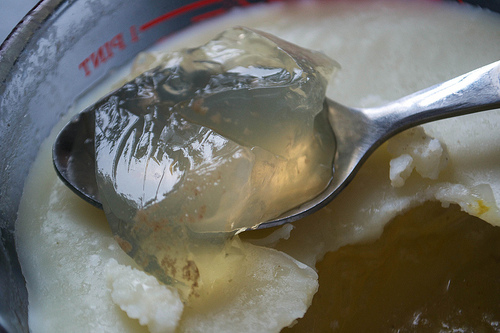
My stock turned to jelly in the picture above – this is a good sign that cartilage and soft bones have broken down and absorbed into the liquid. A good bone broth will give you calcium, collagen and important nutrients like proline, which help calm down an overactive immune system, heal the stomach and basically promote all-round healing in the body. See? It’s not just an old wives’ tale, after all. This article has a lot more information on how brilliant bone broth really is. 

You can use your chicken broth to make soups – clear or blended with veggies, your choice – add it to stews or just drink it as it is. To drink as it is, you might want to play around with some flavourings – try your favourite herbs, some lemon juice, add some salt and just tinker with the flavours to make it taste right for you. A pinch of Chinese 5 Spice (if you can eat seeds and seed spices) would be good here too. I like mine best just ladled, while it’s hot, over some mashed butternut squash, shredded roast chicken and avocado slices, for breakfast. 

12 Hour Slow Cooker (Crockpot) Chicken Broth
Makes approx 500ml. 

To make the broth, just drop the carcass from a leftover roast chicken into your slow cooker’s crockpot, along with all the bits of skin, leg bones, wing bones and cartilage that you have leftover, too. Pour in some boiling water – about 500ml – and replace the lid. For absolute best broth, some acid will help the nutrients come out of the bones so trickle in a little cider vinegar or lemon juice – or just chuck in a halved lemon before replacing the lid. Leave the slow cooker on low for 12 hours – you could even leave it for more if you wanted to. 

Once the time is up, switch off the slow cooker.  Place a sieve over a large bowl – the type you mix your cake batter in – and ladle the carcass, bones and skin into the sieve, allowing the broth to trickle down into the bowl. Sit the bowl in a sink filled a little with cold water, to help it cool down quickly (you don’t want to be leaving this on the worktop for hours on end). Once it’s sufficiently cool, cover with clingfilm and store in the fridge. 

Do you make your own broth? Do you have any tips to share?

I’ve entered this in Pheonix Helix’s Paleo AIP Recipe Roundtable… go check it out to see the other entries and for more Paleo AIP recipe inspiration…

Wednesday, 8 January 2014

Celeriac, Wensleydale Blue and Bacon Soup

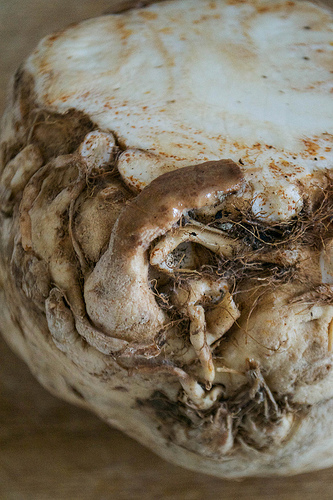
It took me a while to learn to love this gnarly root, but I’m glad now that I do. Celeriac pairs well with bacon, blue cheese, is great mashed along with potato and also served with slow-roasted meats such as lamb. And you can mash it, cut into chunky chips or blend it into soup. And that’s how I love to eat it the best.

I knew that celeriac paired well with blue cheese, but wanted something milder and less tangy than its popular partner, Stilton. I chose Wensleydale Blue – a Yorkshire cheese that I’ve also fallen for and perfect for when you want a milder blue cheese. The bacon lardons are fried afterwards and scattered over the top. A nourishing and filling winter soup. 

celeriac wensleydale blue and bacon soup pic

Celeriac, Wensleydale Blue and Bacon Soup
Serves 4
Ingredients
1 onion, peeled and roughly chopped
1 medium celeriac, peeled and trimmed and then cut into chunks
1 tsp vegetable oil, duck fat or other fat of your choice
pinch salt
500ml chicken stock, homemade or shop-bought
80g Wensleydale Blue, rind sliced off
200g smoked bacon lardons, to serve
snipped chives, to serve

Method
Heat the oil in a medium-sized saucepan and fry the onion gently until softened, with a pinch of salt. Toss the celeriac into the pan and stir-fry for a few minutes. Pour in the stock ad simmer for 10-15 minutes, until the celeriac is very soft. Crumble in the blue cheese and blend with a stick or jug blender. Taste, adding a little extra salt or blue cheese if you think it needs it, and keep warm on a low heat. 

Meanwhile, add the bacon lardons to a small frying pan and heat over a medium heat until they’re golden and beginning to crisp. Ladle the soup into bowls and then scatter the bacon over the top, along with the snipped chives. If you have any blue cheese left, you can scatter some of this over too, if you want to. 

celeriac

What’s your favourite way to eat celeriac? 

Monday, 6 January 2014

Chicken and Butternut Squash Coconut Curry (Paleo, AIP+Seed spices, Gluten Free, Dairy Free)

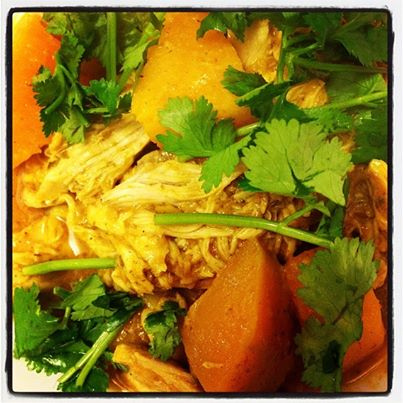
This is my new favourite way to use up leftover roast chicken. You could make it from chopped, raw chicken thigh meat but I never do, choosing to cook a bigger chicken for the roast and cooking this the next day. I’m even thinking about this curry while peering in at the bird browning in the oven. 

It’s suitable for paleo diets, as long as it’s served without rice (or any other grain, so naan bread’s out, too), but to be honest this is how I prefer it. Like a chunky soup in a shallow bowl, scattered with a handful of chopped coriander leaves, which I dip into with a big spoon. Comfort as it’s finest. 

I’ll stop waffling on. This is how you make it: 

chicken and butternut coconut curry

Chicken and Butternut Squash Coconut Curry
Serves 4-6
Ingredients
1 tsp coconut oil
4 spring onions, sliced
1 heaped tablespoon Patak’s Korma paste
2 x 400ml cans coconut milk
half a butternut squash, peeled and diced into bite-size pieces
2 handfuls leftover cooked roast chicken, chopped roughly
salt
fresh coriander, to scatter over

Method
First, melt the coconut oil in a medium-large sized non-stick pan and throw in the spring onion slices. Stir fry for a couple of minutes, until sizzling and just beginning to soften. Lift them out and tip onto a saucer while you get on with the rest of the curry. 

Add the korma paste to the now empty pan and fry for a minute, until warmed through and sizzling. Stir in the coconut milk and drop in the butternut pieces. Simmer on a medium heat until the butternut is just tender (about 10-15 minutes). Add a pinch of salt and the chicken and return the spring onions to the pan, giving everything a stir to combine. 

Once the chicken is thoroughly heated through (4-5 minutes) transfer the curry to bowls and serve scattered with plenty of fresh coriander. 

Note: you could also stir in some frozen peas or chopped spinach along with the roast chicken, for more colour and veg appeal. 

Friday, 3 January 2014

Comfort Bites Comfort Food Challenge #2: Christmas Roundup

Well, that’s Christmas done for another year. We’ve gorged on mince pies, cheese and lots and lots of Heroes…. 

I hope you all had a lovely time. Here are the posts that linked up to the Christmas Comfort food Challenge…

Chocolate Log Blog – White Chocolate Shortbread Biscuits


Chocolate Log Blog's White Chocolate Shortbread 

I was thrilled that Choclette from the Chocolate Log Blog took part this month, as I know it’s always hectic in the run up to the big day. She made some white chocolate shortbread biscuits with flavours such as coffee and matcha tea. The speckled coffee ones were really popular, she says. I bet they were. 

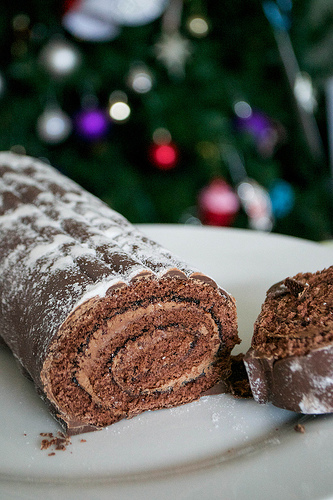
Comfort Bites – 7 Twists on the Yule Log Cake


christmas yule log 

A bit bored of the usual chocolate/buttercream Yule Log, I had a look to see what other Yule Logs had been devised by clever folks on the internet. There were coffee ones, peppermint ones and chocolate and Amaretto ones. I also talked about how a slab of Yule Log plays a part in a little celebration ritual in our house, as we start to say goodbye to the previous 12 months and look forward to the next. 

Thank you Choclette for linking up this month!

A new topic for our monthly celebration of all things comfort food will be posted soon – look out for the post if you’d like to link up. 


comfortbiteschallengexmas

LinkWithin

Related Posts Plugin for WordPress, Blogger...