Monday, 30 June 2014

7 Myths About the Auto Immune Protocol and Paleo Diets

I like to keep on top of the news. Especially when it concerns lifestyle choices I’ve made. But I see too many well-written – but poorly researched – articles on how bad paleo diets are – and that includes the autoimmune protocol, which I follow. 

There was one article recently that headlined how harmful the diet was – and had as its headline image a man enthusiastically ripping apart a piece of raw, bloody meat with his teeth. Yep. We’re not doing that on our lunch break, just so you know.

So I wanted to talk about a few of the main gripes I have with these kinds of articles: 

1. The paleo diets are ‘elitist’ because meat is expensive
Believe me when I say that my shopping bill went DOWN when I started eating paleo. Yes, I was buying (where I could, but not always) organic or grass-fed meat, which is expensive. But I wasn’t buying the crisps, biscuits, cakes, bread, fruit juices, oven chips and chicken nuggets that I used to buy. I was shelling out instead on offal. Like liver, kidneys and heart. My butcher gives me FREE bones for broth and stock. I use every bit of the chicken from the Sunday roast. See? Nothing goes to waste, not even the bones. Buying processed (expensive for what they are) foods, only mainstream cuts of meat (fillet steak and chicken breast fillets, I’m looking at you) and chucking leftovers in the bin? Now to me, that’s an elitist way of eating.
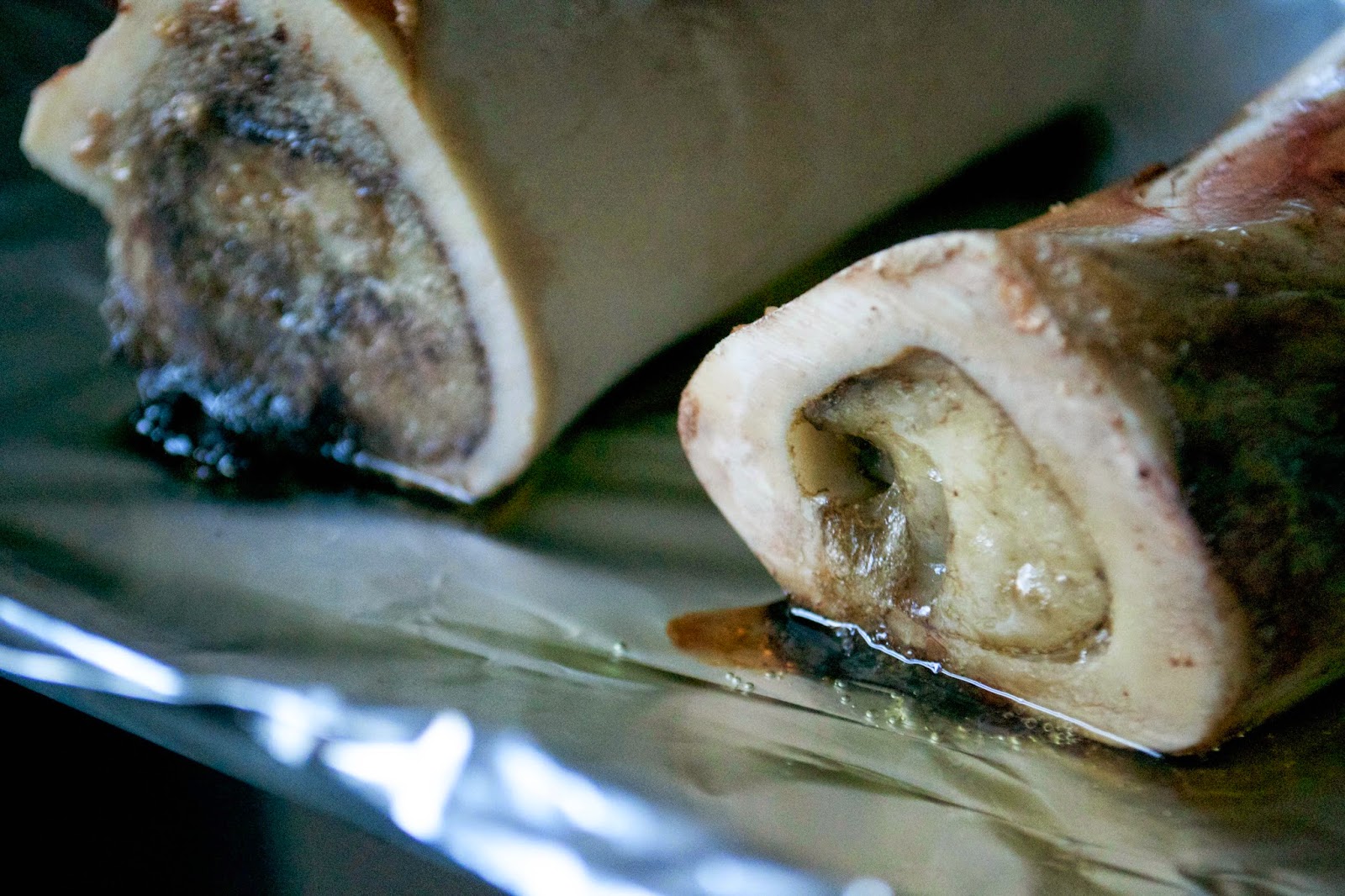
Roasted marrowbones. Cheap. Sometimes free. And paleo.

2. The paleo diet is a low-carb diet and can therefore mess up your digestion
Who said it was low-carb? I’ve never heard that. I eat tons of carbs – sweet potatoes, carrots, squash – just not bread. Carbs are very important as a source of energy and to help keep your digestive system running smoothly. In fact, on paleo, it becomes a bit of a mission to find carbs and include them in your diet. Yes, we’re actually looking for carbs. And my digestion has never been working so well, thanks.

3. The paleo diet is just a fad
Hmm. Archaeological evidence points to early Man eating seafood, foraged vegetables, nuts, berries and meats. We’re talking over 10,000 years ago – before we started farming. I don’t recall Time Team ever digging up a paleolithic skeleton and finding it clutching a crumpled up, faded doughnut packet. But if you want to call it a fad, please do. It’ll be the longest running ‘fad’ in history. 
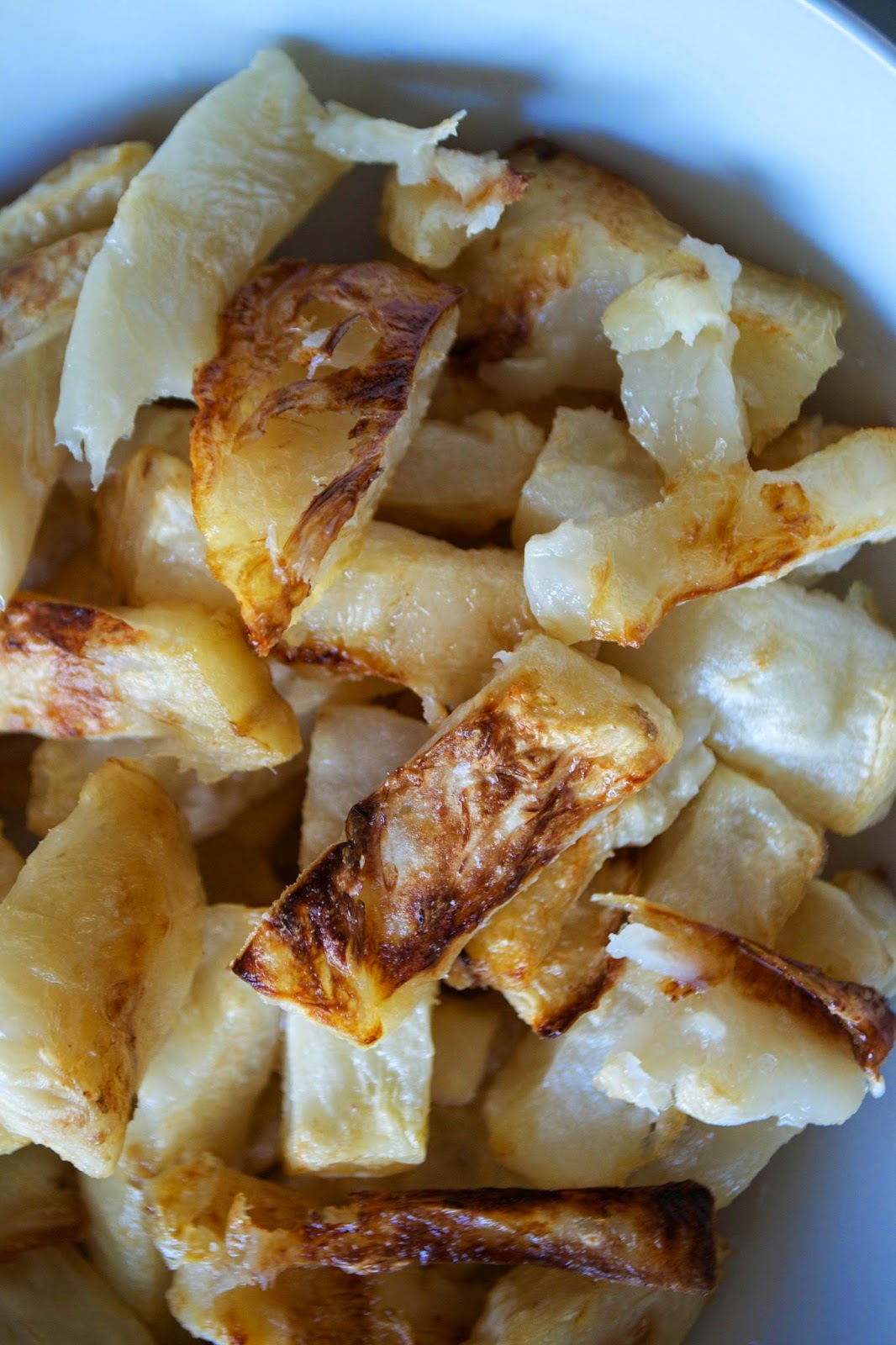

Celeriac chips – one form of starchy veg and important for carbs

4. The paleo diet is a high meat diet and could cause cancer
OK. Firstly, it’s not ‘high meat’. It’s just low-rubbish. If you’re doing paleo the right way, you’ll be eating a wide range of foods – seafood, fish, meats, poultry. We do eat bacon, but we recognise that there are limits and it should be eaten occasionally. We eat well-sourced, natural cuts of meat. When the ‘processed meat and cancer’ headlines hit the news a year or so ago, they were talking about sausages, bacon, burgers and chicken nuggets if I remember correctly. Not duck legs or pork belly. And we don’t just eat red meat. I probably eat beef or lamb once a week – the rest of the time it’s chicken, turkey, fish and seafood. Secondly, paleo eaters eat a lot more veggies than you would probably imagine. We have to. You need something else to fill your plate when you don’t have bread, rice or pasta. Dr Terry Wahls – who used a paleo diet and functional medicine to reverse multiple sclerosis – recommends eating 9 cups of veggies every day. 

5. The paleo diet contains a lot of fat – including saturated fat – which will give you heart disease
More and more medical professionals are coming out with the idea that it’s not fat that’s making us all ill, but too much sugar. And carbohydrate is, ultimately, a form of sugar – if we don’t use it quickly. I remember a while ago, a nurse at my doctor’s surgery was appalled when I told her I ate quite a lot of avocado, and told me to stop it, for the sake of my blood pressure. Now, fats are seen differently, as we learn more about what causes heart disease (inflammation) or makes us more chunky (sugar). Read up on Dr Malcolm Kendrick (a British doctor) and the posts explaining this on Mark’s Daily Apple.

6. Paleo diets are not environmentally sound because of the huge quantities of meat eaten
Firstly, it’s not all about meat. But you knew that, from statement 4, above. Now consider this. What meat we do eat, we try to get grass-fed or higher welfare, because that’s where you get the rich and beneficial omega-3 oils contained in the meat. We don’t really like to eat shellfish that’s been intensively farmed with chemicals that could be contaminating the seas of the world. The argument about using huge patches of land to grow grains to feed cattle – naturally grass-eating animals – is also worth considering here. And let’s not forget the smoke, chemicals and waste being pumped out by factories that produce our processed, conventional foods. Have a look at what Mark Sissons has to say about this in his post on feeding the world on a primal diet. 

7. Diet can’t ‘fix’ autoimmune disease, only medicine can
If I had a pound coin for all the times I was told this (usually by doctors) – well, I’d be blogging from a balcony in Monaco by now. While no one is claiming that autoimmune disease can be ‘fixed’ completely – it’s something you might have to live with for a long time, maybe the rest of of your life – but an autoimmune-friendly diet might send it into remission. Look on the web and you will see lots of success stories, if mine isn’t good enough for you. Look at what Sarah Ballantyne (The Paleo Mom) says about Dr Terry Wahls’ promising clinical trial on diet and autoimmunity. If you’re on medication I wouldn’t suggest stopping it though – work with your doctor and your meds alongside a AIP diet and I bet you’ll see some difference. I know I did. Other factors like stress, sunlight and vitamins play a part too, I should also add.


Thursday, 26 June 2014

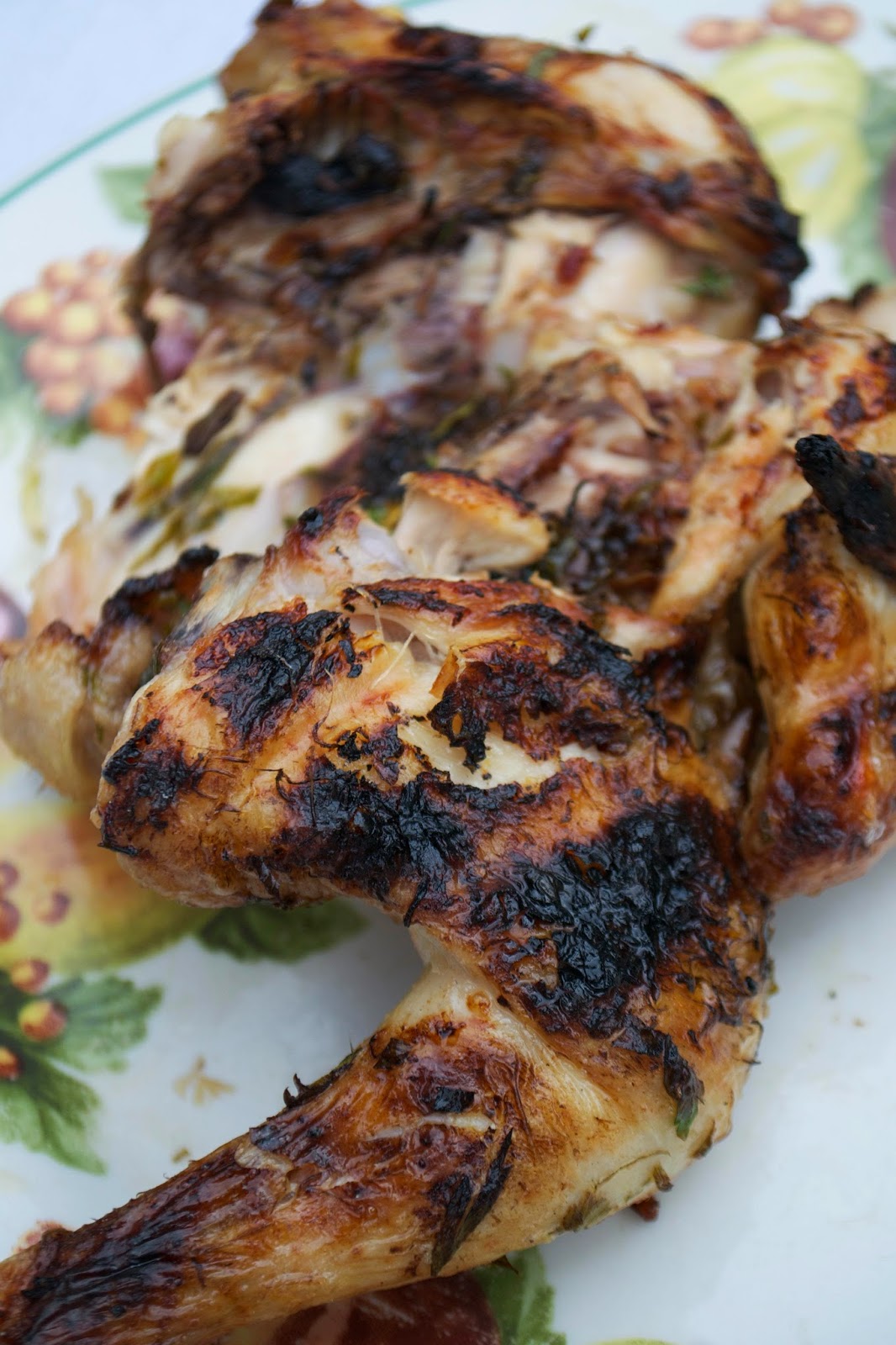
Barbecued Poussins

Oh. My. Goodness. 


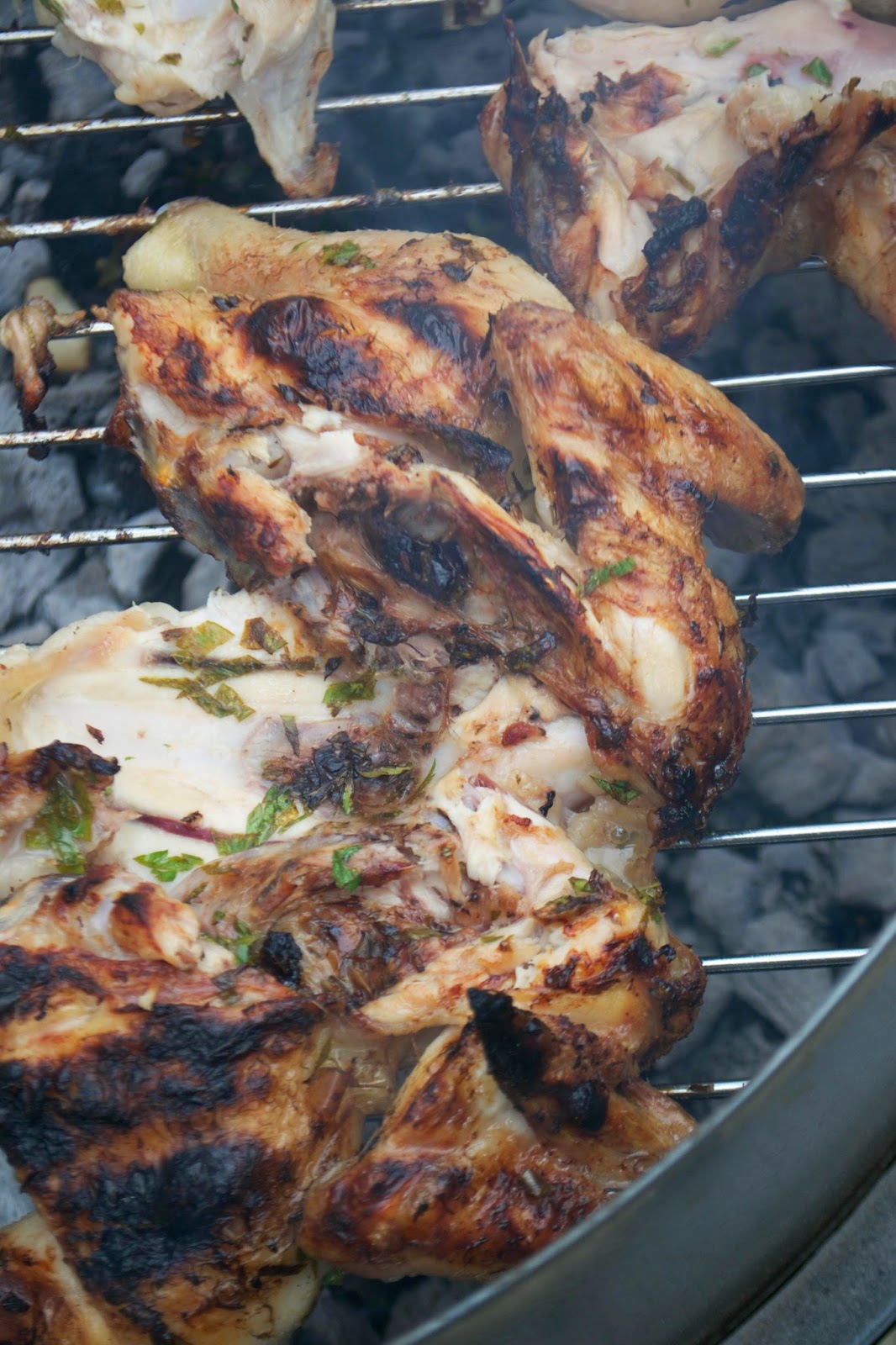
Just look at THAT. 

Barbecued poussins. A poussin is basically a baby chicken – and because they’re small, they cook really quickly, and in their skin, too – which seals in all the juices and flavour. Since we tried these, we can’t light the barbecue now without getting one of these to share. We had friends round for lunch the other weekend, and converted them too. 

I just marinade them in a mixture of garlic, lemon, coconut oil and parsley – give them a quick rub with some salt and then barbecue them whole. For my general cooking I use a mild coconut oil, with no coconut flavour. Here’s how I do it. 


Barbecued Poussins Marinated in Lemon, Garlic and Parsley
Serves 2-4
Take two poussins and spatchcock them (this isn’t tricky at all, and just requires a little bit of elbow grease – full instructions on this post about spatchcocking a chicken). Next, take out a large roasting dish and squeeze in the juice of 2 lemons, a large handful of parsley (chopped) and then 3 whole, but crushed, garlic cloves, removed from their skins. Add 3 tablespoons of coconut oil and then add the poussins, rubbing the marinade and oil over them (if your coconut oil is solid, it will melt down a little as you mix it all with your hands). Wash your hands and cover the poussins with cling film and keep in the fridge until you’re ready to cook. 

Once your barbecue is ready for cooking (no flames, just chalky, hot coals) sprinkle the poussins with a good pinch of salt, and lay them out flat on the bars of the barbecue. Cook for about 7-8 minutes and then turn over. The poussins should take around 15 minutes in total to cook, but check there is no pink flesh (or pink juices) by cutting into it before serving. If there is, put it back on the barbecue for another few minutes until it’s fully cooked through.

Tuesday, 24 June 2014

An Argentina World Cup Party: Choripan, Black Pudding Burgers and Dulce de Leche and Clotted Cream Scones

So. England are out of the World Cup. Boo. But Argentina are still in – (hurray – at least for us!).

To celebrate, we held a little World Cup-themed party – and ate choripan, salsa criolla and burgers. We finished off with hugely decadent dulce de leche and clotted cream scones – and coffee, of course. 


The burgers were inspired by a series of recipes on the Waitrose website for burgers from around the world. I didn’t see an Argentina one and so cast my mind back to the asados I ate at last year in Buenos Aires. I remembered I ate a LOT of black pudding (morcilla) and that it went particularly well with chimichurri. And so I developed a beef burger (how could it not be beef when we’re talking about Argentina?) that had a slice of black pudding in it and a generous spoonful of salsa criolla – a brightly-coloured salsa with onions, red peppers, tomatoes, parsley and garlic. It was beautiful. And burgers are great finger food when it comes to games on the telly.


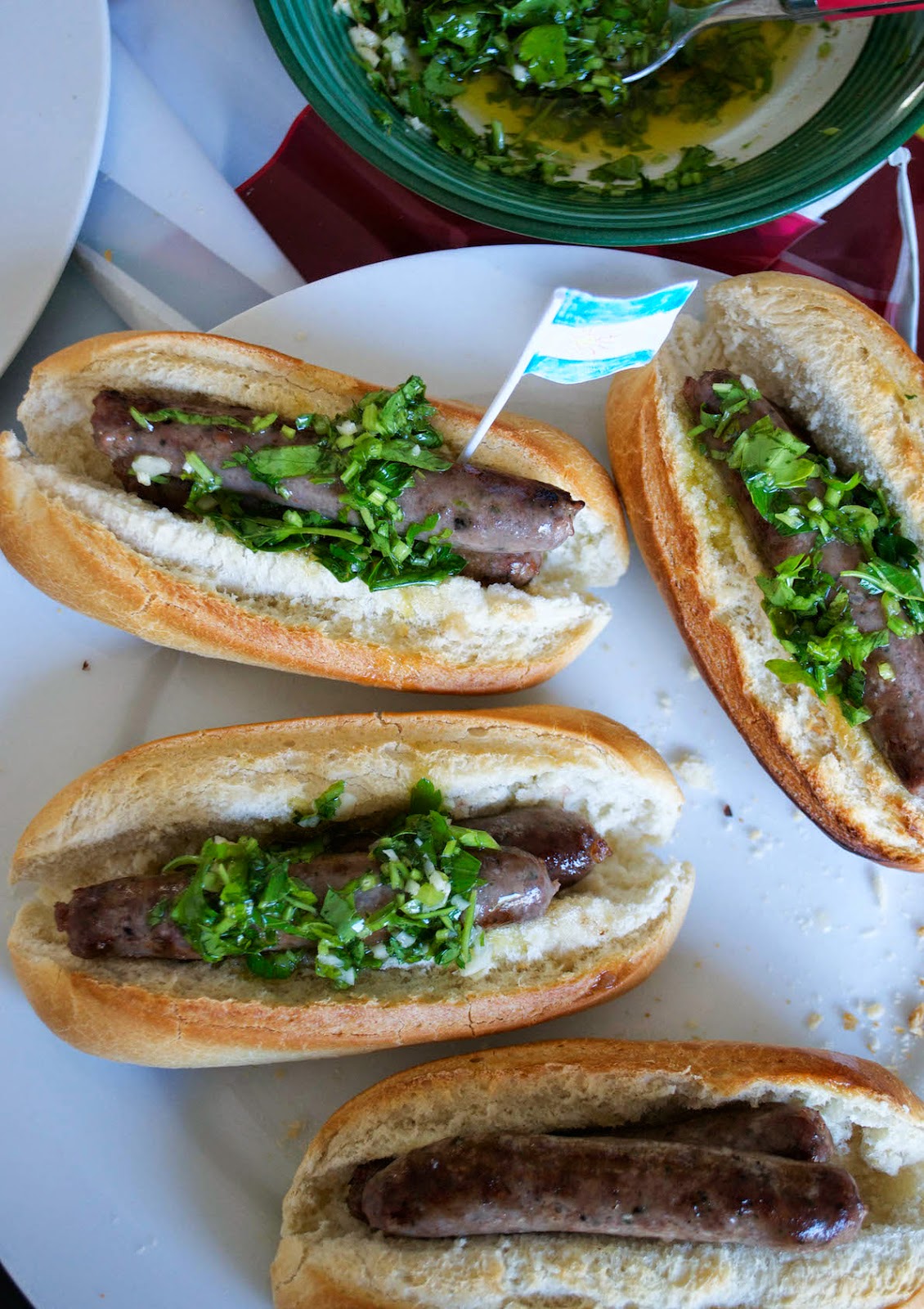
Choripan comes from the Spanish word for sausage: ‘chorizo‘ and bread: ‘pan‘ – so you get chori-pan, or sausage-bread. We grilled Waitrose Aberdeen Angus and black pepper chipotlatas and stuffed them into freshly-baked dinner rolls. A crisp, pale bread is best for these – and then you need to spoon lots of chimichurri salsa over it before eating. See the olive oil dripping down the bread up there in the collage above? That’s what I’m talking about. Gluten-free or paleo peeps, feel free to make a slit down the length of the sausage and spoon the chimichurri into that, eating it just as it is. That’s what I do. 


For the pudding – the dulce de leche and clotted cream scones – you just slice up some scones, add a generous spoonful of thick dulce de leche repostero (I luckily had a jar of this in the cupboard) and then finish with a swirl of clotted cream. It couldn’t be easier, and, quite frankly, everyone can do it themselves, while you get the coffee on. (And yes, you get coffee at football matches in Argentina – not beer – coffee or cola. Someone comes along with a jug of hot coffee, and a stack of paper cups, making their way through the stands. It’s brilliant). 

So. Here’s how you make the beefburgers. 

Argentina-Inspired Beef Burgers with Salsa Criolla and Black Pudding
Makes 6 mini burgers
Ingredients
500g beef mince
1 onion, peeled and chopped finely
pinch of salt
1 tsp coconut oil (or other oil of your choice)
6 slices of good quality black pudding
6 mini burger/sandwich rolls
quantity of salsa criolla

Method
Heat the oil in a non-stick pan and fry the onion, with a pinch of salt, until softened. Tip into a large mixing bowl and leave to cool. Once cooled, add the beef mince and mix together with your hands, until just combined. Divide the mixture into 6 pieces and form patties. Fry them for about 5-6 minutes per side, or until completely cooked through. 

When cooked, lift the burgers out and place on a plate. Quickly add the black pudding slices to the pan, cooking on a medium heat until cooked through and beginning to turn crisp. Assemble the burgers in the split mini burger buns with the black pudding on top and a very generous spoonful of the salsa criolla. 


To help me host my World Cup Argentina-themed party I received a contribution towards the cost of the ingredients from Waitrose.   

For more of my Argentina inspired recipes and information about eating in Argentina, check out my ebooks on Amazon – (affiliate links): 


Monday, 23 June 2014

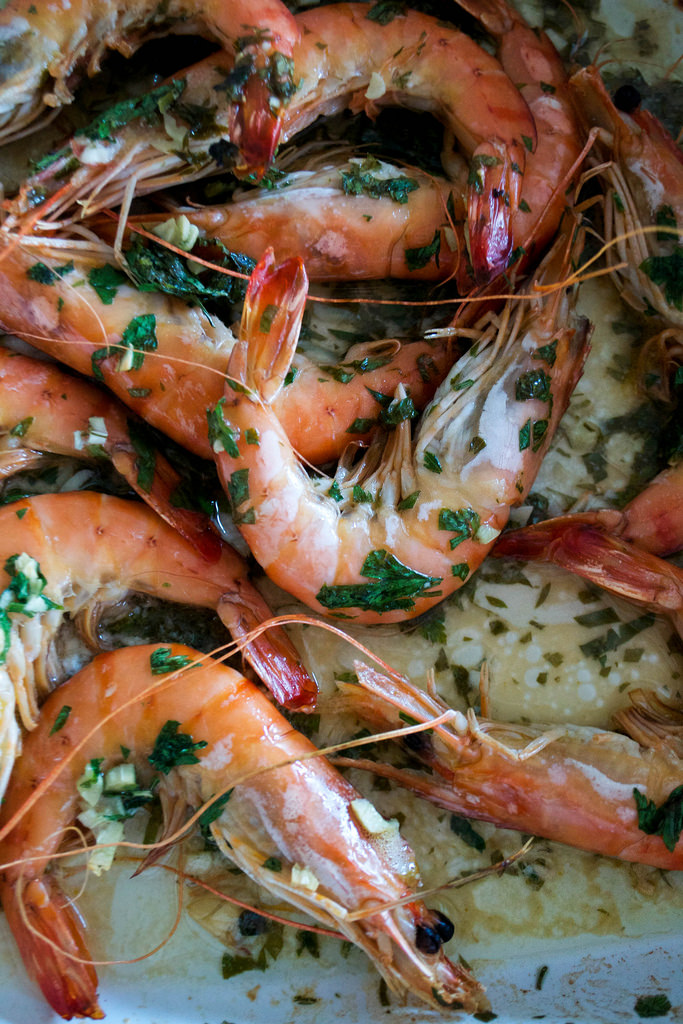
Roasted Prawns with Smoked Garlic, Parsley and Lime

Roasting prawns makes them so juicy. I mean pan-frying is quick and all, but roasting really locks in all that juice and makes them succulent and delicious. 

I’ll hold my hands up – these prawns are pretty addictive, so it’s a good job they’re good for you too, little protein bombs packed with essential omega 3 and 6 oils. Make more than you think you’ll need. They’ll soon be eaten. 

And don’t underestimate their pull on children – my two ended up eating more than we did, they loved them so much. And although the smoked garlic gives a muted, bonfire-sweetness here, don’t worry if you can’t get hold of it – just used regular garlic instead. Oh, and you’ll need something to mop up all that delicious juice: how about some salad leaves or celeriac chips?  


roasted prawns aip paleo with lime coriander and parsley

Roasted Prawns with Smoked Garlic, Parsley and Lime
Serves 3

Ingredients
2 tsp coconut oil
10 welfare-farmed King Prawns, shell-on 
2 cloves smoked garlic (or regular garlic), chopped
large handful fresh parsley, chopped
pinch of salt
1 lime (plus more for serving if you like)

Method
First, preheat your oven to gas mark 6/200ºC. Get out a roasting dish and add the coconut oil, sliding it in to the oven to melt – just for about 2 minutes. 

Once the oil has melted, take out the dish and chuck in the prawns, in a single layer. In a bowl, stir together the chopped garlic and parsley and squeeze in the juice of a lime. Season with salt and then toss the prawns in this mixture, give the dish a shake and roast in the oven for 20 minutes, until the shells are a golden shade of coral and the juices are sizzling. 

Serve the prawns hot, with extra lime wedges for squeezing over if you want to. 


Wednesday, 18 June 2014

Argentina-Inspired Coffee and Cinnamon Ice Cream (Helado de Café con Canela)

This is a very special ice cream. While we were in Argentina visiting family last year, my sister-in-law offered to look after the children, so my husband and I could go out on a little date. As it was lunchtime, we decided to find a nice café and have a couple of cheese and ham tostadas and a cup of coffee. The tostadas were light, fluffy and the cheese perfectly oozy. 

coffee and cinnamon ice cream argentina

But the coffee was something else. Rich and dark, and served in a tall glass with a thick dusting of ground cinnamon over the top. The flavour of the coffee with the cinnamon wouldnt leave my head, so I knew I wanted to make a dessert with it once I was back home. And this is it. It has a splash of coffee liqueur, which adds a richness to the ice cream, and the cinnamon adds a gentle warmth. Beautiful. 
 
Ingredients
2 egg yolks
160g golden caster sugar
200ml double cream
200ml full-fat milk
2 tsp coffee granules
quarter teaspoon ground cinnamon
1 tsp coffee liqueur 
 
Method
First, make sure you have an ice cream machine bowl in the freezer so you can churn your ice cream. 
 
Next, whisk together the egg yolks and sugar, until it resembles a very thick custard. Set to one side. In a small saucepan, gently heat the milk and double cream – dont let it boil – just heat it until you start to see steam forming on top, stirring all the time. Dissolve the coffee granules in the milk, and add the cinnamon and coffee liqueur. Splash a little of the cream mixture onto the sugar and egg yolks, and whisk well. Trickle in the rest of the cream and milk, whisking all the time. 

Immediately pour the mixture back in the saucepan and heat, stirring constantly, until the ice cream mixture thickens slightly. At this point, turn off the heat, leave the mixture to cool and then cover with cling film and refrigerate overnight. 
 

The next day, set up the ice cream machine with the now-frozen bowl attached and churn the chilled mixture for 20 minutes. Scrape into a freezer-proof container and stash in the freezer until ready to serve. This ice cream softens very quickly at room temperature, because of the alcohol, so dont leave it out too long!

I have also entered this recipe into Kavey’s Bloggers Scream for Ice Cream challenge on sharing an ice cream recipe inspired by a holiday. When I saw that ‘holiday memories’ was the theme, I couldn’t resist.  


For more of my Argentina-inspired recipes, check out my ebooks on Amazon (affiliate links):


Monday, 16 June 2014

Washing Chicken, Bugs and What You Need to Know about Campylobacter

If I asked you what makes you ill if you eat undercooked chicken, you might say salmonella. Or E.Coli. But campylobacter is a little less well known and it’s something we should be keeping an eye on, too, according to the Food Standards Agency. 

Today, they launch a campaign to raise awareness of the bug, which is thought to be behind 280,000 cases of food poisoning a year – that’s one case every 2-3 minutes. Yes, that’s every two to three minutes. Startling, right?

I was invited to attend a Google Hangout hosted by the Food Standards Agency last week and we heard all about campylobacter and how you can help prevent infection. And you’ll be pleased to know it’s quite simple. 

We heard from Professor Sarah O’ Brien, from the University of Liverpool, who told us that common symptoms of campylobacter infection include bloody diarrhea, weakness and stomach ache and added that in one case, a healthy man was put on a ventilator for seven weeks because of infection from the bacteria. “We don’t think that when we have our Sunday lunch, three weeks later we could be paralysed,” she says. Well, quite. In fact, last year 1,000 people with campylobacter infections needed hospital treatment.


pomegranate molasses grilled chicken aip paleo autoimmune

And although we think of salmonella as more common, it takes around 10,000 salmonella bugs to infect a person: for campylobacter you’d only need to eat 100 bugs to become infected. These stats are all quite frightening, aren’t they? So how can you help prevent yourself and your lovely family and friends getting infected? Cue Sue Ashford. 

Food expert Sue talked about practicing good food hygiene. And, as 4 in every 5 cases of the bug are traced back to infected poultry, it’s quite straightforward. 

For starters, don’t wash chicken before you cook it.  Apparently 44% of people still give chicken a rinse under the tap before cooking, which doesn’t make your chicken any cleaner but can cause splashing around your worktops, sink, taps and spread the bug about. Campylobacter can actually survive on those for a few hours, if not days – so you don’t want to be doing that. 

Here are Sue’s Top Tips on how to help prevent a Campylobacter infection this summer:

  • Don’t wash chicken
  • Cook all poultry – that includes turkey, chicken, duck etc – thoroughly. Campylobacter (and other nasty) bugs will all die off and be rendered harmless. Check with a knife or skewer that no pinkness remains and then if it isn’t cooked, wash up the knife or skewer.
  • Take an ice pack with you when you go shopping and pack meats separately from fruit, veg and salads.
  • Defrost meat and poultry on a plate at the bottom of the fridge (you don’t want any raw juices trickling into your salad trays underneath). 
  • Wash hands thoroughly after touching all meat and poultry
  • Don’t leave knives, boards and plates that have been in contact with raw poultry or meat hanging about – wash it up straight away. Don’t wait for the dishwasher to get full – just wash it up immediately in hot, soapy water. 
For more information about the campaign, visit the FSA website

Friday, 13 June 2014

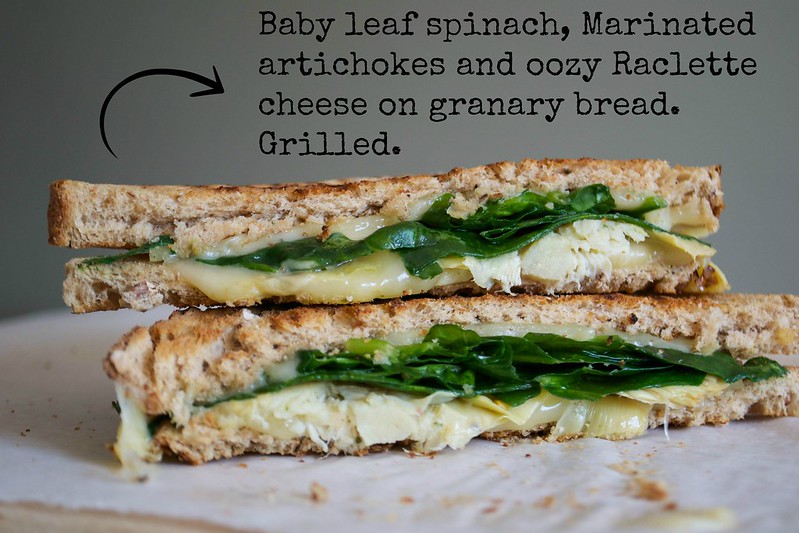
Spinach, Artichoke and Raclette Grilled Cheese Sandwich

OK. Here it comes. 


Spinach and artichokes go together so well, right? I mean, they’re in creamy, cheesy dips all over Pinterest. And so I thought they’d be super in a grilled cheese sandwich. But not the usual Cheddar that usually completes the trio – I wanted a creamy, oozy Swiss: Raclette. 

You have to make this sandwich on granary bread – the malty nuttiness helps balance out the cheese and the spicy zing from the herb and chilli-marinated artichokes. Here’s how you make it: 


spinach artichoke and raclette grilled cheese h

Spinach, Artichoke and Raclette Grilled Cheese Sandwich
Serves 1. 


Take two slices of granary bread and lightly toast them until just beginning to turn crisp. On one of the slices, arrange 1 and a half slices of Raclette cheese and then repeat for the other slice. Take one slice and press in a small handful of baby spinach leaves and then arrange marinated artichokes on the other slice, on top of the cheese. Press the two slices together and lay onto a slightly oiled griddle pan. Leave to turn crisp and golden for about 5 minutes – the cheese should just be starting to melt. Flip it over and grill the other side, until the cheese has melted. 

Enjoy hot. 

Wednesday, 11 June 2014

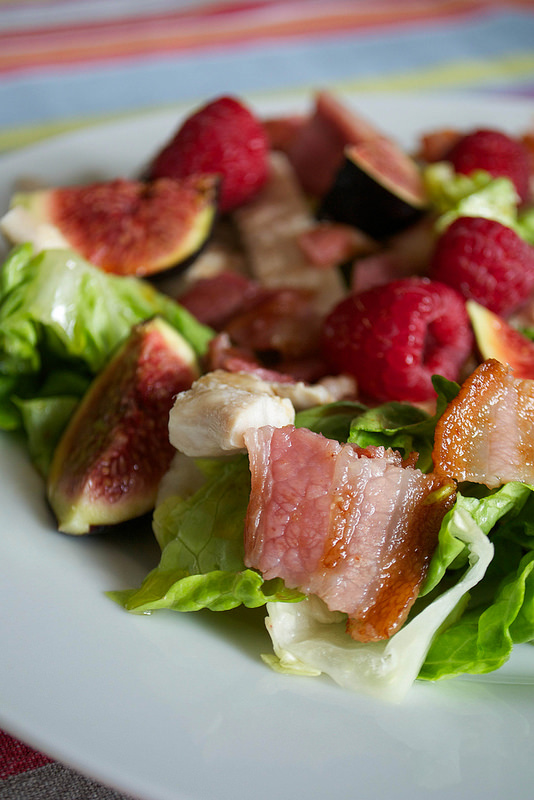
Turkey, Bacon, Fig and Raspberry Salad with Pomegranate Molasses Dressing

So here’s a fruity salad for you… 


aip paleo fig raspberry bacon salad with pomegranate molasses dressing

It came about after I had some leftover, cooked turkey steaks and some bacon – and raided the fridge for whatever else I could find to go with it. I grabbed the figs while thinking they would work so well with the salty, smoky bacon. And then I found the raspberries. I couldn’t decide which to use, so I threw both on. And finished it with some crisp, shredded little gem lettuce and a drizzle of pomegranate molasses and olive oil dressing. 

It’s sweet, salty, smoky and tart. It’s soft, crunchy and aromatic. It’s probably one of the best salads I’ve ever eaten. 

Turkey, Bacon, Fig and Raspberry Salad with Pomegranate Molasses Dressing
Serves 1
Ingredients
1 turkey steak, cooked and cut into slices
2 rashers of smoked streaky bacon, grilled until golden and cut into slices
3-4 little gem lettuce leaves, washed, dried and then shredded
4-5 raspberries, washed and dried
2 baby figs, washed and cut into quarters

For the dressing: 
1 tbsp extra virgin olive oil
1 tsp pomegranate molasses

Method
Arrange the little gem lettuce on a plate with the cooked turkey and bacon. Tuck in the fig slices and scatter over the raspberries. Mix the olive oil and the pomegranate molasses together and then pour over the salad. Eat straight away. 

Monday, 9 June 2014

Argentine Quick Membrillo Facturas

I spent 10 days in Argentina last year. And during that time I gained one kilo of weight. This is quite a lot in a short space of time. And it was partly down to the odd alfajor and visit to the ice cream shop, but it was mostly because of the facturas


Facturas are little miniature pastries that you can buy in Argentina at the panadería (bakery). They even open on Sundays (we visited on Easter Sunday and they were open). And my goodness, did I eat a lot of them. There were little croissants filled with dulce de leche, dusted with cinnamon or custard. And then there were churros, filled with dulce de leche and then dipped in chocolate. And little pastries with membrillo (quince paste) and custard. We’d wake up, at just before eight in the morning – and more than once, my brother in law would be at the door, with a box of facturas. When he wasn’t there, we’d take the short 5-minute walk to the bakers and grab a dozen (or two). 

These arent traditional, authentic membrillo pastries, but theyre the next best thing if youre looking for a quick facturas fix. I sometimes whip up a batch on a Sunday morning and everyone piles around the table with mate or coffee. Makes 6. 
 
Ingredients
1 x 320g pack rolled puff pastry
1 beaten egg
12 heaped teaspoons of membrillo (quince paste)
1 tsp icing sugar, for dusting
 
For the icing:
10 tbsp icing sugar
half a teaspoon hot water
 
Method
Preheat the oven to gas mark 6/200ºC/400ºF and line a baking tray with greaseproof paper. 
 
Unroll the pack of puff pastry in front of you and cut it into six rectangles. 
 
Brush the squares with beaten egg and then spoon 2 teaspoons of membrillo into the centre of each pastry rectangle. Pinch the corners and fold them over the centre of the pastry. Brush with more egg and sprinkle with the teaspoon of icing sugar. Slide into the oven and bake for 10-12 minutes. 

To make the icing, spoon the 10 tbsp icing sugar into a small bowl and add a tiny trickle of hot water, enough to make a thick but still runny icing. Once the pastries have cooled down, drizzle the icing over the top and leave to set. 

Have you ever tried facturas? For more of my Argentina-inspired recipes, check out my cookbook on Amazon (affiliate link): 


Friday, 6 June 2014

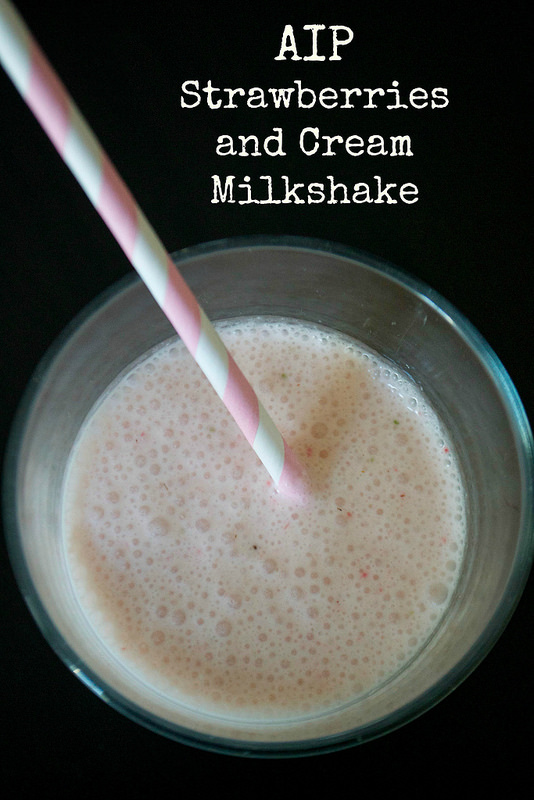
AIP Dairy Free Strawberries and ‘Cream’ Milkshake

Is this a smoothie or a milkshake? I never really know…


aip paleo strawberries and cream milkshake 

It does have a banana and some strawberries blended in, so I suppose it’s a smoothie but then there’s coconut milk, too. And there isn’t actually any ‘cream’ of course, that’s just the cream from the coconut milk. Well, whatever you want to call it – it’s delicious, as well as vegan, paleo, autoimmune-approved and completely dairy-free. And it feels sweet and indulgent – a fragrant, fruity milkshake that satisfies those cravings for strawberries and cream…


aip paleo strawberries and cream milkshake smoothie


AIP Strawberry and Cream Milkshake
Serves 2-3
Ingredients
A large handful of chilled strawberries – about 8-9 large ones, the green tops trimmed off
1 frozen banana (peeled)
400ml can coconut milk (not low-fat) – chilled if you like
1 tsp vanilla extract (for strict AIP use vanilla powder – vanilla extract can only be used if it’s cooked and the alcohol is burned off). 

Method
Blend all the ingredients together until smooth and drink while cold – or cover and chill in the fridge once blended if you prefer. 


Wednesday, 4 June 2014

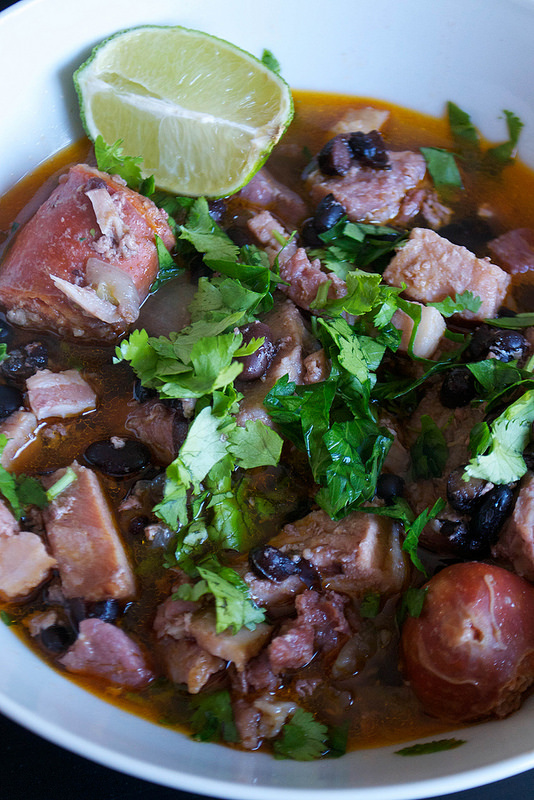
Slow Cooker Brazilian Feijoada – Pork and Black Bean Stew

I can’t say that this is 100% authentic. I haven’t been to Brazil (although I am working on it). 

What I can say is that it’s the end result of tweaking other Feijoada recipes until they worked for me, adjusting and tinkering as I went, until I ended up with something completely different.


brazilian feijoada

First, I tried Alan Rosenthal’s version, from the book Stewed!. In it, he uses chorizo, pork shoulder, gammon and smoked bacon and suggests serving it with orange slices and freshly-chopped coriander. The stew was delicious but a bit salty for my taste, and so I’ve taken out the gammon and just kept in the smoked bacon lardons, adjusting quantities of the rest of the meats accordingly.

And then there was a recipe on the Allrecipes website that I tried. It used bacon but didn’t have the lovely big chunks of pork shoulder or the chorizo that I loved in Alan’s version. The chorizo is especially important, as it colours the broth a warm amber and gives the stew a smoky-sweet flavour. And it was scattered with a combination of parsley and coriander. That bit I really liked. So I kept it in.  

I also wanted to leave the stew in the slow cooker bubbling away all day. I don’t like to have the oven blaring when it’s hot outside, and this way you can come and go all day without worrying about when you’re going to put dinner on. You just eat when everyone gets home. And I’ve used tinned beans instead of dried ones. This really is an unfussy, uncluttered version. You just chuck everything into the crockpot and scoop it all out to eat 4 hours later. 

So this is it: my version of the Brazilian stew Feijoada. You can use beef instead of (or as well as) pork shoulder if you like. But you need the smoky chorizo and the bacon. Trust me. 

I hope you like it.

Slow Cooker (Crockpot) Feijoada
Serves 4-6
Ingredients
1 tsp olive, coconut oil or whatever you like to cook with
2 garlic cloves, peeled and roughly chopped
2 onions, peeled and roughly chopped
200g smoked bacon lardons
550g pork shoulder steaks, diced into 4-5cm chunks
280g mild cooking chorizo, cut into chunks
400g tinned black beans, drained
large handful each of fresh parsley and coriander leaves, chopped
Fresh lime wedges, to serve

Method
Put your crockpot on to high. 

Heat the oil in a frying pan and gently cook the garlic and onion until softened but not browned – about 5 minutes. Add to the crockpot. 

Next, fry the bacon lardons until the fat starts to render down and they turn slightly golden and then add the pork shoulder pieces. Continue to cook until the pork is lightly golden and then add to the crockpot, along with the chorizo sausages. Add 150ml water to the pot, give everything a stir, and replace the lid. Leave to cook for 3 hours. 

When you’ve only got one hour left for the stew to be cooked, tip in the beans to warm through. Allow to finish cooking for the final hour. 

When the stew is ready to serve, the pork shoulder will be tender and the broth will be a warm amber colour. Ladle into bowls and pour over some of the liquid in the pot. Scatter with the chopped coriander and parsley and squeeze over the lime juice just before serving. 

I eat this plain, in shallow bowls, but you could serve it with some rice – how about some lime and coriander rice alongside? 


Monday, 2 June 2014

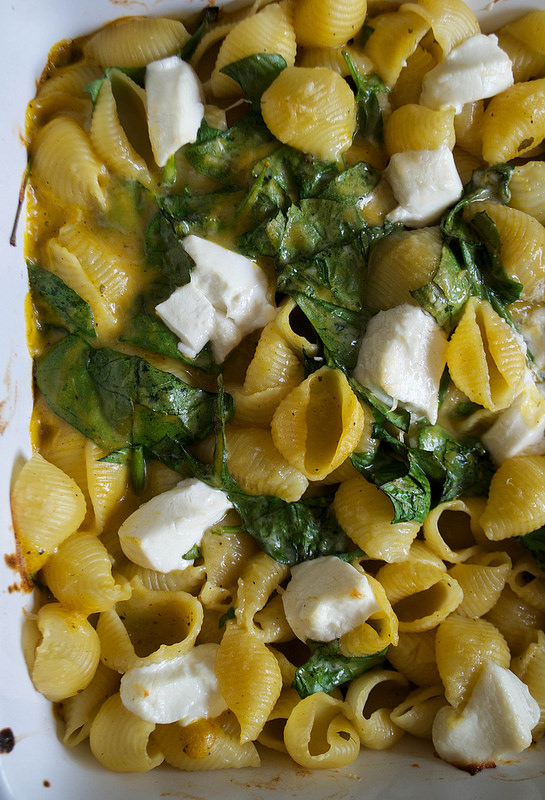
Pumpkin, Goat’s Cheese and Spinach Pasta Bake (Using Glorious! Lost in Lombardy Sauce)

I talked about Glorious soups a while back – well now, they’ve come up with a range of cooking sauces too – including one that particularly caught my eye: a pumpkin and amaretto sauce.

I mean, pumpkin and amaretto? What will that go with? Goat’s cheese, people. Lots and lots of goat’s cheese. And spinach, too.

There are other sauces in the range – I’ve tried the Barefoot in Bologna sauce – which is a mix of sausage, spinach and tomato (lovely with courgette ‘noodles’); and A Night in Tuscany – a rich tomato sauce with Chianti (which I stirred into some minced turkey and gnocchi and baked in the oven). This pumpkin sauce is called Lost in Lombardy.

You get creamy goat’s cheese, pumpkin sauce with the sweetness of the amaretto and all bubbling straight out of the oven.


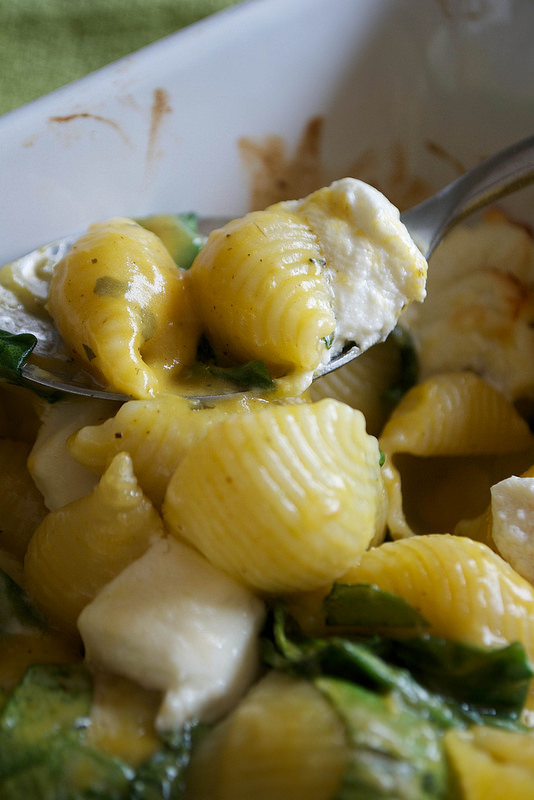
glorious pumpkin sauce with goats cheese spianch and pasta

Here we go. 

Pumpkin, Goat’s Cheese and Spinach Pasta Bake
Serves 4-6
Ingredients
300g pasta
50g soft goat’s cheese, sliced
a big handful of fresh baby leaf spinach
1 pot of Lost in Lombardy Glorious! sauce

Method
Preheat your oven to 200ºC/gas mark 6 and get out a roasting dish. Cook the pasta in boiling salted water until just tender and drain. 

Tip the pasta into the roasting dish and pour the sauce over the top, stirring to coat it well. Roughly slice up the spinach leaves and add this to the dish along with slices of goat’s cheese which are dotted on top. 

Bake in the oven for 20-30 minutes or until the goat’s cheese has started to turn golden and the whole dish is hot and bubbling. Finish with some grated Parmesan if you like. 

glorious pumpkin sauce with goats cheese spinach and pasta_

LinkWithin

Related Posts Plugin for WordPress, Blogger...