Tuesday, 30 April 2013

Santa Ines Fresh Pasta Shop, Haedo, Buenos Aires – Argentina

All the guide books tell you that, in Argentina, you’re going to enjoy a lot of beef. 

But what a lot of people don’t tell you about is the pasta. 

Argentina has a mixed population – Bolivians, Spanish, Columbians and native Argentinians, to name a few. But it also has a large number of people with Italian descent. And it’s most prominent when you look at the food. 


pasta shop - shop front

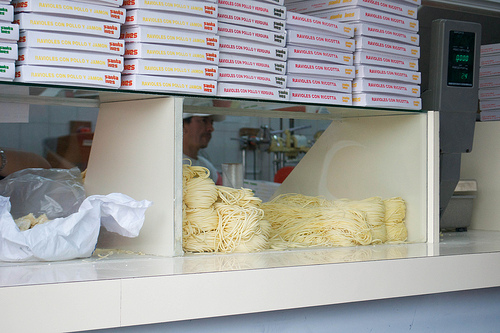
We stopped by a little shop in Haedo, just outside Buenos Aires, that sells nothing but fresh pasta. As you walk into Santa Ines, you can smell the fresh, eggy pasta straight away and see the nests of freshly made spaghetti and boxes of ravioli, all with different fillings. 


pasta shop - in the shop at front

The pasta is sold by weight, and there are various raviolis to choose from, including chicken and ham (pollo y jamón) and straight ricotta. We bought a couple of boxes of the ricotta-filled ravioli to eat for lunch with a beefy bolognese sauce and Parmesan sprinkled on top. 


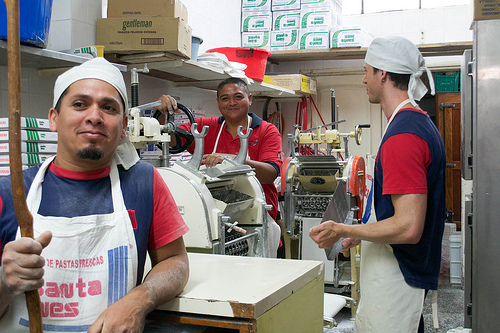
pasta shop - the guys at the back

When we mentioned that I wrote about food, the manager beckoned us through to the back of the shop,  so we could see all that was going on behind the scenes. It was refreshing to see the pasta being prepared by hand, with simple, basic ingredients. There’s nothing processed here – it makes me wonder why shops such as these don’t exist here at home. 

santa pasta shop - cheese

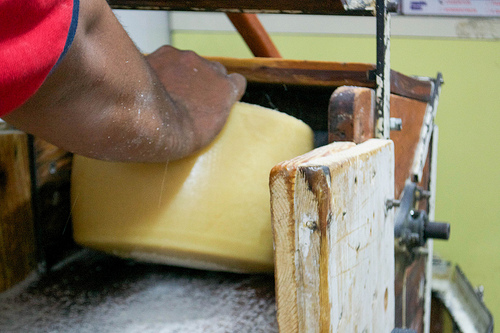
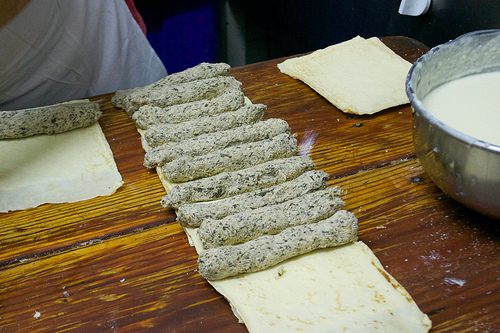
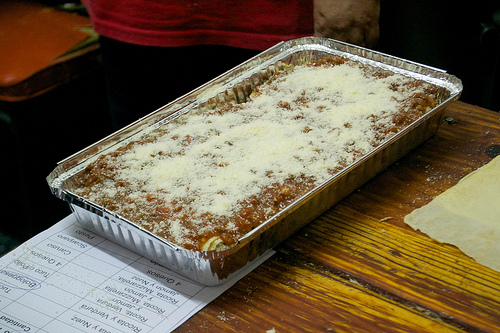
We saw a huge wheel of Parmesan being grated, ready to add to cannelloni and lasagnes and also sold in bags on the side for people to take home and dredge all over their chosen pasta. A fantastic group of ladies filled and rolled cannelloni and made them up in foil trays, ready for people to take home and bake. ‘Which channel are we going to be on, then?’ they joked as they fluffed up their hair, as I snapped the food with my camera. 

pasta shop - spinach ricotta canneloni

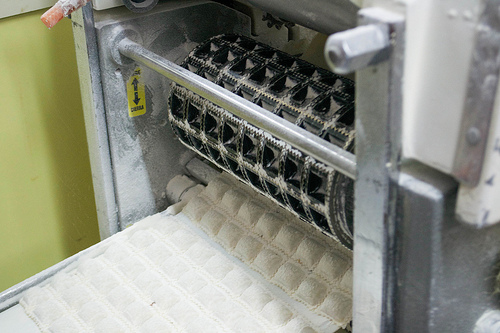
To the side, a ravioli machine pressed the filled pasta, so it was ready to cut into portions and box for sale at the front of the shop. The atmosphere was fun, the workers joking with us as we shuffled around: they spoke Spanish, I replied in Spanglish. 

pasta shop - raviolis

I thought this was a one-off, but there are lots of shops selling ‘pastas frescas’ around Buneos Aires, and in Argentina as a whole. Pasta (and pizza for that matter) are a huge part of Argentinian cuisine, and many people outside of the country don’t realise it. When we ate our ricotta-filled ravioli, it was delicious: pale and extremely light, with a generous filling. Pasta like this takes a long time to perfect, and can take hours in the kitchen to make at home. It’s a far cry from those gluey, tough little tortellinis and raviolis we’re happy buying in the chiller cabinet of the supermarket. I just wish we had a shop like this at the end of every street in the UK. 

pasta shop - canneloni


Santa Ines is at: La Fraternidad 7, Haedo, Buenos Aires, Argentina 
Telephone: (011) 4460-0383

Would you like to see fresh pasta shops in the UK? Or don’t you think it would work here? Let me know, would love to know your thoughts….

Monday, 29 April 2013

Britain’s Stinkiest, Full-Flavoured Cheeses

We tend to think of Europe as home to strong, stinky cheeses such as Gorgonzola and Roquefort, which got me wondering: do we have any strong and smelly cheeses that are made in Britain? I did some research and asked the British Cheese Board and cheese experts from Paxton and Whitfield for some advice. Here’s what they suggested…
 
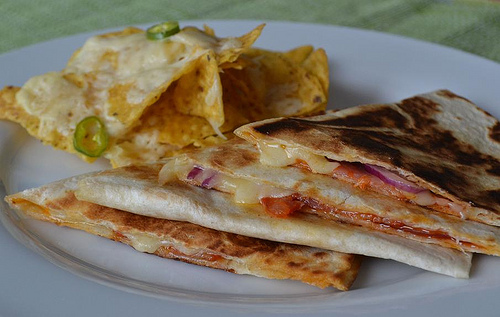
10 minute quesadillas and cheesy nachos
Grandma Singleton’s Strong Lancashire… perfect on nachos and in quesadillas…

Belton’s Red Fox
Not a really pungent cheese, but worth a mention for its complex flavour. At first glance, it looks a bit like a block of Red Leicester but once you taste it, you find some intense sweet and savoury flavours and a light crunch, thanks to the naturally-occurring calcium lactate crystals. These are also a sign that a cheese has matured, as this is how the crystals are developed. 

Davidstow Extra-Mature Cheddar
This cheese is matured for more than 20 months, which gives it a really rounded flavour, still similar to the sweet flavour of regular Davidstow but with a tang and deeper flavour. The British Cheese Board says that this Cornish cheese ‘is one for the real cheese connoisseur.’

Oxford Isis
Paxton and Whitfield recommended this one, and describe it as having a ‘pungent, spicy tang’. It was created in 2003 in Oxfordshire to compete with French cheeses such as Epoisses and Soumaintrain and it’s been popular ever since. It’s washed in honey mead and matured for over a month. Check out Oxford Isis on Paxton and Whitfield’s website for more details. 

Lake District Extra Mature Cheddar
As I mentioned in an earlier post on British cheese, not all Cheddars are created equal. And recently, the British Cheese Board launched a flavour map to prove it. Cheeses can be sweet and nutty (e.g. Leicestershire Red), tangy (Whitefriar’s Cheshire), earthy or ‘farmy’ (Keen’s Mature Cheddar) and also savoury or meaty. Lake District Extra Mature Cheddar falls in this category and the British Cheese Board describe it as having a ‘unique, intense flavour’ that’s also ‘complex and balanced.’
 

Stinking_bishop_cheese
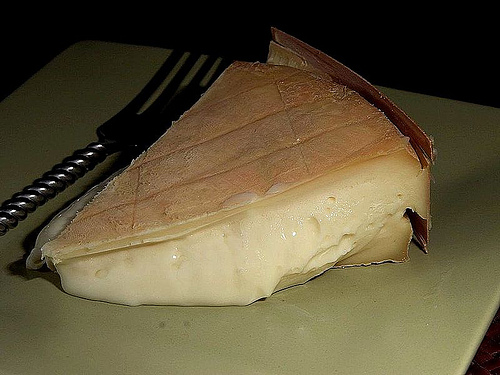
Stinking Bishop cheese, photo from Wikimedia Commons (public domain)
 
Stinking Bishop
A perfect name for a cheese, if you ask me. But the name of this famous cheese actually comes from the variety of pear used to make the perry that the cheese is washed in. Regardless, the cheese has a fruity flavour with a strong aroma. The texture changes as the cheese matures, too, starting from creamy and firm to softer and full-flavoured. Paxton and Whitfield offer Stinking Bishop on their website, go and have a look for more information. 

Cornish Blue
Unlike British Stiltons, Cornish Blue cheese is moist and sticky, and, the British Cheese Board say, has a flavour similar to Gorgonzola. Matured for 12 weeks, the cheese has a tang to it, too. Tear off and dot in salads or add to savoury tarts or quiches. 

Grandma Singleton’s Strong Lancashire
Lancashire – the best cheese for melting, I reckon. The British Cheese Board recommend this one for its ‘long, lingering aftertaste’ and the fact that it’s made from the curds of three different days. Strongly-flavoured, it’s great as it is, a chunk cut off a cheeseboard – but it also makes a killer cheese on toast or grate a little over nachos before topping with jalapeño slices and baking (one of my favourites).

Have I missed any? What are your favourite stinky and full-flavoured British cheeses? 

Thanks to Paxton and Whitfield and the British Cheese Board for their advice for this post. 


Friday, 26 April 2013

Alternatives to Sugar in Cooking and Baking

Sweet cakes and biscuits are all very well, for a while, but then you start to wonder how much sugar you’re packing in to your daily diet. My moment came while I was on the elimination diet last month. I had to go cold turkey on sugar. Completely. I felt hungover, had headaches and was incredibly lethargic for a couple of days. And then I realised – in the midst of a huge Mars Bar and Coca-Cola craving – that it was a withdrawal symptom from all the sugar I was used to eating. 


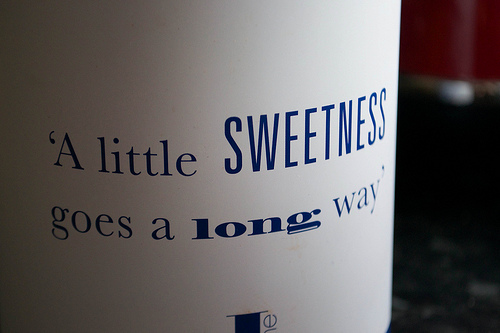
little sweetness goes long way

Whether you’re following a special diet, want to cut the sugar you’re eating or just want to try out some new ingredients, check out these alternatives to regular sugar. 

Agave
Agave syrup comes in the form of a thin syrup (thinner and runnier than honey) that has a low GI index so it won’t give you those dreaded sugar rushes. It comes from the spiky agave plant, and is sweeter than honey so you’ll need to use less. Use in baking (experiment, but start by replacing the sugar in a recipe with about half the quantity of agave syrup – just weigh it) and also in drinks. A squeeze of agave is great added to a hot camomile tea or you can also drizzle it over pancakes. Agave has a pleasant, slightly toffee-like flavour. The American Diabetes Association says that it’s safe to eat if you’re diabetic, but you should still count it towards your sugar intake for the day.

Stevia
You can buy stevia now in many large supermarkets, and online. It’s a bit of a wonder sweetener. According to manufacturers, it doesn’t harm teeth, won’t give you blood sugar rushes and is suitable for diabetics. They also say it contains no calories and also has a low GI. It can be used in place of sugar in baking and cooking but it’s not recommended for making meringues or caramelising, as it doesn’t behave exactly like sugar does when heated. Stevia is 100% plant-based and is 10-15 times sweeter than sugar. Check pack instructions for specific conversion details and check out more details here. 

Honey
We’ve been eating honey for at least 8,000 years. We know this because a Spanish cave painting from this time shows a drawing of a person with their arm in a beehive, surrounded by flying bees, and presumably scraping out the honey (rather them than me). Honey’s been armed with a wide range of health benefits: it’s believed to be a natural anti-inflammatory, antiseptic and also an aphrodisiac. It does have a strong flavour, which goes into whatever you’re cooking. Honey actually contains more calories than sugar, but it’s sweeter so you’ll probably use less of it, and obviously, it’s natural and unrefined. There are lots of recipes online that use honey instead of sugar in biscuits, cakes and tray bakes. Ingredients that pair brilliantly with honey include: lemon, oats, banana, almonds and, of course, roasted gammon.

Maple syrup
Similar to honey but darker, with a slightly smoky, toffee-like flavour. Maple syrup pairs brilliantly with raspberries and blueberries and also grilled bacon. It’s expensive though, so it’s not used an awful lot (in large quantities) as an ingredient in baking but a few spoonfuls will add a nutty sweetness to anything you’re cooking. Maple syrup is also great drizzled over baked muffins for a sticky glaze before you top with some chopped pecan nuts. Quick note: the quality of maple syrup varies (buy the best you can afford) and ‘maple-flavour syrup’ is not pure maple syrup and may not behave in the same way when you’re baking with it.

Xylitol
The name sounds like it was conjured up by a load of food scientists in a lab, but xylitol is actually 100% natural. It comes from birch wood and has a GI index of 7 (low). It won’t give you tooth decay, it’s suitable for diabetics (manufacturers say) and contains 40% fewer calories than sugar. You don’t have to mess about with conversion tables or worry about how much to use either, because you can use it exactly as you would use sugar in your recipes. The only problem with it is that, eaten in large amounts, it can give you diarrhoea and should be kept away from dogs as it’s apparently toxic to them.  


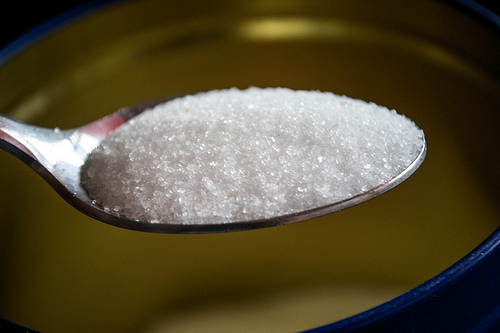
spoonful of sugar

Note: Diabetes should always be managed by a doctor (I am not one) so to be safe, before using any sugar substitute if you’re diabetic, always check with your GP first, or contact Diabetes.co.uk for advice.


Wednesday, 24 April 2013

Beef Empanadas (Empanadas de Carne)

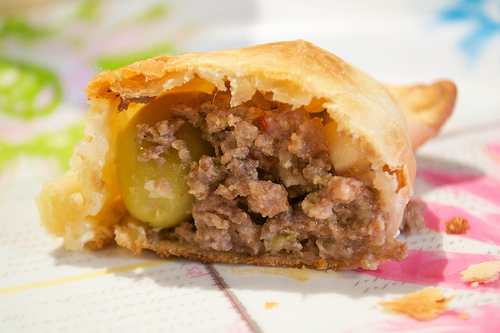
When I was in Argentina, it seemed that at every gathering we went to, we had empanadas. They’re similar to little pasties, filled with minced beef, green olives, chopped hard-boiled egg and onions. But the pastry is different to our shortcrust, puff or filo pastry and kind of a cross between all three. It’s thin and flaky but nowhere near as brittle or crisp as filo, and it’s paler, softer and easier to work with, too. 

beef empanada cut in half
Beef empanada, cut in half – check out that thin, crispy pastry

You can make the pastry yourself but I do what my Argentine family do and buy it in, already rolled and cut into circles ready for filling and crimping. In the UK, you can buy it online (from Tom Hixson), and it’s available at a number of online stores in the US. Make sure you buy the type for baking, as some empanadas can be deep-fried and use a different type of pastry.

baked empanadas
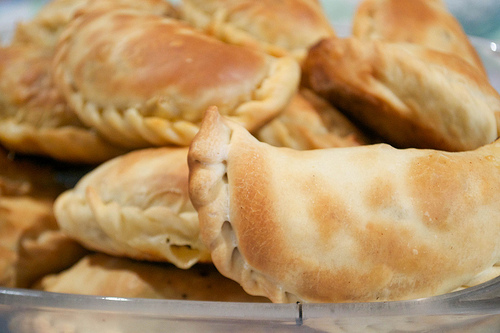
Baked empanadas
I watched my sister-in-law make these, and followed the recipe as closely as I could once I was home, adding a little less salt and using sweet red peppers. It makes a big difference and gives a really authentic Argentine flavour. One top tip before I give you the recipe. You do need to chop everything quite finely – you want to pack a bit of everything into the empanadas, and they’re smaller than a regular Cornish pasty so chop everything finely to pack more flavours in each one. 

Bite into one of these babies and you get crisp, flaky pastry and then juicy beef, egg and a sweetness from the peppers followed by the briny hit from the green olive. They’ve become a hit for us since we got back home, and I can’t stop making them. I hope you like them.  

empanadas before baking
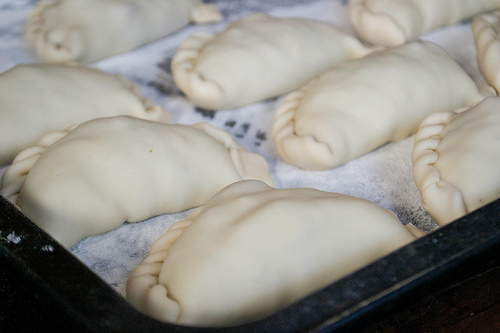
Filled and crimped empanadas, ready for baking

Argentinian Empanadas de Carne
Makes about 24 (bank on serving about 3-4 per person)
Ingredients
24 empanada wraps
1 tbsp olive oil
pinch sea salt flakes
1 large white onion, chopped finely
4 cloves garlic, chopped finely
400g good quality, lean, beef steak mince
quarter tsp smoked paprika (or pimentón dulce)
2 pointed sweet red peppers, chopped
1 heaped teaspoon tomato paste
150ml beef stock
12-14 pitted green olives, halved 
3 large, hard-boiled eggs – peeled and chopped into small chunks
1 heaped tablespoon chopped flat-leaf parsley
Black pepper, to season

Method:
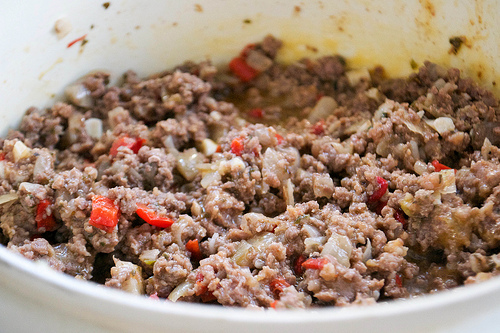
First, heat the oven to 200ºC. In a large frying pan or saucepan fry the onion in the olive oil with the pinch of salt until softened and translucent but not coloured. Add the garlic and then the steak mince. Cook, stirring, until browned and just cooked through. 

Sprinkle in the paprika and add the peppers. Stir, cooking for 1 minute. Stir in the tomato paste, the stock, olives, hard-boiled chopped eggs and the parsley. Taste and season with pepper and a little more salt if you think it needs it. Leave to cool. 

Take a circle of the pastry and moisten the edge of one side of it with a fingertip dipped in cold water. Put a tablespoon or two of the filling onto the pastry and fold in half to seal. You can crimp to seal either using a fork or by twisting the pastry with your fingers to give it that classic hand-crimped edge. Bake on a tray lined with greaseproof paper for 15 minutes. Remove from the oven and eat while hot – the filling will be really hot so cool a little before giving to children. 

Freezing tip: the empanada wraps are usually supplied frozen – defrost the quantity you need (mine come in packs of 12 wraps), fill and bake as usual. As these are made with hard-boiled egg I wouldn’t suggest freezing them once baked (although you can freeze cooked empanadas that don’t have the hard-boiled egg or the olives inside). What you can do is make up a batch of the filling (minus the egg and olives), and freeze. When you want to make quick empanadas, defrost the frozen beef filling and stir in the chopped hard-boiled eggs and green olives. Fill and bake as usual. 

Have you ever had empanadas? Do you fancy making them? 


beef filling empanada
Filling for empanadas de carne, before the eggs and olives are added

I’ve submitted this recipe to the Tuesday’s Table link-up hosted by the blog Love in the Kitchen.


Tuesday, 23 April 2013

Mozzarella Milanesas

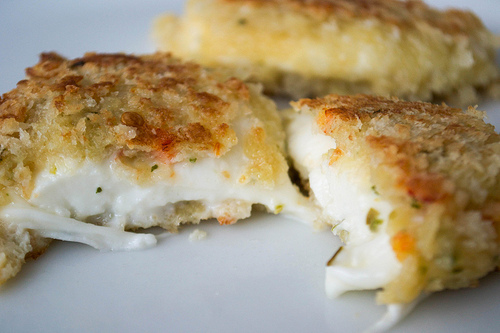
How could these not be good? Slices of mozzarella coated in egg and crispy panko breadcrumbs and then fried for a couple of minutes on each side until oozy. I made these after I found a lonely ball of mozzarella at the back of the fridge and half a packet of panko breadcrumbs in the cupboard. They’d be lovely with a little pot of chilli sauce to dip them in or alongside a curly-leafed green salad. 

mozzarella milanesas

Mozzarella Milanesas
Makes 6-7 milanesas
Ingredients
70g Panko breadcrumbs
125g ball mozzarella
1 tsp Italian herbs (basil, oregano)
half teaspoon chopped red chilli (or mild chilli paste)
1 egg, beaten
vegetable oil, for frying

Method
Tip the breadcrumbs out into a shallow bowl and place the bowl with the beaten egg alongside. 
With a sharp knife, slice the mozzarella into approxiately 1cm thick slices. Add the herbs and chilli to the beaten egg and stir well. 

Take a slice of the mozzarella and dip into the egg, then the breadcrumbs; and then repeat so you get a double layer of breadcrumbs on the mozzarella. Don’t worry if it doesn’t cover the cheese completely, you need a good, general covering. 

Repeat with the rest of the slices. Next, heat 2-3 tbsp oil in a non-stick frying pan and lower in the breaded mozzarella slices. Don’t crowd the pan or they won’t turn crisp – cook in batches if you need to. 

Fry for 2 minutes each side, or until golden and crisp. Drain on kitchen paper and serve, while still hot. 

* ETA: I made these for a third time yesterday and found that for some reason (it didn’t happen so much with the other times) the egg slipped off the mozzarella too easily. If you like, you can always dust the mozzarella slices in plain flour before dunking in the egg and then the breadcrumbs. 

Do you think you’ll try these? 


Friday, 19 April 2013

Gourmet Garden Herb Blends: A Review

Fresh herbs and spices are almost always preferred in cooking – they’re usually fuller-flavoured and have a softer, fresher texture than their dried versions. But then you don’t always have a bunch of fresh herbs when you need them, or feel like doing all that chopping. 


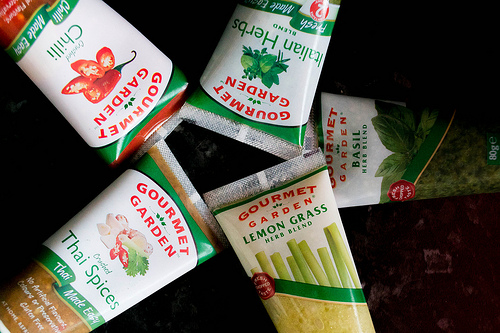
herb and spice pastes

Luckily, you can buy herbs and spices already prepared – frozen in little tubs or packets, or puréed in tubes, designed to save you time in the kitchen. Gourmet Garden sent me a selection of their ready-prepared herbs to try out. 

You can’t really help but avoid waste and save time with these herbs. With fresh herbs, you need to give them a rinse, chop them finely and then wash up the knife and chopping board. With these, you just squeeze them out of the tube into your dish. I was sent the Italian Herbs, Ginger, Thai Spices, Basil and Chilli tubes, and managed to integrate most of them into my everyday cooking. 


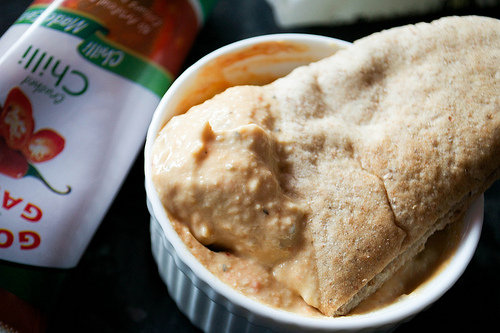
pitta with chilli hummus

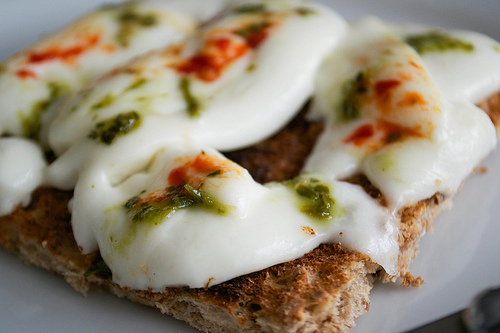
One teaspoon of the purée is the equivalent of a teaspoon of fresh herbs, so you don’t need to do any conversions when you cook. A good squeeze of the basil went into my avocado pasta, and also into a bolognese I made mid-week. I squeezed a teaspoon of their chilli paste into a leftover half tub of hummus and ate it with pitta bread, for a snack. And the Italian herbs and chilli were great spread onto slices of mozzarella before grilling on a piece of wholemeal toast. You could also knead them into breads to add flavour and use the ginger and lemongrass pastes to make up quick curry pastes, too. I didn’t have these, but they also make garlic and parsley pastes and I know I would use these ones a lot. 


herby mozzarella toasts

They’re simple to use, give you less washing up, save you time and mean that you don’t end up with soggy bunches of herbs, past their best, at the back of the fridge (the pastes have a longer shelf life than fresh herbs). They also taste just like the chopped herbs. The only downside I was ready to throw in is that they were more expensive when compared with fresh herbs. But even that isn’t true. Sainsbury’s currently sell fresh basil at £2.86 per 100g, and Gourmet Garden basil paste works out at £1.91 per 100g. The only reason I reckon you’d really have to ditch these for fresh herbs is when you want a coarser texture in a dish and want to see the individual leaves in there. 

I had reviewed Gourmet Garden a few years ago, and found the pastes particularly useful when cooking home-made curries. I also spread the coriander and garlic pastes onto freshly baked naan breads as they came out of the oven. I’m really glad to see that they’ve kept their great quality and are just as easy to use in the kitchen for quick 5-minute snacks as well as longer, slow-cook meals. 

Have you tried herb pastes? How do you get on with them? 

Thursday, 18 April 2013

Authentic Argentine Chimichurri Sauce

Chimichurri sauce seems to be everywhere at the moment. There are some versions flecked with red chilli, some that resemble loose vinegary dressings and some that are piled up high in big spoonfuls, like finely chopped salads, on top of steaks and burgers. These are all fine, and undoubtedly all delicious, but real, authentic Argentine chimichurri is a bit different.  

The first thing: authentic chimichurri – the kind families serve up on hot Sunday lunchtimes with their asado – is not spicy. Chopped red chillies, cayenne pepper and the like can all be added but aren’t traditional. Sometimes, a little pimentón is added for flavour, but that’s about it. This is the chimichurri that I tasted in Argentina: strongly-flavoured with garlic, heady with the flavour of parsley and with just enough vinegar to take the greasiness out of the moist, chargrilled meat that it’s served with.


chimichurri salsa
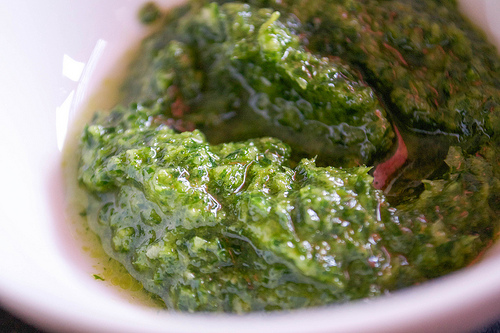
Chimichurri blitzed in a processor – a smoother, pesto-like sauce

The second thing is that chimichurri is insanely easy to make, and once you’ve got the basic recipe down, you can tweak it to suit your own personal taste. Loosen it up with some more vinegar or oil, leave the parsley chunky or blitz until it resembles a fine pesto. I asked a few different families for the recipe and no one gave me quantities: just the basic ingredients. Just keep adding and tasting until it tastes right for you and your steak. Chimichurri is gorgeous in burgers or spread into a sausage sandwich in a crusty white roll. It’s also wonderful dabbed onto grilled chicken. 

Here’s how you make a good, authentic, chimichurri salsa. 

Chimichurri
Makes about 8 spoonfuls
Ingredients

  • 8 cloves of garlic
  • 12g bunch flat-leaf parsley
  • 4 tbsp extra virgin olive oil
  • 2 tbsp white wine vinegar
  • pinch sea salt and a little grinding of pepper
  • quarter tsp smoked paprika/pimentón

Method
Either chop the parsley and garlic finely, or blitz in a processor if you prefer it more smooth. Trickle in the olive oil and vinegar and season with the salt, pepper and paprika or pimentón. Give it a stir and have a taste. Does it need more vinegar, to sharpen it up? More salt? Perhaps you prefer a little more pimentón, to give it a smoky spice. Keep tasting and seasoning until it’s right for you, and then spoon into a jar or container and keep in the fridge. 

asado tio benicio chicken chimichurri
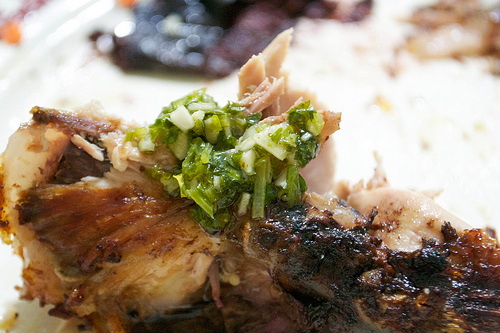
Home-made (hand-chopped) chimichurri salsa on top of some chicken, at an Argentinian asado

Wednesday, 17 April 2013

Walkers Hoops and Crosses

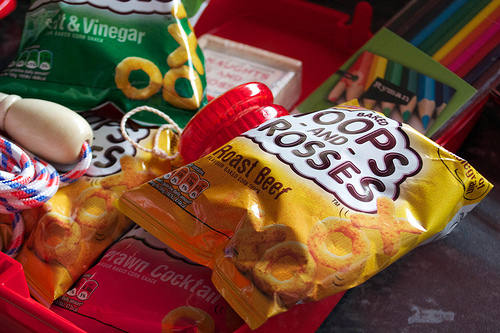
Walkers have a new snack out, called Hoops and Crosses. And they kindly sent me a few packs to try, with the girls.

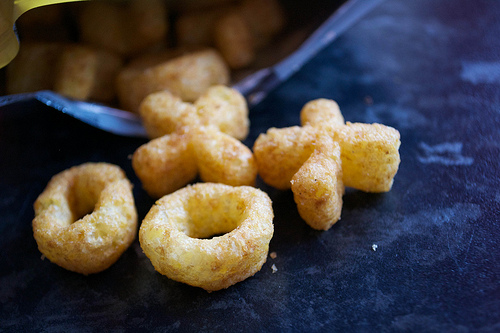
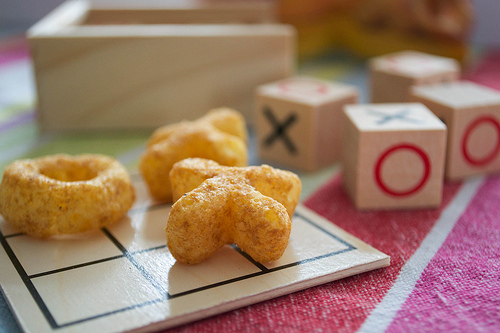
The crisps are shaped like the old-fashioned ‘noughts and crosses’ game and they’re fun for the kids to eat. The good news for us is that they’re wholegrain, have no artificial colours or preservatives and they contain 30% less fat than a regular packet of crisps.

walkers hoops crosses

The girls liked them: they come in three flavours: prawn cocktail, salt and vinegar and also roast beef, which was the clear favourite with us. The prawn cocktail flavour was tangy and the salt and vinegar flavour wasn’t that strong, it was quite mild which is great for kids. I’m surprised though that they haven’t developed a cheese flavour – I know my girls would go mad for them.

We liked them and I’d probably tuck one of these in the school lunchbox on those days they have regular crisps, partly because a little extra wholegrain has got to be good and also because they’re lower in fat.

walkers hoops crosses 3

Have you tried these new Hoops and Crosses? What did you think?

walkers hoops crosses 2

Tuesday, 16 April 2013

5 Argentinian Salads

When I visited Argentina over Easter, even though it was their Autumn time, temperatures were hitting the 29-30ºC mark. And of course they fired up the asado – and what do you need to mop up all that meat? Salads, of course.

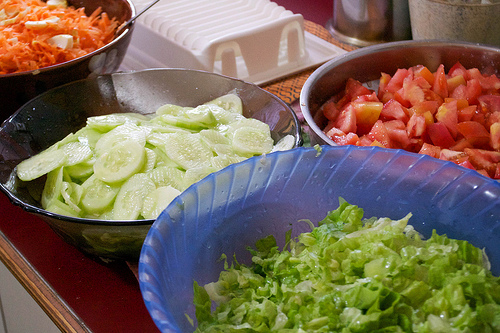
Salads were served I think, at pretty much every meal, alongside pickled aubergines, chimichurri and criolla salsa. And they’re creative with them – you don’t just get a bowl of mixed green leaves and a drizzle of dressing. If you fancy a salad and want to have a go at some with an Argentine influence then have a go at these…

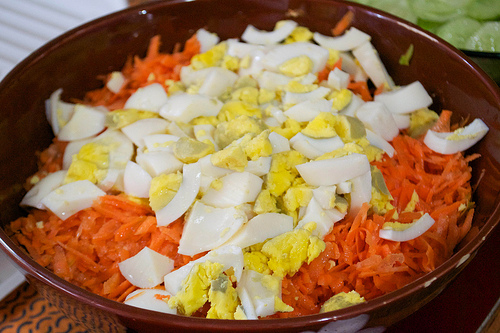
Ensalada de zanahoria y huevo
Just grated carrot and chopped hard boiled egg, mixed together and dressed with a mixture of salt, vinegar and olive oil. The carrots are sweet and the egg fills you up – sometimes a version of this salad can have some mayonnaise stirred in too. So simple and one of my favourite salads to eat alongside grilled meats.

asado tio benicio carrot and egg

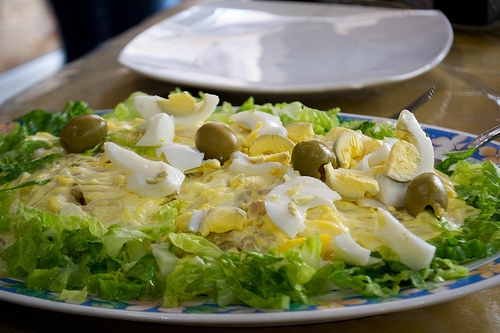
Ensalada de papas, huevos, arvejas, lechuga y acietunas
This beautifully dressed salad consists of a platter of chopped lettuce (the lettuce is chopped fairly fine) topped with egg mayonnaise that’s had diced, cooked potatoes, cooked and cooled peas and green olives mixed in. It’s just seasoned with salt. The sharp green olives and crunchy lettuce are really needed against all that creamy egg mayo, one salad I will definitely be making now I’m back home.

salad eggs, olives peas mayo, lettuce

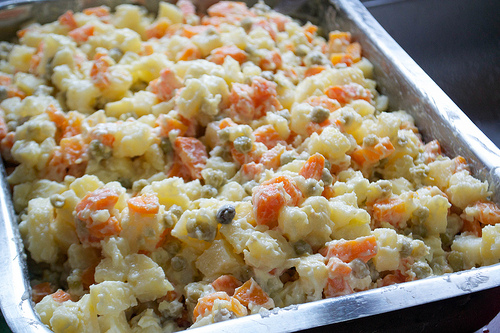
Ensalada Rusa
This is a really popular salad in Argentina. It’s just a combination of cooked and cooled peas, cooked and diced potato, diced carrot, a few spoonfuls of mayonnaise and seasoned with salt.

asado tio benicio peas potato carrot salad

Ensalada de pepinos
Here, the cucumbers are peeled and then sliced and dressed with salt, white vinegar and a little oil. It’s a refreshing salad and great with the grilled meats we ate it with but I reckon it’d be lovely with a grilled or barbecued salmon, too.

asado tio benicio argentine salads

Ensalada de Tomates y Cebollas
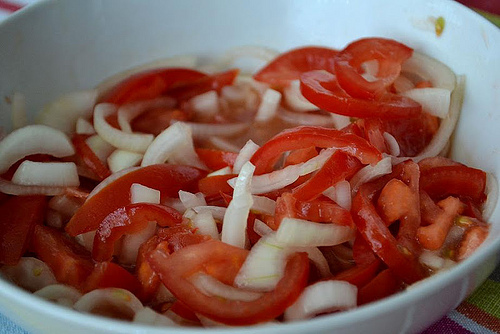
Fairly thinly-sliced tomatoes and blanched onions dressed with olive oil and white wine vinegar – a sharp and at the same time a sweet salad that I love. Great for the barbecue season, too. 

argentinian tomato onion salad

Do you fancy having a go at any of these salads? 

Monday, 15 April 2013

Real, Proper, Argentine Asado

Pretty much every country has their version of a barbecue. The South Africans have their braii, East Asia has satay and us Brits even think we’re a dab hand at it, with our row of chipolatas and beefburgers and saucy aprons that Dad generally wears. But talk to an Argentinian about asado and they’ll get passionate about it. They might even invite you over for one. I ate asado just about every third day while I was over there. It’s an art form, a competitive sport, almost. And whether you visit a parrilla to eat it, or enjoy it at someone’s home, you mustn’t miss out on it. 
 
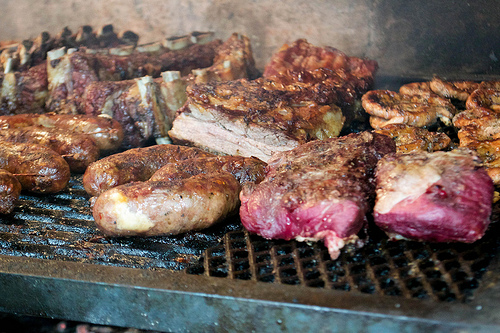
The first rule of asado is not to be squeamish. You will eat things like intestines, glands, cow’s udders, tripe, kidneys and black pudding, alongside cuts of beef and chicken. It’s all cooked slowly, over hot coals, which flavour the meat and make it super tender. Here’s a run down of what you might expect to eat at an Argentinian asado. 
 
Beef – vacio, entraña, costillar
It goes without saying that at an asado you’re going to eat some beef (you’re in Argentina), but it might not be in chunky steaks, like you’re used to at home. Vacio (pronounced vass-ee-oh) is a cut of beef without bones, the nearest you’ll get to a chunk of steak. Entraña (ent-tran-ya) is from the tummy area of the cow, tender and very tasty, with a little sinew which is rendered down after long, slow cooking. And you’ll eat ribs – known as costillar (cost-ee-szj-ah) juicy chunks of beef with the short rib bone still in; smoky, dark and cooked until just pink in the middle. 


asado tio ruben 1
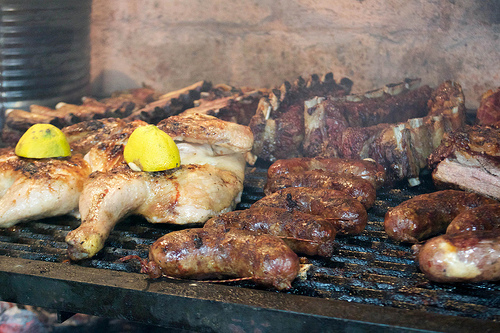
On the asado: left-right: costillar (ribs), chicken, chorizo and vacio on the right hand side at the back


Chicken
Chicken legs and breasts are cooked on the asado until the skin is crispy and blackened and the flesh inside is pale and juicy. Chicken breast meat can have a tendency to dry out on the asado so a special eye is kept on it to catch it when it’s just cooked. At the parrilla, the chicken had a really delicious, smoky flavour as a result of the coals. Gorgeous with a spoonful of chimichurri or criolla salsa to add moisture as well as sharpness.
 
Morcilla
Black pudding, but completely different from the stuff served in the UK. Its black, thick skin isn’t often eaten (although some people like it) and the centre is scraped out and eaten with other meats (chicken goes well with it) and a juicy salad. Morcilla (pronounced mor-SEE-jza) is very soft in the centre and the big white lumps of fat (typical of British versions) are absent. The flavour of morcilla is dense and very rich. You’ll either love it or you’ll hate it. But you have to try it. 


asado tio benicio chorizo halved
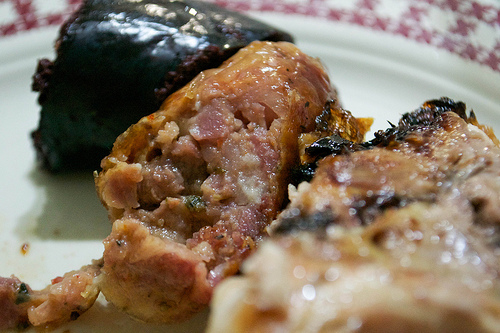
Close up of Argentine chorizo with its chunky texture. Behind it is a slice of morcilla.
 
Chorizo
These are nothing like their Spanish, paprika-scented namesakes. Argentine chorizo is a densely-packed, coarse, meaty sausage, usually made from pork or beef. A stubby little sausage with a crisp skin, but looks can be deceiving: the little fellas are actually very filling. Wonderful as they are or cut in slices and added to stews. My husband’s uncle, who lives in Fiorito, just a few blocks from where Maradona was born, handed me a choripan: chorizo sliced in half lengthways and stuffed into a split crusty bread roll: one of the best sausage sandwiches of my life. Chorizo can be flavoured with chilli or pepper flakes, roquefort cheese or they’re often just left plain.
 
Lechon
Suckling pig, pronounced ‘lech-ON’. Roasted over coals, whole, until cooked through and very juicy. Pork at it’s juiciest and most tender. This will be cut into chunks and passed around on a platter, and leftovers are eaten cold with salads the next day. 


asado tio ruben
An asado: rear left: costilla (ribs), vacio, chinchulin. Front, from left: chorizo, vacio. 
 
Riñones
Kidneys – sweet and flavourful, although the ones I tried at the parrilla were a tad over done and a bit chewy and dry. Pronounce them ‘rin-yon-ez‘. I was assured that they’re often served not just as they are, but with a salsa, such as chimichurri, or with lemon juice, garlic and parsley. 
 
Chinchulin
Chinchulin (‘chin-choo-lin‘) was the one thing (apart from politics, which was best not mentioned) that I found even divided Argentinians. Some love it, and others hate it. When cooked, it has the appearance of a small, curly little sausage and it’s basically grilled intestines. It’s best cooked slowly until crispy, but has a fairly bitter flavour and once you bite into it, and the appearance of a very hollow, thin sausage. The texture was good, something I could imagine nibbling on in front of a film, but the flavour a little too bitter for my liking. 
 
Molleja
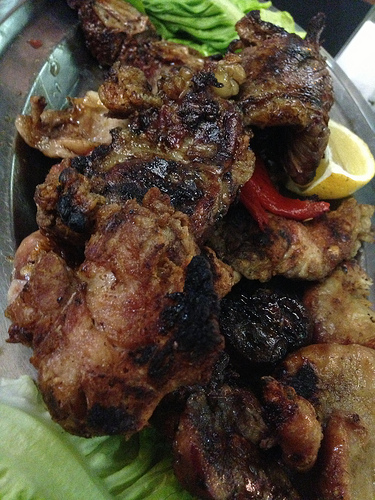
If you’re offered something at an asado that has the appearance and texture of a chargrilled lump of white fat, don’t worry. It’s probably molleja (pronounced mozjs-ekh-ah), or in other words chargrilled glands. They don’t have a particularly strong flavour, other than the chargrilled outside, but it’s the texture that people go for. It’s pale, kind of sweet, and a for a lot of Argentinians, it’s one of the stars of the asado. My nephew makes it with a parsley, garlic and lemon topping. 


parrilla
Platter of meats at the parrilla: the entraña is at the top of the plate, the pale meat on the left is molleja and the darker meat at the bottom of the picture is riñones. The pale pieces of meat on the right hand side just in the photo are chinchulin.

Cordero
Lamb is eaten in Argentina but not as widely as beef. I gather that’s because it’s expensive, but it can be cooked whole on the asado until tender. I’ve been promised this next time we visit by my husband’s uncle Benicio, a perfect excuse to start planning another trip next year, perhaps? 
 
 
Have you ever eaten asado, or would you like to experience one? Would you eat chargrilled intestines or kidneys? Let me know in the comments below…

Friday, 12 April 2013

Hot Dog of the Month: The Chilli Dog

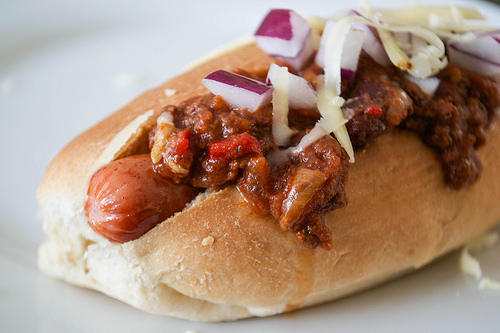
Once I tried a chilli dog, I found it difficult for a while to imagine eating hot dogs any other way. The spicy, meaty sauce with soft, dark kidney beans were up against the smoky sweetness of the frankfurter and then the chewy, soft, white bun. Add to that a few pieces of diced red onion for crunch and freshness and a small grating of good, mature Cheddar for creaminess.


chilli dog with red onion and cheddar cheese


How to make a chilli dog

Obviously if you want to have a favourite chilli con carne recipe simmering away for this then that’s fine, but I always rely on chilli leftovers, making chilli dogs the next day. All I do is get the frank into the frying pan with a little drizzle of oil, and cook for a few minutes on all sides, until it’s browned and hot all the way through. While that’s doing, I chop off a slice of red onion and dice into small pieces, just enough to sprinkle onto the hot dog. Grate a pinch of the cheese and pile it up on the board next to the onion. Split the bun. Then, I reheat the chilli – either in the microwave or in a separate pan if I have one handy. To assemble, you just slide the hot frankfurter into the bun, top with the piping hot chilli and then sprinkle with the red onion and grated cheese. If you’re looking for a more instant chilli product for this then I can recommend the ‘Look What We Found’ chilli con carne – it comes in a pack, contains just two servings and takes a few minutes to heat in the microwave. And it tastes good, too. And if all that meat isn’t really your thing, try topping with a veggie, Quorn or lentil chilli instead. 

Chilli dogs – love them, hate them or never tried one? Let me know…


LinkWithin

Related Posts Plugin for WordPress, Blogger...