Wednesday, 31 December 2014

A Look Back At 2014: Healing, Stargazing and Getting Into Offal…

So. Here we are, at the end of another year. I thought it would be a good idea to recap over the last twelve months. If you’ve been a regular reader of the blog, or followed me on Instagram, Twitter and Facebook, you might remember some of these… 

I Became An Author
A proper author!! *excited face* This was the year I published four of my own books – two on the food of Argentina and two on the Autoimmune Protocol diet and lifestyle. You can have a read about them (and maybe download one of them if you want *flutters eyelashes*) over here.  I have an idea for a fifth book (related to the paleo diet and AIP), so watch this space. I’ve collaborated with other AIP bloggers in the upcoming ebook 85 Amazing AIP Breakfasts (coming out on 1st January) and I also have some cool book and blogging partnerships coming up in early January 2015. Exciting times! Definitely watch this space. 

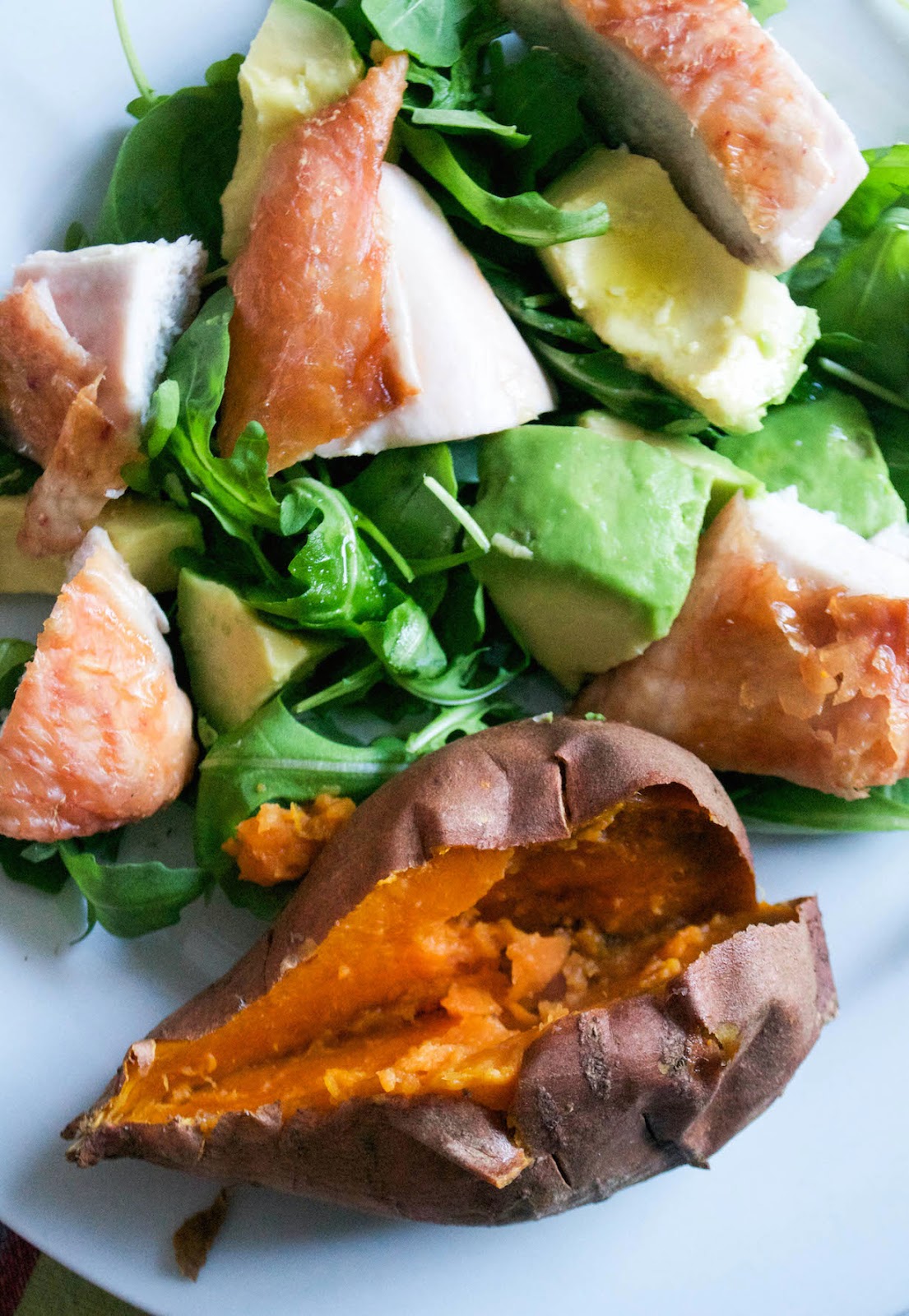
I Discovered Chicken Breasts Are Delicious With Sweet Potatoes and Avocado


Nigella Lawson casually tweeted her supper. I liked the look of it. I made it and fell in love. It’s GORGEOUS. And I eat it about once a week. Get the recipe here. 

I Got Into Offal. In a BIG Way. 


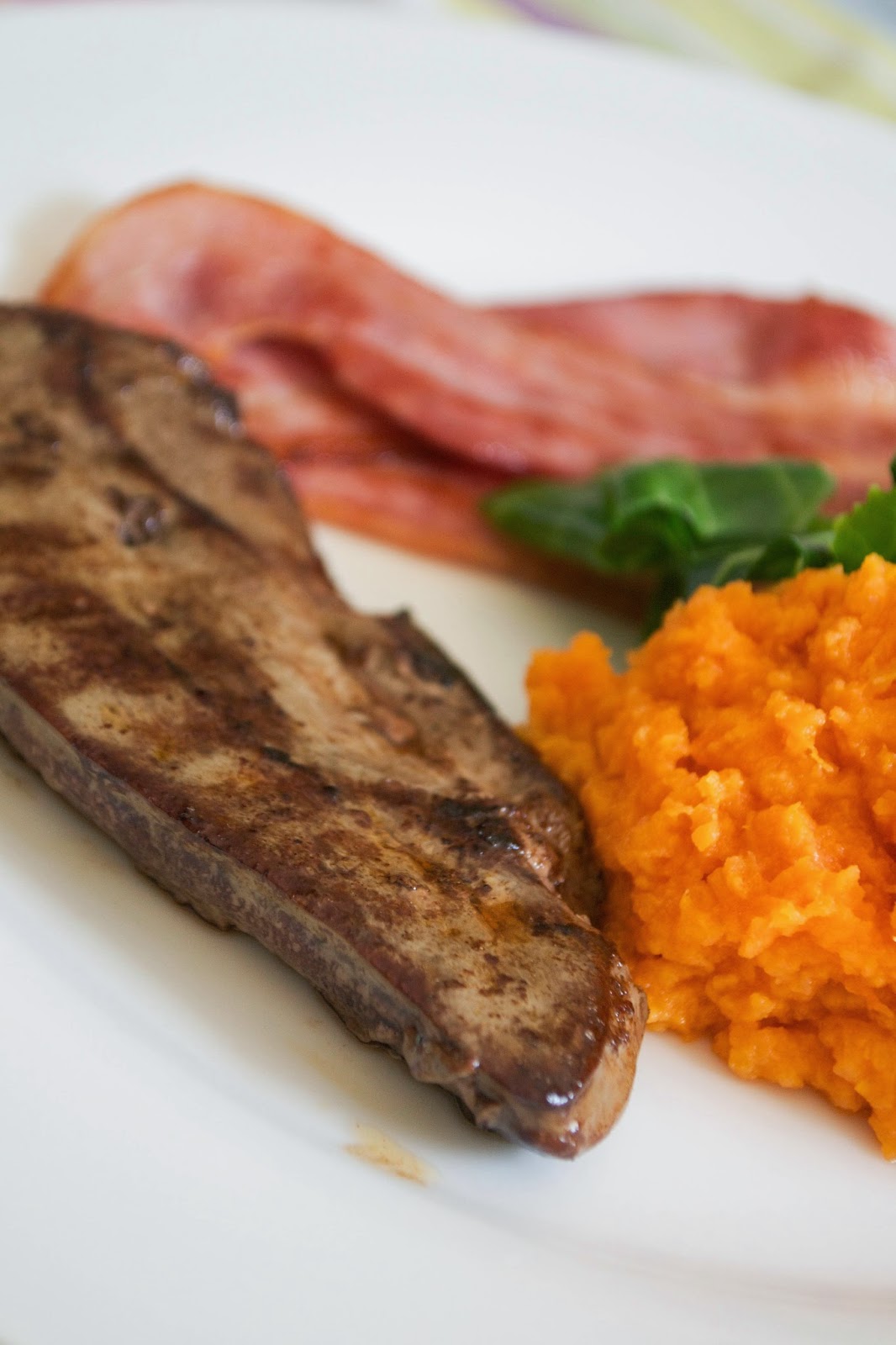
Before Christmas last year, I ate the odd bit of liver and thought I was being a bit of a crusader against the ‘choice cuts’ supermarket culture of meat eating – people only buying chicken breasts, drumsticks, lamb chops and steaks. No, I liked to flash fry a dark, slippery chunk of lamb’s liver and eat it for my dinner. Well this year I started eating more offal and wobbly bits of meat. Steak and kidney stew, lamb’s hearts, ribs, more liver… There’ll be more of this next year, as I cook more adventurously with different organ meats, which are good for you and also promote a more ethical way of eating meat – by using the whole animal. 

My Psoriasis Suddenly Got WAY Better
The good news: eighteen months on the AIP diet and lifestyle and my psoriasis has almost gone. The not so good news: I caved in and ate a few mince pies over Christmas this month with family and it partially came back. But that’s the motivation I need to get back on track and get better. And it’s not only my psoriasis that’s improved, but my anxiety levels, mood (it no longer swings), my general appearance – skin, hair and nails – and my energy levels are huge! 

I Finally Got the Hang of Instagram


Instagram was one of those things that I had signed up for in the early days of blogging but neglected. Now, I’m on it throughout the day, posting pictures of my breakfast, woodland walks, lunch, the moon, dinner and the odd cup of tea. I’ve managed to connect with so many like-minded people and found it to be a huge inspiration. I was priviliged to take over the Autoimmune Paleo Instagram account for a week, too, sharing all my AIP compliant meals with you all. On Instagram? Connect with me @joromerofood. 

I Did Some More Online Courses
I love learning. And one of the ways I manage my stress is to learn more about the things I really enjoy and am interested in. This year I completed my Diploma in Yoga, a course on Philosophy, one on Radio Astronomy, another on Ancient Greek Mythology, two on Shakespeare and the play Hamlet and one on the Moons in our Solar System. I also completed a course on Child Nutrition and another on the Gut Microbiome. All fascinating stuff. Free courses are all over the internet – the websites I love the most are Coursera, Futurelearn and Open2Study

And it doesn’t look like 2015 is slowing down, either. Lots of projects planned, lots of ideas and lots of recipes I want to cook and share with you all. I want to wish you all a healthy and really happy end to 2014 and a fantastic start to 2015. 

*clinks glass* 


Monday, 29 December 2014

Slow Cooker Crockpot Lamb Hearts

The thing with thinking about eating hearts is that it’s easy to get a bit squeamish. 


Especially if they’re from fluffy little lambs. 


But then you soon realise that you need to get your act together because a) it’s a very lean, nutritious organ meat that will be good for your body – and b) eating the whole of the animal, rather than only the choice cuts, is the most sustainable way of eating meat. And hearts are actually really delicious. Honest.

When I was faced with three little marbled hearts in a plastic bag, I wasn’t sure quite what I was going to do with them. So I put them in the slow cooker for a few hours. The result was something terrific. The meat was tender but dense, with a meaty, lamby flavour that I suppose had a very slight flavour of liver, if you thought about it. But we all agreed – six and nine-year old included – that we would all eat this again.


RESULT.


Slow Cooker Crockpot Lamb Hearts
Serves 4
Ingredients
75g bacon lardons
1 small onion, peeled and roughly chopped
1 clove garlic, peeled and roughly chopped
pinch of dried thyme
bone broth or stock (lamb or beef is good), about 250ml
3 lamb hearts, trimmed of any very sinewy fibres and cut into chunks

Method 
First, fry the bacon in a dry pan until it releases its oil and starts to turn golden. Add in the onion, garlic and the thyme and cook, stirring regularly, until the onion and garlic is tender. Scrape all the veg into the bottom of the crockpot, which has been set to ‘high’. 

Next, arrange the lamb heart chunks over the top of the onions and pour over the bone broth. Replace the lid of the crockpot and leave to cook for 4-5 hours, until the hearts are tender when cut into. The meat won’t pull apart like lamb shanks do – the hearts will still be fairly firm in texture.

Serve the lamb hearts hot, with the vegetables spooned over the top. You can also serve the bone broth left in the slow cooker if you like – you might want to thicken it slightly by blending in some of the softened vegetables or by adding arrowroot powder. 


Wednesday, 17 December 2014

Paleo Slow Cooked Rabbit Bolognese

When I told people on Monday’s school run that I’d just cooked a whole rabbit earlier in the day, I had a mixed response. 


Some had rabbits as pets, so it didn’t go down very well with them. 

Some sort of disappeared from the group and backed away (maybe reminded of a certain Glenn Close film from the 1980s). 

Others were curious and wanted to know how I’d cooked it and what it tasted like. 

Gorgeous, I told them all. In a rich Bolognese-style sauce. 


There is this thing with some people that rabbits shouldn’t really be eaten, because they’re often family pets and people don’t like to think of their fluffy loved one chucked in a tomato sauce and cooked. But like it or not, we’ve been eating rabbits for years – a recipe exists from Roman times, at least. 

Rabbit is incredibly lean, and needs a little fat to cook with it – I’ve used pancetta here or streaky bacon, chopped up – but some people told me they cook it with pork belly. It also tastes a little bit like chicken, according to my daughters, only slightly flakier in texture and more gamey. I didn’t waste the offal that came with it – that got chopped up and added in too, to give a deeper, richer flavour. Honestly, please don’t be squeamish about cooking with rabbit – it’s a sustainable, readily available source of meat. 


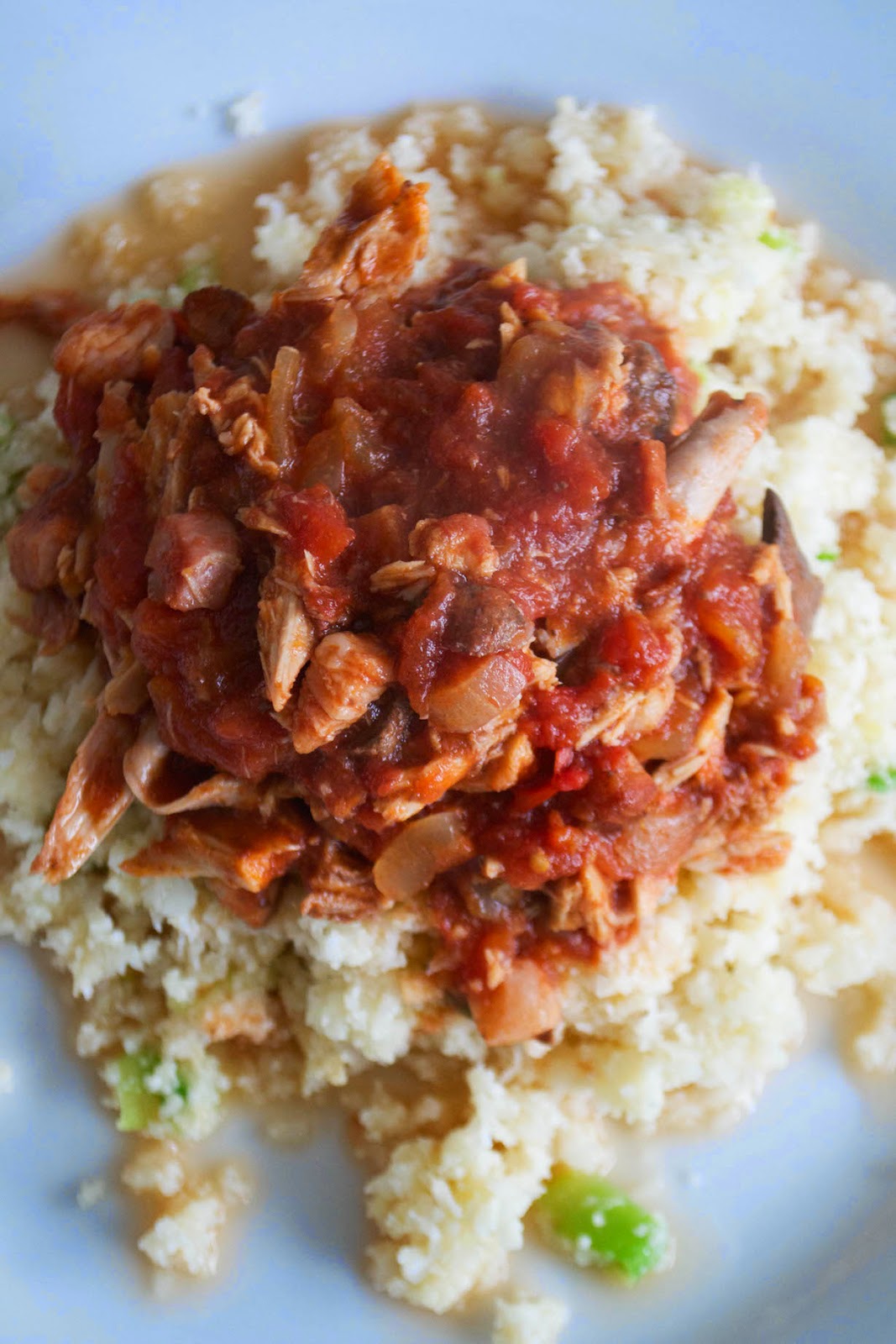
I was sent the rabbit to try by Farmer’s Choice, a free-range meat supplier in the UK. This recipe will make about 8-10 big ladlefuls of the meaty sauce, so freeze any leftovers – it’ll also mean you have some left in the fridge the next day to reheat for breakfast. I had mine with cauliflower rice, but it’d also be lovely with some courgette/zucchini strips, which take just a couple of minutes to pan-fry in some coconut oil. Yum. 

Paleo Slow Cooked Rabbit Bolognese
Serves 8 (freeze any leftovers in individual portions for extra meals)
Ingredients
1 whole rabbit, with any offal that came with it (rabbit must be skinned and headless)
75g smoked streaky bacon, cut into cubes – or use pancetta
1 onion, peeled and chopped
3 cloves garlic, peeled and chopped
about 100ml (or a small wine glassful) red wine
2 x 400g cans plum tomatoes (with no added sugar)
2 bay leaves
black pepper, to taste
2 pinches of dried rosemary

Method
Take the clean and prepared rabbit carcass and remove the liver, heart and kidneys (with your hands) if they’re still inside. 

Curl the whole rabbit into a casserole dish that has a lid and chop up the offal and add that on top. 

Next, make the sauce. Fry the bacon or pancetta in a dry frying pan until it releases most of its fat and starts to turn golden. Add the onion and garlic and fry for 2-3 minutes until softened. Turn up the heat and pour in the red wine, bring it to a simmer to burn off the alcohol. After a couple of minutes, add the tomatoes and use the spoon or spatula to break them up in the pan. Throw in the bay leaves. Season with a twist or two of black pepper and the rosemary. Pour the tomato sauce over the rabbit, give it a stir and a shake to distribute the sauce and make sure it’s covering the rabbit. Put on the lid. 

Cook at gas mark 2 for two and a half hours, checking it after 2 hours. The meat should be tender and easy to flake off the bone. If not, return it to the oven and let it cook a little bit more. 

Once cooked, lift the rabbit out onto a clean board and let it cook enough so you can handle it. Using your fingers (you can wear clean, plastic gloves if you prefer) flake the meat off the bones and into the sauce, feeling for the tinier bones as you go, and putting them in a dish alongside. Go through the stew until no more bones remain. 

To reheat, take the sauce with the flaked rabbit meat, and reheat in a pan, serving with courgette/zucchini strips or like I’ve done, some cauliflower rice stir-fried with a little spring onion, olive oil and salt. Remove the bay leaves before serving.

Farmer’s Choice provided the rabbit for me to cook, along with a contribution towards the cost of the other ingredients. You can check out their range via their website

Monday, 15 December 2014

Exciting News! New AIP Paleo Breakfast Cookbook Collaboration

A new AIP ebook. Because BREAKFAST. 

Breakfast can be as easy as pushing some cold leftovers onto a plate or a bit more complicated, while you’re rubbing your eyes and blinking into the fridge at 7am (full-on AIP blueberry muffins, for example). It’s up to you. But it’s also one of the meals that in the beginning, you might be tempted to cheat on. It can take a while to bring your brain around to the idea that breakfast just doesn’t mean eggs, croissants, brioche or cereal. 

So a group of AIP bloggers got together and produced a really cool ebook that will give you 85 different recipes for the first meal of the day. The book is edited by Eileen Laird, from the blog Phoenix Helix and I’m so proud to have taken part, with 3 recipes – one of them specially created for the book. 


The great thing about the recipes is that everyone who contributed has improved their health using the autoimmune protocol. We’ve lived and breathed the food and lifestyle and this means they’re all 100% AIP compliant and also practical. There are pancake recipes, hash/skillets, bowls… and with 85 recipes, you have enough new breakfasts to eat a brand new recipe every day for nearly 3 months. No more waking up and staring into the fridge wondering what to eat. 


A sneak preview of one of the recipes I contributed to the book… 


The ebook will be released on New Year’s Day, watch this space for more details! 

Wednesday, 10 December 2014

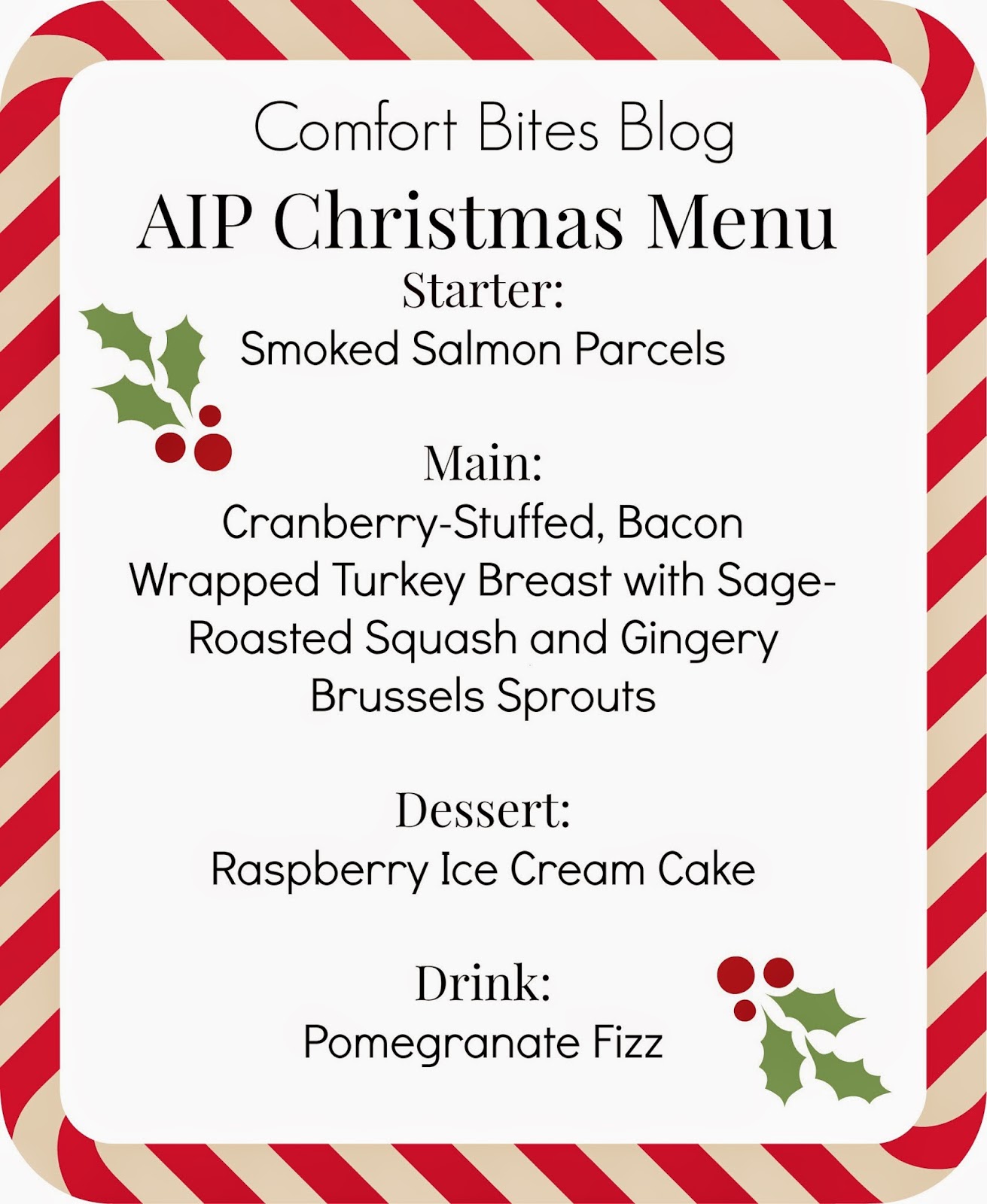
Comfort Bites’ Autoimmune Protocol (AIP) Christmas Menu

OK, people. It’s HERE. 

My AIP-compliant Christmas menu. 


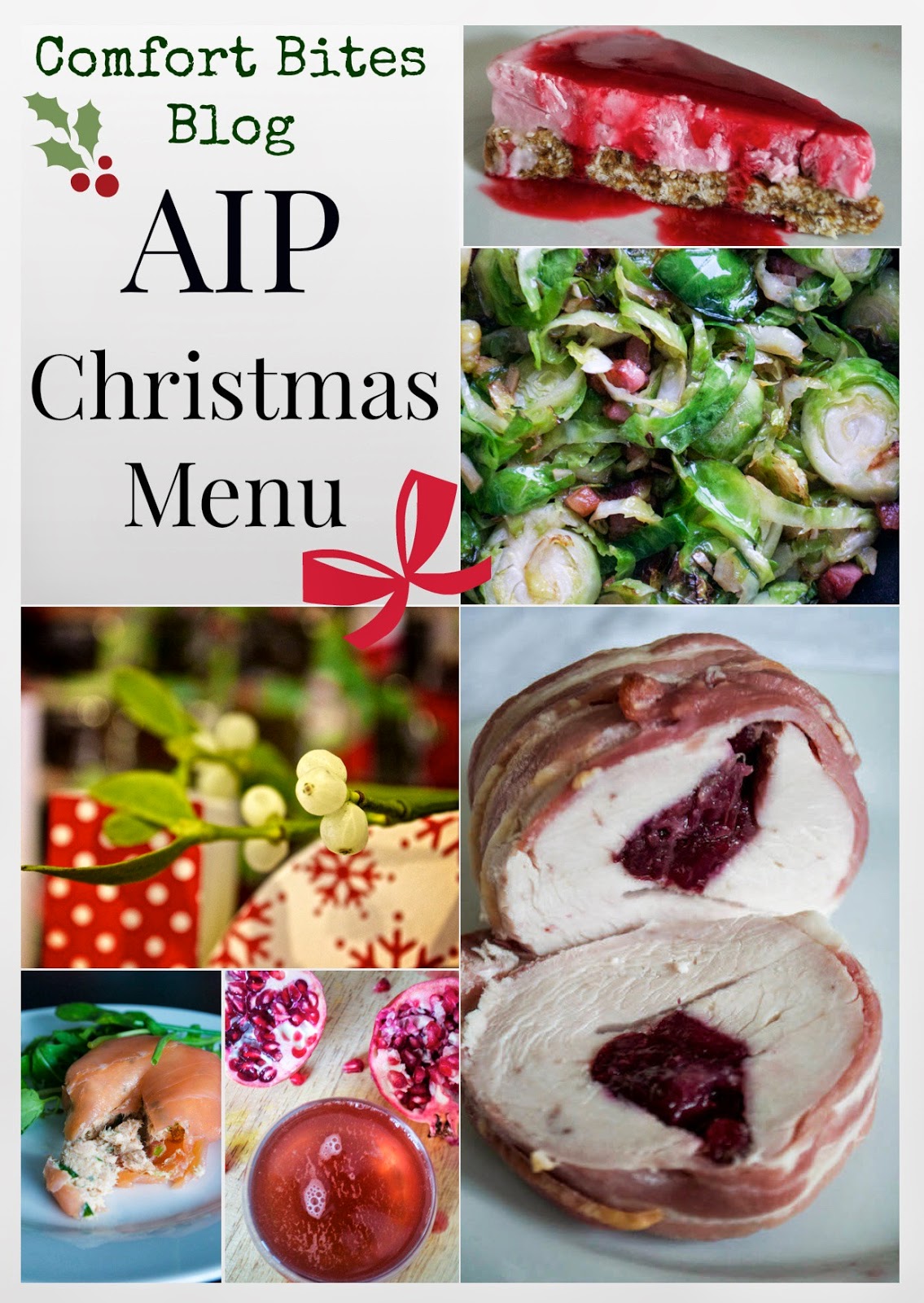
There’s all the traditional goings on: smoked salmon, turkey, Brussels sprouts, cranberry sauce – and it’s all totally AIP compliant. There’s a raspberry ice cream cake as pudding, too – so you don’t need to compromise on anything that you might regret the next day. And a drink that’s fruity and fizzy but sharp at the same time – so you won’t miss the wine with your dinner. 

Here it is: 


I hope you like it, and wish you all a super Christmas. 

The Starter: Smoked Salmon Parcels (makes 4)
This was my version of a posh smoked salmon mousse parcel I used to often have at restaurants in the old days. Of course, they were full of cream cheese and black pepper, which are out on the autoimmune protocol. Cue the brilliant Rachael from the blog Meatified, who came up with a salmon spread that was AIP-compliant. I jiggled some of the ingredients about a bit to make it taste more mild, added in some traditional smoked salmon slices and hey presto – our posh Christmas starter was born. It can be made ahead, just make the parcels the day before and store them covered, on a plate. Take them out and allow to come just to room temperature before serving. Serve it with a small tangle of watercress, rocket (arugula) or spinach leaves dressed in a little olive oil and salt. 


Ingredients:
1 spring onion, chopped
170g can salmon, drained
2 small slices of wafer-thin smoked salmon
the juice of half a small lemon
1 tbsp coconut milk
small handful of chives, snipped into small pieces

To serve: 4 slices smoked salmon and salad leaves.

Method:
To make the filling, blitz the spring onion, canned salmon, 2 slices of smoked salmon, lemon juice, coconut milk and chives until smooth. Next, take one of the remaining slices of smoked salmon and put it on a board. Dollop 1 heaped tablespoon in the centre of the slice, and fold the salmon slice around it, so you have a rough circle-shape. Tuck the ends of the salmon slice underneath the parcel and you’re done. 

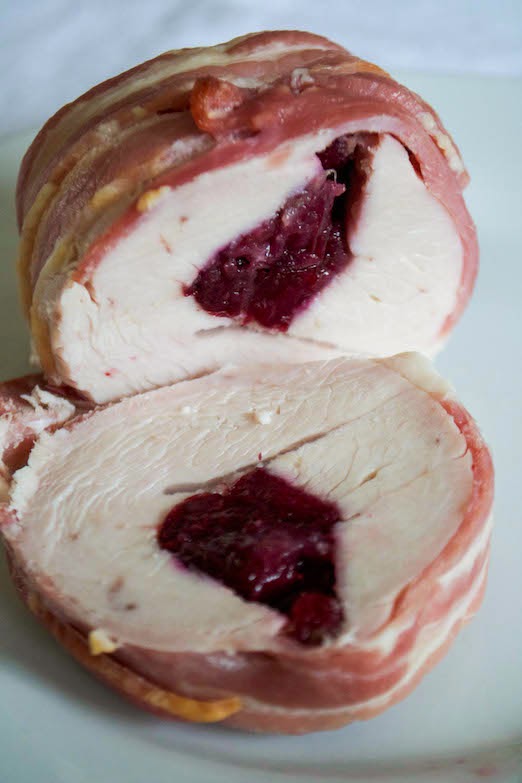
Main Course: Cranberry Stuffed, Bacon Wrapped Turkey Breast (serves 4)
This is one of the recipes in my first ebook, Simple Autoimmune Paleo Comfort Food. When I made it I thought how wonderful it would be as a festive main course, with its flavours of cranberries, orange, turkey and bacon. And because it’s the breast meat, it cooks in a fraction of the time that a whole turkey takes to cook – and will take up less room in the fridge, too. Go check out my Sage Roasted Squash side dish that would be lovely to go alongside. The Gingery Brussels Sprouts recipe is up next. 


Ingredients: 
For the cranberry sauce (makes a bowlful, but you’ll use some of it for stuffing the turkey and serving alongside the Christmas roast):
juice of half an orange
100g cranberries (fresh or frozen)
1 tbsp maple syrup
small pinch of salt


For the turkey:
330g turkey breast fillet (whole, no bone and no skin)
2 tbsp cranberries from AIP cranberry sauce 
8-10 rashers of streaky bacon (smoked or unsmoked, your preference)
5 or 6 cocktail sticks
 
Method:
First, make the cranberry sauce. Add the cranberries, maple syrup, salt and orange juice to a small pan and simmer for 5-7 minutes, until the cranberries are softened and the sauce has thickened slightly. Allow to cool, cover and refrigerate. It’ll last in the fridge for about 5 days. 

Once the cranberries have cooled, get on with the turkey. Place the turkey breast on a chopping board in front of you. Using a sharp knife, cut a slit in the side of the breast, as if you were making a chicken kiev. Make a little pocket in the breast, running almost to its length, but don’t cut all the way through. 
 
Next, take a couple of spoonfuls of the cooled cranberries you made earlier and arrange them in the centre of the pocket. Careful you don’t touch the spoon with the turkey and then put it back in the cranberry sauce. Pinch the breast back together and wrap with the bacon, trying to get the ends of the bacon underneath the breast, as you go. Once you’ve covered the turkey breast in bacon, secure the top of the joint with cocktail sticks, or tie with string if that suits you better. Carefully lift onto a baking tray (I line it with foil to make washing up easier) and roast in an oven heated to gas mark 5/190ºC/375ºF for 40 minutes, or until thoroughly cooked, all the way to the centre of the joint.
 
Once out of the oven, allow the bacon-wrapped turkey breast to rest for 5 minutes and then slice, taking out the cocktail sticks as you serve. 
 
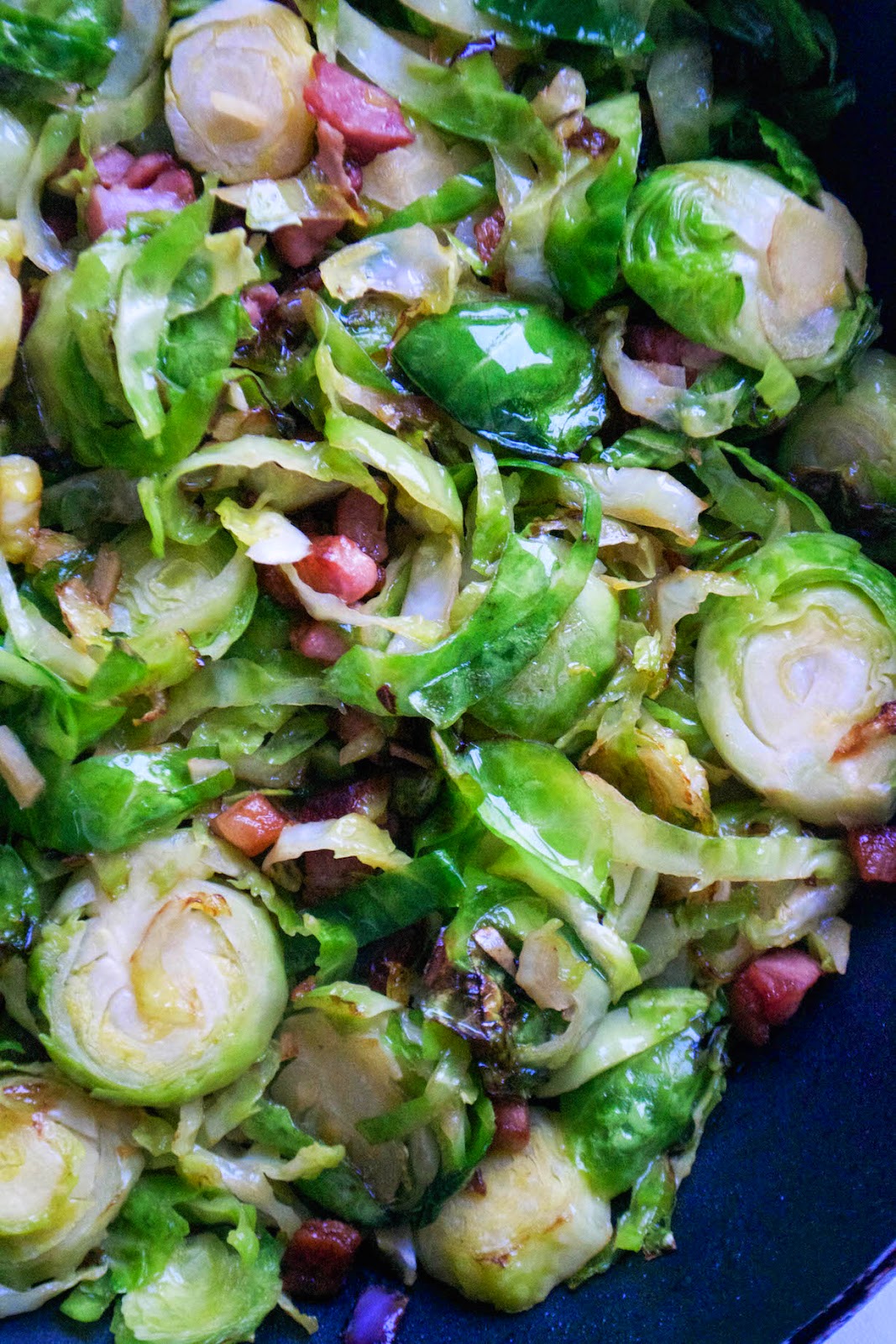
The Side: Gingery Brussels Sprouts (serves 4)
Christmas just wouldn’t be the same without Brussels Sprouts, and although they take a lot of flack for being generally hated, I think they’re great, if cooked the right way. My children love eating Brussels Sprouts all year round, something that many people are surprised by. My secret? I fry them. With bacon. Lots of bacon. Shredding them means they’re quicker to cook and turn a bit crispy, giving them a sweeter flavour. I’ve added ginger for a Christmassy touch – it works well with the smoky bacon and it’s good for you, too. 


Ingredients:
75g smoked, diced bacon or Pancetta
350g Brussels Sprouts
a thick slice (about 2cm thick) of fresh ginger root, chopped finely or grated
1 garlic clove, chopped finely or grated
pinch of salt

Method:
Dry fry the bacon or pancetta in a frying pan, until the bacon starts to turn golden and the fat is released into the pan. While that’s happening, clean and slice the sprouts and add them to the pan, along with the ginger and the garlic. Stir-fry for five minutes or so, until the sprouts are cooked and aromatic. Taste, and season with a pinch of salt, if needed. 

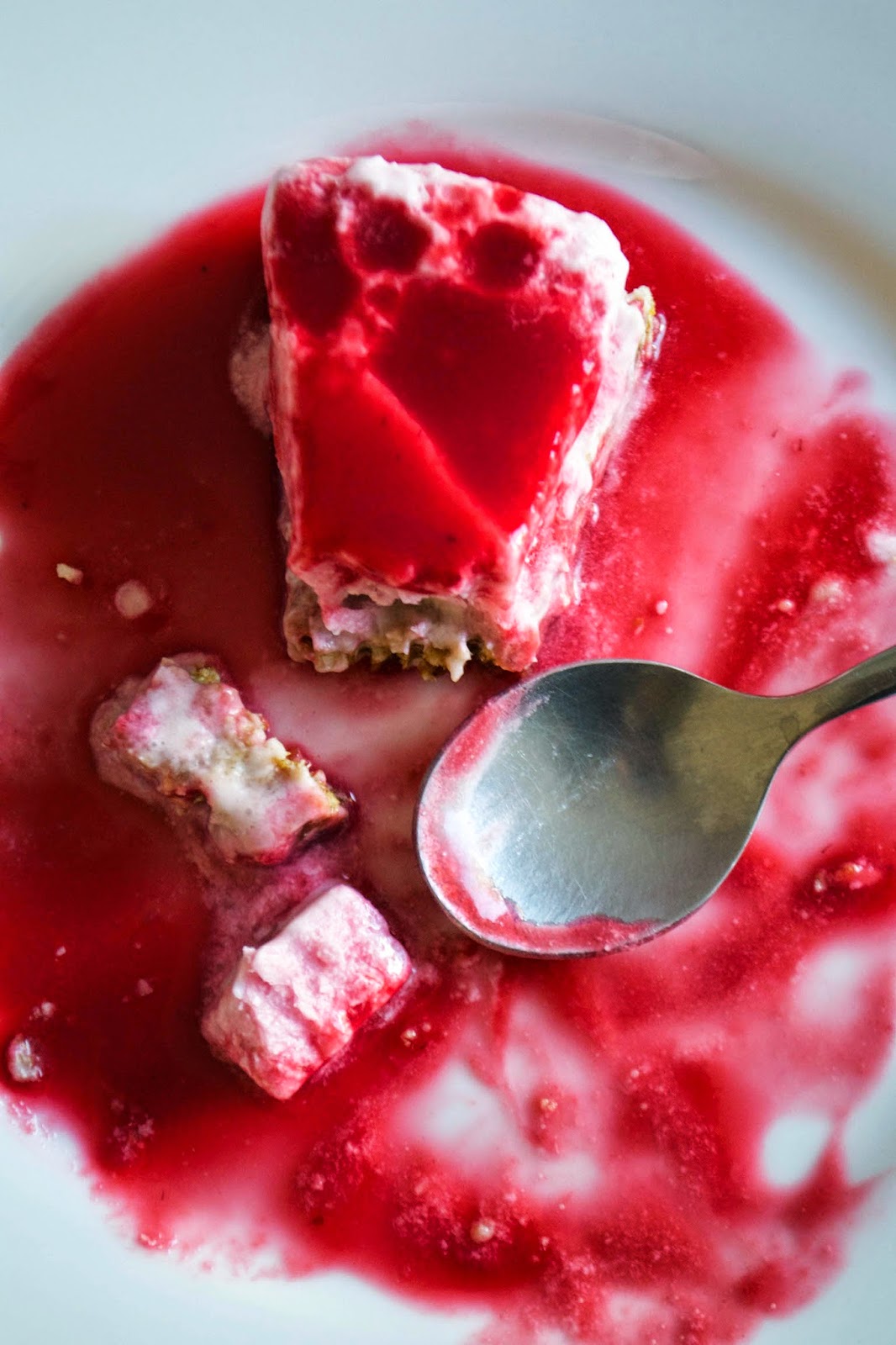
Dessert: Raspberry Ice Cream Cake (serves 8)
I made this in the summer, but felt it was better as a special celebration-style pudding. It doesn’t take much work to make, and it’s really tasty. I serve it with the sauce from Eileen at Phoenix Helix’s Raspberry Panna Cotta, drizzled over the top. Don’t skip the sauce – it really makes the whole thing special. I’ve included the quantities I made for a small cake, if you want a thicker ice cream layer, increase the quantity – if you want to make a bigger cake, obviously double up the base too. The only thing about this cake is that the ice cream topping sometimes does slide off the coconut and date base as you cut it, but this gets better if you leave it at room temperature a bit longer to soften up. And anyway. With how this tastes, you probably won’t care. 


Ingredients:
For the base: 
250g soft, pitted dates
100g finely shredded, dried coconut
1 x 15ml tbsp coconut oil
1 tsp vanilla extract – if you are still on the elimination phase of the AIP or are sensitive to even tiny traces of alcohol, use vanilla powder instead.

For the ice cream topping: 
400ml can coconut milk (full fat)
300g fresh raspberries, fresh and washed
1 tbsp honey
1 tsp vanilla extract (optional, only if you have reintroduced it fine or are not sensitive to the alcohol)

For the sauce: visit Phoenix Helix’s post and make the sauce from her Raspberry Panna Cotta.


Method:
Check there are no stones in the dates (the last thing you want to do is ruin your processor blade) and dump them into the bowl of a food processor. Add the coconut, the coconut oil and the vanilla seeds, if using, and pulse until the mixture turns sticky. You’ll know when it’s ready as the mixture will start to clump as it whizzes around in the processor. 
 
Line the base of a small, 20cm or thereabouts springform cake tin with cling film so the cling film comes up and hangs over the sides and press the mixture into it. Slide into the freezer while you get on with the ice cream topping. 

Mix the coconut milk and the fresh raspberries in a bowl with the honey and blitz with a stick blender. If you want your topping to be seedless, pass the mixture through a fine sieve, leaving behind the tiny raspberry seeds as you go. Churn the mixture in an ice cream maker until it reaches a soft-serve consistency. Take out the cake tin from the freezer and pour the raspberry ice cream into it and slide quickly back into the freezer, draping the cling film that’s hanging over the sides of the tin over the top to stop it drying out. Freeze until set – about 3 hours (depending on your freezer).

When you’re ready to serve, cut the cake into slices (it might be hard if very frozen, leave out for a little bit so it starts to soften) and drizzle over the raspberry sauce as you serve.

Drink: Pomegranate Fizz
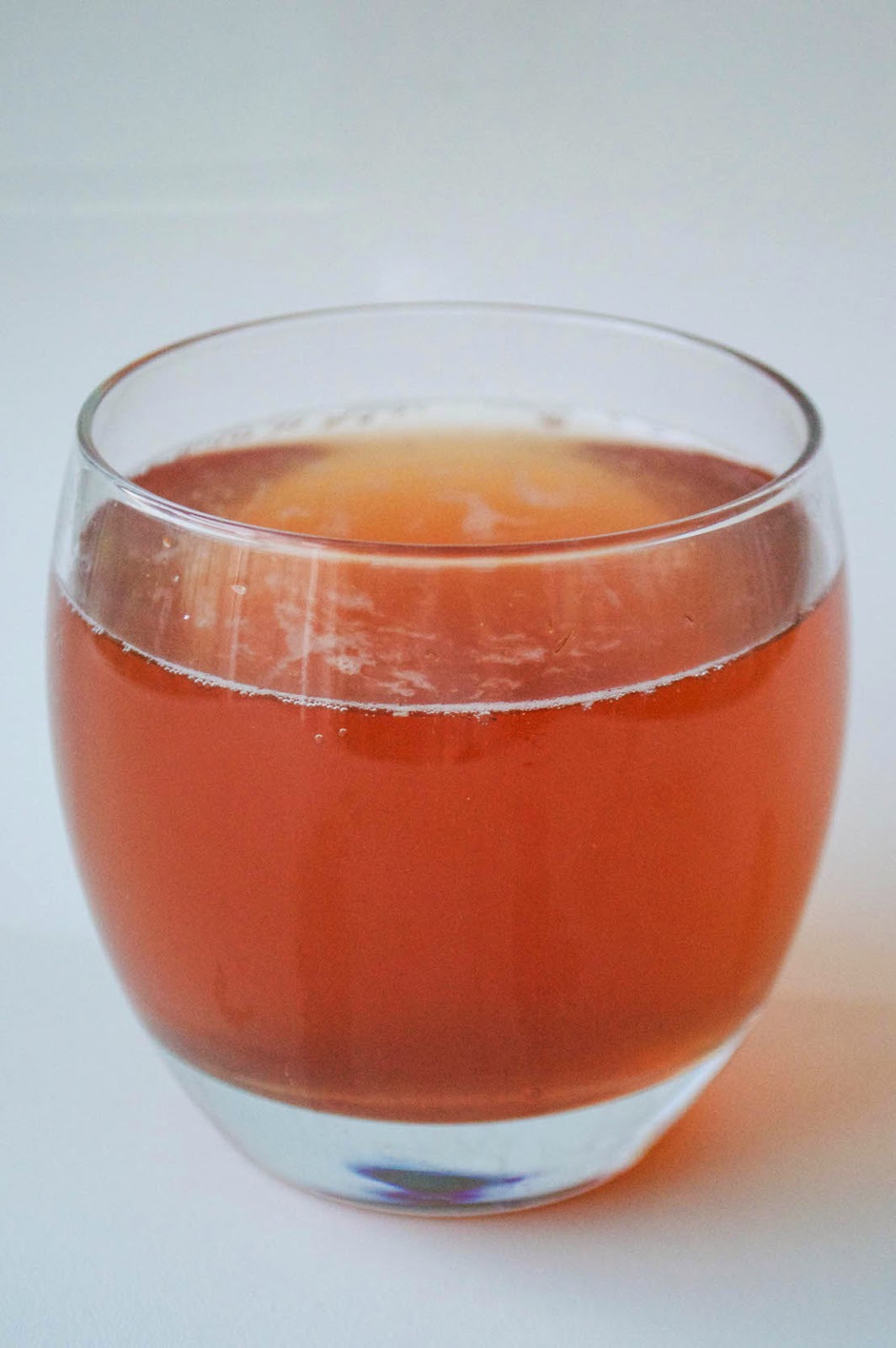
Very simple, but also tasty and you won’t miss drinking the wine with your Christmas dinner. It’s fruity, pink, fizzy and has a tartness to it, thanks to the pomegranate molasses, that’ll go perfectly with your food.


To make it: Fill a small glass with chilled, plain sparkling water. Stir in a teaspoon of pomegranate molasses. Next, cut a pomegranate in half and squeeze all the juice out of one of the halves by hand, into your glass. Taste, adding more juice if you think it needs it. 


Have a great Christmas, everyone! 



Friday, 5 December 2014

Artichoke Heart Salad with Garlic and Chives

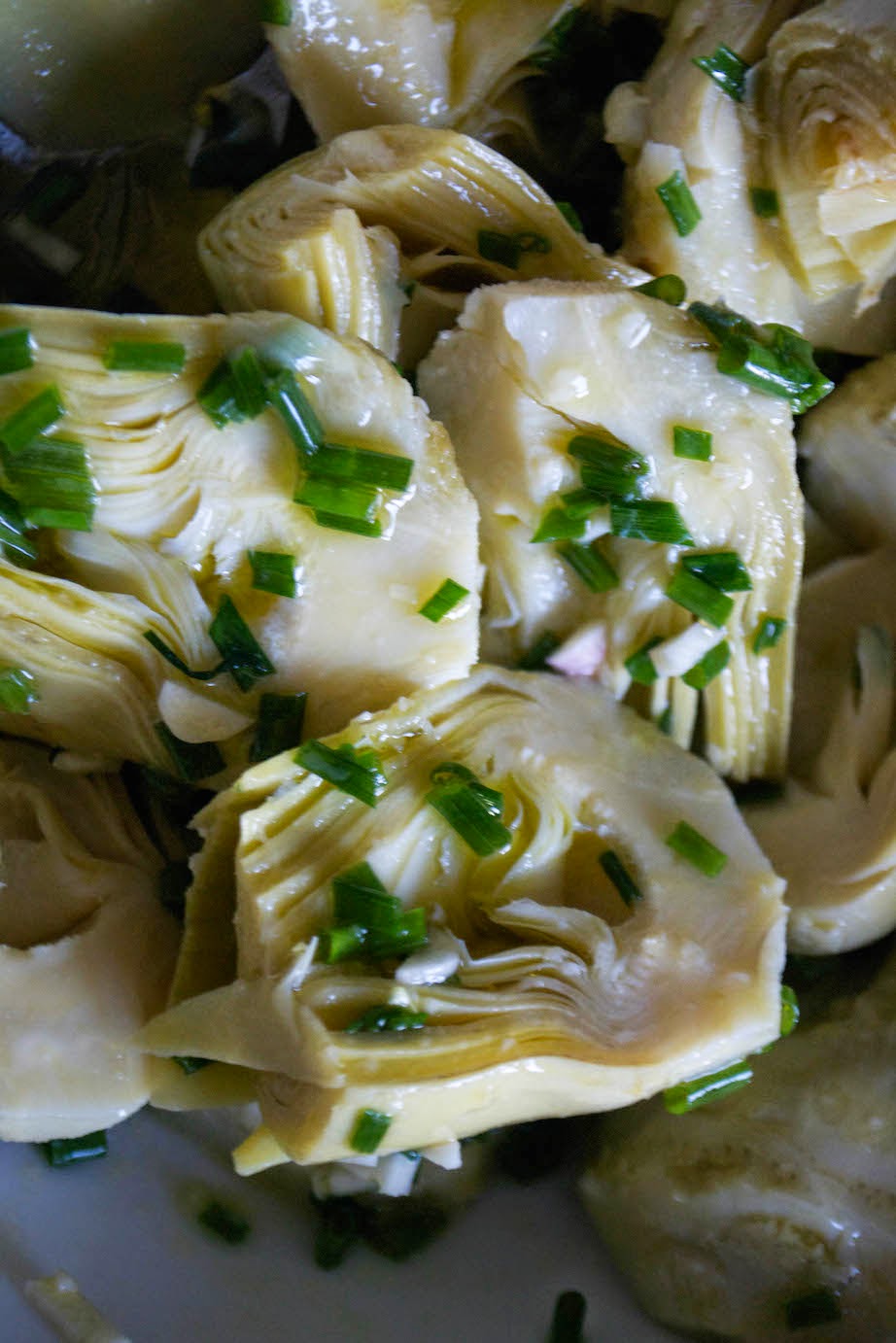
So. Here’s something new. Artichoke hearts with garlic and chives. 


I made this one afternoon, when I discovered a can of artichoke hearts in the back of the cupboard after my husband announced he was going to light the barbecue. Yep, I thought. They’d go very nicely, indeed. But they needed flavour. 

Out came garlic, extra virgin olive oil and chives. This little side dish is cheap and really easy to put together. It’s quick, too – it could be on the table in less than a minute, if you find your can of artichoke hearts quick enough. It goes well with all grilled meats but especially chicken, tuna and lamb. The soft, tender artichoke hearts need the punch of raw garlic and then oniony chives. The olive oil drizzled over at the end gives a silky richness and sweetness. I hope you like it. 

Artichoke Heart Salad with Garlic and Chives
Serves 4, as a side dish or side salad
Ingredients
400g can of cooked artichoke hearts, drained
1 clove of garlic, peeled and finely chopped
small handful of chives, snipped into small pieces
2-3 tbsp extra virgin olive oil

Method
Combine the drained artichoke hearts, the chopped garlic, chives and olive oil into a bowl and stir well. Serve cold, alongside grilled and roasted meats and fish. 


Tuesday, 2 December 2014

Maintaining Balance While on the Autoimmune Protocol (AIP) Diet

A group of us AIP bloggers got together and had a discussion about how important a sense of balance is when you’re on the autoimmune protocol (AIP). And it occurred to me that the diet itself is as much an emotional and physical journey as the disease you’re doing it for. We decided to label this week #aipbalance and post blogs sharing our thoughts and experiences of what it’s really like being on the AIP diet and how to keep a sense of balance. I hope you enjoy mine… 


—————————————————————————-

Going on an elimination diet for your health is a very exciting thing to do. But it’s also very scary.

You’ve eaten pizza, dairy, grains and chocolate bars your entire lifetime. Then you strip everything back to basics. You find yourself staring blankly into the fridge at a pack of turkey mince and some carrots and wondering what the heck you are going to have for breakfast. Suddenly, social gatherings become a problem, because you can’t just eat sandwiches, crisps and sausage rolls anymore. You can’t enjoy a beer down the pub with friends or chomp on a chunk of wedding cake. And you can’t just grab a packet of crisps if you’re feeling peckish. It hits you emotionally, and if you’re not careful, physically too – which is the complete opposite of what you are trying to achieve by taking on a healing diet.

So what do you do? Give up? Think Christmas is going to be too hard and just give yourself a ‘day off’ the diet, eating chocolate, cheesecake and overindulging on the Prosecco? Wave the whole diet off as a ‘fad’ or label it ‘unhealthy’ because you’re having a craving for lasagne? Of course not. And I’ll tell you why. 

It can be really hard to find some sort of balance when you start AIP – and also as you continue. I’ve been on it for 16 months (with reintroductions) and I still have my moments, especially when there’s carrot cake on offer somewhere. You just need to have a little chat with yourself and remember why you’re doing it in the first place. Need a pep talk? Feeling a bit wobbly? Allow me… 


Maintaining balance on AIP is important for success

Social situations CAN be easy while you’re on AIP
Social situations usually mean food and alcohol. But don’t be tempted to undo all your healing work and tuck in to whatever’s on offer. Remember what you’re doing there in the first place. Social gatherings are about meeting up with people and enjoying their company – it’s very rare that food is actually centre stage. Let me tell you something. I went to a wedding last year and I thought one piece of thickly-frosted, white chocolate wedding cake wouldn’t make any difference to my healing. It did. The next day I was in agony with stomach pain and an upset tummy. So now I don’t take the risk. If you’re out, either take a small container of food with you (I usually take a cold, cooked leftover burger and some salad) or if that’s not an option, order something as unprocessed as possible (an unpeppered steak and plain salad or a gluten-free, bunless burger with sweet potato fries). Remember that you’re there not because of the food but to enjoy the company of your friends or family. Can’t have the chocolate fudge cake for pudding that everyone else is eating? It’s not that bad, order a camomile tea and chat to the person next to you instead.

You don’t actually eat LESS on AIP, you eat MORE
Starting the autoimmune protocol is not simply a case of carrying on with what you were eating before but just avoiding gluten, grains, nuts, seeds, nightshades, eggs and dairy. You’ll still need to fill up on nutrients. So what do you do when you’re faced with a huge long list of spices, fruits, vegetables and entire food groups that you CAN’T eat? Yep. You EAT MORE. More of what you can eat. A wider variety of vegetables of different colours, safe starches (squash, sweet potato, carrots) and organ meats. My diet has MUCH more variety – and is subsequently more nutrient dense – than it was two years ago in my lasagne and garlic bread days. 

Don’t take it too far
In the short term, the AIP diet is healthy. But remember the elimination phase is just temporary. As soon as you can, start bringing foods back in. It’s normal to wonder whether your reintroductions will fail, but it’s also exciting. Sure, you run the risk of a flare-up with each new reintroduction, but there’s also a chance that it will have no effect and you can add it into your diet. If you start to actively worry about nutrition and health, and it starts to take over your life it can be a warning signal for orthorexia – a preoccupation and obsession with eating healthfully that actually can result in you taking in a lack of nutrients. And there’s no reason for anyone without an autoimmune disease to go the full AIP – as long as you don’t have intolerances to nuts or eggs, for example – you can do straight paleo, instead. 

It’s not a dirty secret
When I first went fully AIP, I told everyone. Yes, I took the risk of my friends thinking I was taking on a weirdo, fad diet but I thought it would make things easier if I ever ended up round their house and they offered me a cup of coffee and a biscuit. I thought people would think I was weird, but I found them hugely supportive. If you think it would make it easier if a friend or family member knew what you are doing, then tell them, on a ‘need to know’ basis. Don’t feel you have to push it on people. They’re also more likely to be there for you with a cup of camomile tea and a date and coconut bar when it all gets too much. 

Have a word with yourself
Think about what happened that made you start AIP in the first place. Was it a particularly bad flare up? Desperation? Think back to the last time you ate a certain food that’s off limits for you at the moment (for example, cake). What happened? How did you react? This short moment of reflection can distract you from something processed and sugary that’s being waved under your nose and put you back on track. Remember how far you have come. Have you seen your symptoms improve already? Be proud of yourself for taking a huge step in beginning to ease the symptoms of your autoimmune disease naturally. When people tell me that diet can’t help autoimmune disease, I just tell them that it worked for me. Take a good look at how far you’ve come – regardless of whether that’s 2 days or 2 months – and politely push that chocolate cake to one side. You’ll feel better for it.

Are you on the AIP or a strict elimination diet? How important do you think balance is? What struggles have you faced while on AIP?


Monday, 1 December 2014

The Alt-Ternative Autoimmune Cookbook

Those of you who follow the autoimmune protocol (AIP) diet will no doubt be aware of Angie from Alt-Ternative Autoimmune. I love reading her social media updates and blog posts because they are always (sometimes painfully) honest, her recipes easy to follow and her whole approach to healing very real and often injected with humour. You’ll be pleased to hear, then, that today she has released her cookbook. And it’s REALLY GOOD.

What I love about the book, having had a sneak peek of it, is that it’s not just a list of recipes. There are lots of beautiful-looking, simple dishes and they all look amazing. I’ll definitely be trying out a few of these. The photography is bright, colourful and makes you want to get in the kitchen. But what I love most about the book is that Angie deals with a lot of the emotional side of AIP too – how healing affects you emotionally as well as physically, as well as how to cope with the feelings of denial, fear and anger you get when you have a chronic disease (as many of the autoimmune diseases are). 


The recipes also cater for not only the elimination stage of the AIP but also the time when you’re starting to reintroduce certain foods, which can be tricky when you’re considering recipes.

And guess what? It’s in both PRINT and in E-BOOK format. You decide which one suits you best (she’ll give you a discount if you buy both).

Click here to view more details (affiliate link)

More great news!
I’m going to be doing a live cookalong with recipes from the book all day on 13th December 2014 and sharing the results on Instagram (@joromerofood), Facebook and Twitter. Come along and see what I’m cooking up!

LinkWithin

Related Posts Plugin for WordPress, Blogger...